
How should an HRC calculate the true cost of each hair system
HRC Guide: Calculating True Cost of Hair Systems in 2026

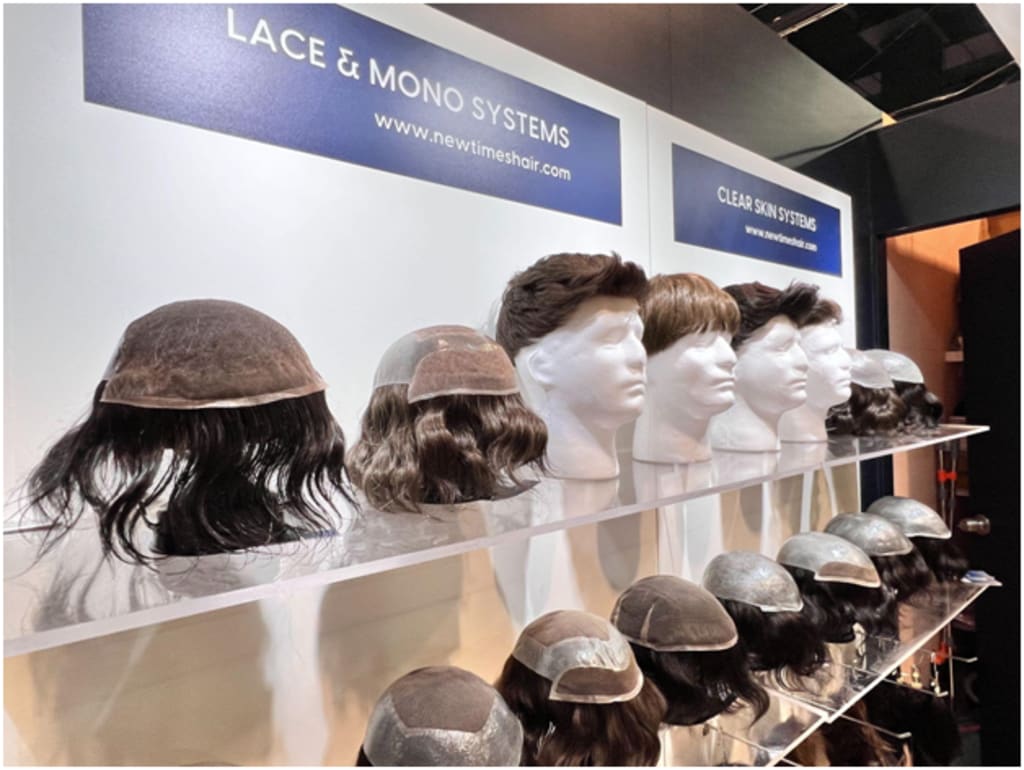
How should an HRC calculate the true cost of each hair system
How exactly should an HRC figure out the true cost of a hair system? You start with the wholesale invoice. Then, just tack on your direct material and labor costs, plus rent, utilities, marketing, and admin fees.
This kind of breakdown reveals what it actually takes to sell and service every single unit. Newtimes Hair backs up your business here by offering clear, competitive wholesale prices.
Key Takeaways
Calculate landed cost from wholesale price, freight, duties, materials, and prep labor.
Allocate monthly overhead across completed units to reveal real per-system costs.
A 3% to 5% defect reserve protects margins from replacements.
The Total Cost of Ownership Formula for Hair Replacement Centers
Your HRC's real cost for a hair system goes way beyond the wholesale invoice. You have to factor in every single expense it takes to receive, prep, and support that unit.
Stick to one consistent formula. This turns your manufacturing cost, direct labor, and operating overhead into a clear cost breakdown.
What Is the Universal HRC True Cost Equation?
Here's the formula to use for every hair system: True Cost = Manufacturing Cost + Direct Material Costs + Direct Labor Costs + Allocated Indirect Costs. Simple. The manufacturing cost is just the wholesale price you pay the supplier. Direct materials cover any supplies used specifically to prep or service that one unit.
Direct labor is the paid time your staff spends handling, prepping, or fitting the piece. Then you have allocated indirect costs—things like rent, utilities, marketing, and admin work. Just divide those operating expenses across all the units your HRC handles during a specific timeframe to figure out each unit's share.
Why Does Wholesale Sticker Price Distort HRC Profitability?
A wholesale quote only gives you the manufacturing cost, not the total amount your HRC actually spends to deliver a finished hair system. If you treat that supplier invoice as your final cost, things like labor, materials, rent, utilities, marketing, and admin work just vanish from your margin calculation.
The gap between wholesale manufacturing costs and your retail price isn't pure profit. Real profit only kicks in after you cover every direct and indirect expense. Newtimes Hair gives you transparent, competitive wholesale pricing, but every HRC still has to add their own operating costs to get an accurate cost breakdown.
Direct Cost Components: Materials, Logistics, and Prep Labor
The wholesale invoice is just the beginning. A hair system's main direct costs cover the unit itself, inbound freight, import charges, and the paid time needed to prep that specific piece. Simple.
Keep these strictly separate from overhead expenses like rent, utilities, marketing, and administration.
How Do Base Materials and Customization Specs Drive Material Costs?
Base materials set your starting cost. Since thin skin and French lace are entirely different base types, you should record their quoted prices separately instead of lumping them into one generic average. The raw unit price belongs right in the direct cost of that specific system.
But customization changes that baseline. Hair density impacts how much hair gets used, while custom ventilation adds skilled labor to put hair into the base. Make sure to record every single requested spec on your purchase order. This way, the final cost tracks with the client's actual unit, not just a rough guess.
Newtimes Hair's transparent, competitive wholesale pricing definitely makes comparisons easier. Still, HRCs need to look over each quote by base and customization.
How Do Freight Fees and Import Duties Determine Landed Cost?
Landed cost is the total amount you pay to get one hair system through delivery and import, rather than just the wholesale tag. Start with the supplier invoice. Then, add on international freight, customs clearance charges, and any import duties tied to that shipment. That's it.
You'll need to spread shared logistics costs across all the units in the box. For instance, divide a single freight bill, duty payment, or clearance fee by the number of systems it covers—unless the carrier lists a unit-specific charge. Always keep your shipping documents with the order record.
Don't put rent or general marketing into your landed cost. Those are overhead expenses, even after the shipment shows up at your HRC.
How Should HRCs Quantify Stylist Pre-Service Prep Labor?
Pre-service prep labor needs to be charged by the minute, not by throwing out a flat guess. Track your stylist's time spent trimming the base, thinning out the hair, and chemical pre-styling before the actual appointment. Don't include in-chair fitting or later maintenance and styling.
Convert those recorded minutes to hours, then multiply by the stylist's hourly labor rate. A 30-minute prep task uses 0.5 labor hours, so its direct labor cost is 0.5 times their rate. Apply this exact same timekeeping rule for every Private Label system.
And keep this labor entry completely separate from your overhead expenses. Rent, utilities, marketing, and admin work support the HRC as a whole. Prep labor, on the other hand, belongs to one specific hair system.
Indirect Costs: Allocating Overhead to Individual Units
Rent and office payroll don't belong to just one hair system, but every single unit needs to carry its fair share. Spreading overhead expenses across your monthly unit volume shows you the real operating cost. This gives an HRC a much clearer ROI (Return on Investment).
How Do Facilities and Administrative Expenses Divide Across Unit Volume?
Start with your monthly overhead pool. Then, just divide it by the number of hair systems you sold or serviced that month. Add up the salon rent, utilities, receptionist or admin salaries, software, and any other expenses that keep the entire Hair Replacement Center (HRC) running.
Let's say an HRC has $6,000 in monthly overhead and sells 60 systems. That assigns $100 of overhead to each system since $6,000 divided by 60 equals $100. Make sure to use the exact same unit measure every single month. That keeps your comparisons actually useful.
Volume matters. If overhead stays at $6,000 but sales drop to 40 systems, your allocation shoots up to $150 per system. This doesn't change the supplier price, but it absolutely changes the HRC's true cost per unit.
How Should Marketing and Client Acquisition Costs Be Factored Into COGS?
Marketing usually isn't part of formal COGS since it doesn't create or prep a specific hair system. But an HRC still needs to factor in advertising, consultation time, and referral fees to find the actual cost of winning a client.
Add up your monthly acquisition spend, then divide it by the number of new clients or systems tied to that budget. A $1,200 monthly campaign that brings in 12 new system clients adds $100 per acquired customer.
These are the hidden expenses of hair system ownership, going way beyond the initial price tag for the business. When you track them separately from direct costs, you can actually see if each system sale brings in a worthwhile ROI (Return on Investment).
Risk and Carrying Costs: Inventory Degradation and Defect Buffers
Stocked hair systems can lose value long before a fitting even happens. Plus, cash tied up in inventory can't cover labor or overhead—things like rent, utilities, marketing, and admin costs.
Transparent wholesale pricing from Newtimes Hair helps an HRC plan out its buying. Factoring in carrying costs and a defect reserve protects margins when stock ages or someone needs a quick replacement.
How Does Inventory Carrying Cost Impact Stocked Hair Systems?
Inventory carrying costs kick in the moment an HRC pays for a hair system and stop when the unit gets fitted or written off. Cash locked up in unsold stock can't fund direct hair and base materials, technician labor, or regular bills like rent, utilities, marketing, and administration.
Base materials can actually degrade while sitting on the shelf. This cuts down their lifespan and leaves the HRC with stock that might not even be usable anymore. To figure out the cost per wear for a high-end custom hair system, just divide the total unit cost—including that carrying cost—by the number of expected wears. Naturally, a shorter lifespan drives that cost right up.
What Percentage Buffer Should HRCs Reserve for Warranty Claims and Defects?
Setting aside a 3% to 5% buffer on the monthly hair-system buying budget gives an HRC breathing room for unexpected defects or early replacements. It keeps you from wiping out the profit margin on your healthy units. Stick to 3% if recent defect claims are rare, but bump it closer to 5% if you're dealing with more frequent replacements.
Make it a habit to check your replacement, repair, and refurbishment records every month. These logs show whether professional customization and repair actually save a system's value or if you're forced into a full replacement. Keep any unused reserve funds tucked away for future claims, and tweak your buying forecasts if claims keep eating past your buffer.
Worked Financial Example: Step-by-Step Per-Unit Landed Cost Breakdown
Any Hair Replacement Center (HRC) needs to figure out its per-unit landed cost before guessing a hair system's profit margin. Things like direct materials, inbound shipping, and technician labor reveal exactly what it costs to buy and prep a single unit.
This breakdown also rolls in a fair chunk of rent, utilities, marketing, and admin fees. Newtimes Hair's clear wholesale pricing gives your HRC a solid starting point, but every center really needs to pull from its own invoices and payroll records.
Cost itemPer-unit amountHair system wholesale price$120Inbound freight$12Technician labor$35Rent, utilities, marketing, and administration$28Total landed cost per hair system$195
In this setup, the HRC spends $195 on a single ready-to-fit hair system. That $120 wholesale price is just one piece of the puzzle. Freight, labor, and indirect running costs tag on another $75. You'll want to check these numbers every month, especially if your shipping rates or labor hours shift.
Practical Cost Audit: Actionable Steps to Optimize HRC Margins
A hair replacement center (HRC) protects its margin by checking actual spending each month. Don't just rely on the wholesale invoice alone.
Your cost breakdown needs to include direct materials, technician labor, rent, utilities, marketing, and admin work. This spots the hidden expenses that quietly bump up the cost of every finished system over time.
Match your supplier invoices and freight bills to the units you actually receive, and flag any duplicate charges or damage.
Count the systems sitting on the shelf for more than 90 days. Pause reorders for this slow-moving stock.
Log the exact prep and fitting hours for every completed unit.
Spread your monthly indirect costs across completed units, not the ones you ordered.
Track ROI by comparing a change's monthly savings against the time or money it took to pull off.
Plus, Newtimes Hair's transparent wholesale pricing makes your purchase-cost line much easier to check and predict. Simple as that.
Streamlining Wholesale Sourcing with Newtimes Hair
Newtimes Hair gives HRC owners a better look at the exact purchase price behind each Hair System. Clear wholesale pricing lets you compare supplier invoices against freight charges and the units you actually receive, without trying to guess where the manufacturing cost starts or stops.
This makes monthly cost reviews a lot easier, especially since labor, rent, utilities, marketing, and admin fees already eat into every completed fitting. Plus, having a steady wholesale price lets you figure out your landed costs before placing a reorder. You won't get hit with random surprises after delivery.
If your center is building a Private Label program, predictable sourcing leads to much smoother inventory planning. You'll be able to order based on actual fitting demand and keep a close eye on the cash tied up in your stock. It also keeps your purchase-cost records perfectly organized while your business grows.
Frequently Asked Questions About Hair System Costs and Operational Metrics
How much should you charge for hair?
Charge above true cost: wholesale, freight, duties, prep labor, allocated overhead, acquisition cost, and a 3%–5% defect reserve. The invoice price alone is not profit.
Can you shower with a hair system?
Yes. Wait until the adhesive has fully cured, then use lukewarm water and avoid aggressive scrubbing at the base.
How do you wash your hair with a hair replacement system?
Use sulfate-free shampoo, pat rather than rub, and condition the hair lengths. Keep oily conditioner off the bond area.
Can you go swimming with a non-surgical hair system?
Yes, but chlorine and salt shorten bond life. Rinse immediately afterward and expect more frequent maintenance.
How much do 3,000 grafts of hair cost?
Usually $9,000 to $30,000 in the U.S. at roughly $3–$10 per graft. Premium clinics can run higher.
What is the average price per graft for hair restoration?
About $3–$10 per graft is the common U.S. range. FUT is often cheaper; FUE usually costs more.
About the Creator
Leo
Passionate men's hairstylist with a keen eye for detail and a knack for creating on-trend looks. Dedicated to delivering hair restoration education that enhances individual style.
Enjoyed the story? Support the Creator.
Subscribe for free to receive all their stories in your feed.
Comments
There are no comments for this story
Be the first to respond and start the conversation.