
How Does Private Label Hair System Manufacturing Work?
How Does Private Label Hair System Manufacturing Work? Scaling Your Salon Brand from Stock to Custom

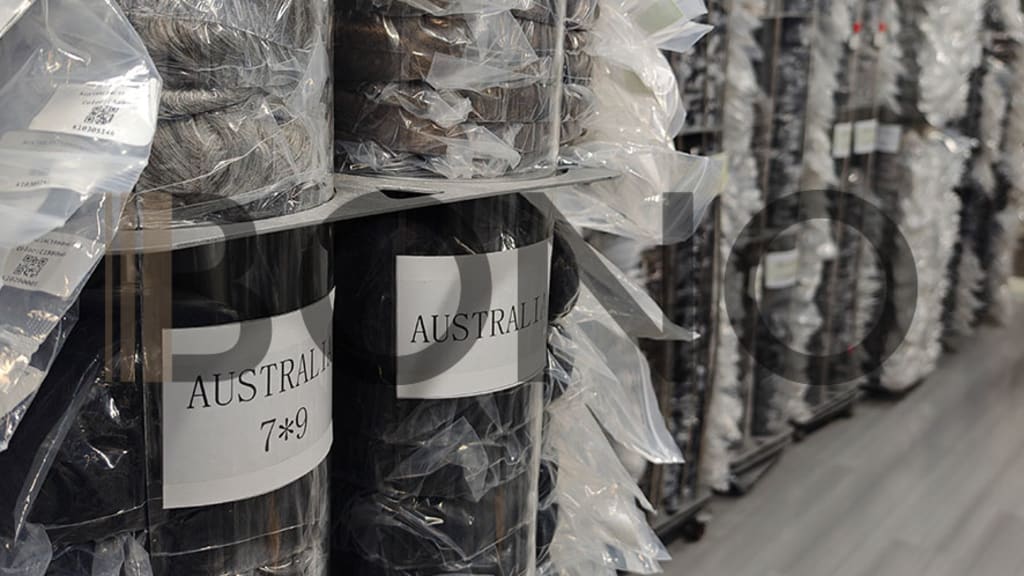
How Does Private Label Hair System Manufacturing Work? Scaling Your Salon Brand from Stock to Custom
Private Label Hair System Manufacturing lets your salon stop just reselling basic stock units and actually build inventory around your own clients. You pick the specs, and the factory makes it all under your label. It's that simple.
Here, we'll break down the whole factory process and the right questions you need to ask. Plus, we'll show you how Bono Hair helps you safely make the jump from stock to custom units.
Key Takeaways: Scaling Your Salon Brand with Private Label Hair Systems
Private-label stock units let salons test demand before committing to custom inventory.
Client records reveal the best specifications for a scalable signature range.
Standardized records keep every custom order consistent throughout factory production.
Why Salon Brands Transition from Reselling Stock to Private Labeling
Stock units can seriously cap your profit margins. They also make your salon brand look exactly like the rest.
Private labeling hands that control back to you, covering everything from branding and product specs to your final orders. But before you lock in a supplier like Bono Hair, it's crucial to know how different factory models actually shape your customization options.
What Private Label Hair System Manufacturing Actually Means
Private label manufacturing isn't just one single factory service. OEM, ODM, and private labeling each give your salon a different level of control over the hair system, how fast you launch, and brand ownership.
So, ask a manufacturer which model actually fits your needs before you even start talking about logos or minimum order quantities.
Original Equipment Manufacturing (OEM) in Hairpiece Production
OEM (Original Equipment Manufacturer) simply lets your salon set the exact requirements for a branded hairpiece.
You'll want to ask which specific details Bono Hair can document and easily repeat. Keep in mind that custom formulation usually applies to hair-care products, not the hair systems themselves.
Original Design Manufacturing (ODM) for Ready-Made Base Lines
ODM (Original Design Manufacturer) takes a factory-designed hair system and lets you sell it under your own brand.
Just ask Bono Hair about your branding options, minimum orders, and what kind of support they offer for repeat purchases on stock private label lines.
Private Labeling: Placing Your Salon Brand on Proven Base Models
Private Label Hair Care takes your salon's brand and puts it on a proven hairpiece model.
Consistent branding and great service really help cut down on clients shopping around for cheaper prices. Just make sure to confirm logo approval, minimum orders, and reorder consistency with the manufacturer beforehand.
The Stock-to-Custom Spectrum: Four Levels of Salon Product Ownership
Salon ownership can easily shift from fast replacement stock all the way to systems built around each client's specific template.
Going with stock private labels helps you grow early on. But deeper ownership means a bigger inventory commitment. It also takes more planning to keep your service consistent for clients as demand picks up.
Level 1: Standard Wholesale Stock Units
Stock units are great for quick replacements. The downside? They don't give you much control or make your lineup stand out.
Make sure to check available sizes, colors, and reorder times. You'll also want to see if the supplier can keep your supply chain running smoothly.
Level 2: Private-Labeled Stock Systems
Private-labeled stock systems let you put your salon's name on proven units, which instantly boosts their perceived value.
Just confirm repeatable tags, packaging details, and minimum orders with Bono Hair before you grow your product lineup.
Level 3: Semi-Custom Signature Line Specifications
Semi-custom lines standardize your base choices. This makes it easy to scale reorders without needing individual client templates.
Document your approved specs with Bono Hair. Keep in mind that "custom formulation" usually describes hair-care products, rather than hair-system construction.
Level 4: Full Custom Template-Based Manufacturing
Full custom OEM (Original Equipment Manufacturer) work actually follows a specific client head mold and precise ventilation specs.
Be sure to ask Bono Hair how they record approvals and track client differences for future repeat orders.
The 3-Stage Hair System Manufacturing Process Explained
Making a physical hair system comes down to three main steps: base construction, ventilation, and final quality checks. Some hair care manufacturers offer contract manufacturing. Ask Bono Hair exactly who builds the base, logs the specs, and tests the final units. You'll want to inspect the base construction first.
Stage 1: Base Construction and Material Selection
Choosing a base sets the balance between a natural look, everyday durability, and getting repeat orders.
Your homework starts by asking Bono Hair, a Hair Care Manufacturer, to document the material, thickness, and target density. Then, compare the lace, mono, and PU samples against your current product lineup. Simple.
Swiss and French Lace: Breathability vs Durability
Swiss lace gives you a much finer front edge, while French lace adds more support to the base.
When you're testing samples, make sure to check the mesh stretch and edge recovery before approving either material.
Monofilament Bases: Structure for Heavy Density
Woven monofilament easily supports heavy-density systems. It features a firmer center that holds its shape perfectly during salon service.
Just ask the Hair Care Manufacturer which mono fits your lineup best and request those material records.
Polyurethane (PU/Skin) Bases: Scalp-Like Appearance and Maintenance
Factories pour liquid polyurethane right into molds. Then, they cure it to create skin bases.
For your sample testing, ask for the 0.03 mm to 0.12 mm options. Also, double-check how that thickness will impact your maintenance planning.
Stage 2: Raw Hair Sourcing, Sorting, and Preparation
Hair quality gets locked in way before ventilation even starts. Factories source the human hair, hackle it to line up the strands, and sort out the texture and length. Then they color-match the batches while keeping the cuticle safe.
For a private-label line, these early checks are exactly what keeps your future samples consistent across your supply chain.
Sourcing Indian vs European Human Hair
Indian and European human hair are pretty different when it comes to texture, availability, and how well they handle processing. If you plan to market your color processing with Organic or Natural Actives, make sure to ask for sample testing against your target texture.
Only approve batches that stay consistent. No exceptions.
Remy vs Non-Remy Hair in Men's Hair Systems
You'll often see non-Remy hair used in men's systems. That's because the knotting process folds the strands back on themselves. If you use Remy hair, those cuticles end up facing opposite directions and just tangle up mechanically.
Always ask your factory to do their due diligence.
Stage 3: Ventilation and Hair Attachment Techniques
Ventilation decides where the hair sits, how it moves, and if the front actually looks real on your client's system.
For private-label buyers, the attachment method is something you need to approve during sample testing. Don't just leave it up to the contract manufacturer.
V-Looping for Flat Hair Direction
V-looping pushes each strand right through a poly skin base. This creates a V-shaped anchor instead of an obvious knot.
During contract manufacturing, technicians make sure the hair lies flat in whatever direction you choose.
Injected Hair for Seamless Poly Bases
Injected hair gets pushed straight into soft polyurethane. Because of this, the strands look like they're growing right out of a real scalp.
If you're building an OEM product lineup, make sure to approve a sample before full production starts.
Bleached Knots and Single Split Knots for Natural Hairlines
Single split knots keep the bulk down at the lace front. Plus, bleaching lightens those knots right after tying them.
Always use sample testing to check and approve the hairline before jumping into custom formulation or mass production.
Phase 1 of Salon Scaling: Branding Stock Inventory
Start with proven stock bases, then attach your own salon's brand label and packaging. Stock private labeling lets you test product demand without paying for custom development up front.
Just ask Bono Hair about label artwork, custom packaging options, MOQs, and sample approval. And once you're placing repeat orders, it's easy to lock in your exact specs.
Phase 2 of Salon Scaling: Building Your Signature Hairpiece Range
Check your client records to see which base, density, color, and attachment options get requested the most. Use that data to create a product lineup with just three to five set specs. You'll also want to ask Bono Hair about their batch consistency. Scaling this way makes the logistics of individual fittings a lot easier down the road.
Phase 3 of Salon Scaling: Full Custom Order Integration
Custom work belongs right inside your consultation form. Just jot down each client's measurements, base preference, density, and color reference using one repeatable order setup.
Check with Bono Hair about how contract manufacturing deals with approvals and reorder records. Having a solid workflow is what keeps things running smoothly as you get busier. That's it.
Practical Logistics: How to Submit Custom Orders to a Hair System Factory
Solid custom orders start with real, physical references. Don't rely on memory or cell phone pictures.
When you pair good physical references with a single standard form, you give factory workers a clear production record. This makes the whole supply chain smooth and repeatable for your salon or brand, whether it's a brand new order or a simple restock. That's it.
Creating and Shipping Accurate Head Templates (Molds)
Make the mold right on your client's head using plastic wrap and tape. Be sure to mark the front, crown, and outside edges.
Ship it flat in a stiff mailer so it keeps its exact shape.
Submitting Physical Hair Samples for Color Matching
Include a small, clean hair sample from your client right along with the order.
Pictures change depending on the lighting. But a real sample lets the factory team see the exact color and gray mix right in front of them. No guesswork.
Standardizing Custom Spec Sheets for Production
Stick to one standard form for every single manufacturing request. You'll want to write down the base size, density level, curl type, wave direction, and the exact color match.
If anything looks vague, clear it up before production even kicks off.
Vetting a Hair System Manufacturer: Due Diligence for Salon Owners
Doing your homework starts with actual proof, not just empty promises. Make sure to ask for a facility tour, material logs, their quality-control steps, and the paperwork proving they actually follow the rules.
Bono Hair is happy to talk through your custom needs clearly. Because if you skimp on checking out your suppliers, you're just asking for shipping delays and expensive reorders.
Mistake #1: Asking Vague Questions Instead of Requesting Sample Proof
Broad claims about what a factory can do don't prove much. Anyone can just say yes without actually showing how they'll meet your brand's specific needs.
To do real due diligence, ask for evaluation samples. Then use that sample testing to check the construction, how they handle the hair, and if they actually follow your custom instructions.
Mistake #2: Ignoring Batch-to-Batch Quality Control Checkpoints
Approving a sample is just the beginning. When you place repeat orders, make sure you're asking for documented checks on density and base dimensions for every single batch. These steps back up your regulatory compliance and prove due diligence. Plus, they make it much easier for Bono Hair to nail your approved specs every time.
Mistake #3: Over-Customizing Inventory Too Early in Brand Growth
Custom options are great, but launching with way too many just drains your cash before you've even proven the demand. Start off with a solid range your salon can easily reorder.
Just ask Bono Hair which specific tweaks might drag out your production schedule. Keeping your custom orders in check protects your profit margins and makes growing a whole lot easier. Simple.
Essential Questions to Ask Potential Private Label Hair System Factories
Before you place a production order, get the factory's process in writing. A solid Hair Care Manufacturer needs to clearly explain sample sign-offs, MOQ structures, and production timing.
These answers will show if Bono Hair can actually back up a controlled launch and handle your future growth. That's it.
What Is the Factory's Sample Approval Protocol Before Mass Production?
Find out who signs off on the sample, exactly what details they record, and if they hold off on production until they get your written okay.
Sample testing is just basic due diligence. Your approval gives the factory a hard reference point for the actual order.
How Does the Supplier Structure Minimum Order Quantities (MOQs)?
Request separate MOQs for their stock units, signature base specs, and fully custom orders.
A clear Minimum Order Quantity plan protects your cash flow. Plus, it leaves plenty of room to scale up later.
What Are Real-World Production Lead Times for Stock vs Custom?
Make sure to ask for different timelines for branded stock units versus custom, hand-ventilated orders.
Contract manufacturing schedules shift all the time. So, ask exactly how material sourcing, production phases, and final approvals will impact your Supply Chain Logistics.
Business Impact: How Private Labeling Protects Salon Profit Margins
Private labeling gives your salon total control over how hair systems are presented, replaced, and remembered.
Bono Hair handles the custom branded orders, but your salon actually owns the customer relationship. This protects your profit margins and gives repeat business a clear home base.
Preventing Client Price-Shopping Across Online Retailers
When you use your own exclusive labels, clients can't just run a quick online search to compare prices across different retailers.
Your brand becomes the only reference point. This keeps your profit margins safe and shifts the conversation right back to the quality of your service.
Maximizing Client Lifetime Value Through Exclusive Product Ownership
Selling your own proprietary systems naturally brings clients back to your salon because you control exactly how they get their replacements.
Consistent ordering under your own brand boosts client retention. Plus, it makes figuring out inventory and demand way easier as your business scales up.
Navigating Supply Chain Logistics, Packaging, and Shipping
Your private-label margins also rely on your systems showing up on time and in one piece. A solid supply chain setup protects your reorder schedule, not just the delivery itself.
Make sure to ask Bono Hair how they deal with regulatory compliance, customs clearance, safe packaging, and shipping timelines for your specific destination.
Sample Testing Protocol: Evaluating Production Samples Before Bulk Launch
Sample testing is that final check before you commit to a bulk order. You'll want to closely look at the base edges, seams, and knots to spot any separation.
Give small sections of hair a gentle pull, brush them the way they naturally flow, and bend the base a bit. Just jot down your findings for Bono Hair before you give the green light.
Managing Minimum Order Quantities (MOQs) Across Product Lines
Smart MOQ planning protects your cash flow and helps you grow. Rely on stock units for your regular demand, group semi-custom options into shared orders, and save the fully custom work for when a client actually locks it in.
Just ask Bono Hair if related designs can share the same MOQ.
Regulatory Compliance and Quality Assurance in Hairpiece Sourcing
Material declarations and import records give your salon a much safer paper trail than just verbal promises. Real regulatory compliance actually starts before production even kicks off.
When doing your due diligence, make sure to ask Bono Hair for proof of factory audits, batch records, and destination-market paperwork before you place a private-label order.
Final Decision Framework: Is Your Salon Ready to Scale Beyond Stock?
You're ready to make the jump when repeat demand gets predictable, your team actually tracks inventory, and there's enough cash flow to handle both sampling and reorders.
Keep your initial salon brand launch tightly focused. Bono Hair handles the customization side of things, but true scalability comes down to repeatable services and smart purchasing habits. That's the secret.
Scaling Your Salon Brand with Bono Hair Custom Manufacturing
Once your demand gets predictable, your salon brand needs a real factory partner instead of just buying random stock. Bono Hair backs this growth with low-MOQ private labeling, signature-line development, and OEM (Original Equipment Manufacturer) projects built right around your work.
Make sure you ask each Hair Care Manufacturer how they handle samples, approvals, reorder consistency, branding options, and communication. It matters. Bono Hair can help turn those answers into a solid launch plan. Plus, they won't ever force your brand into a generic, one-size-fits-all catalog.
Frequently Asked Questions About Private Label Hair System Manufacturing
How does private label hair system manufacturing work?
You choose approved specs; the factory builds, ventilates, checks, and brands the units.
How much does it cost to start a private label hair care line?
Start with stock-label options. They avoid custom development costs upfront.
What is the difference between stock and custom private label hair systems?
Stock is proven and fast. Custom uses your measurements, base, density, and color specs.
What is the typical minimum order quantity for private label hair products?
No fixed number. Bono Hair offers low-MOQ private labeling—confirm the structure first.
How long does the private label manufacturing process take?
No universal timeline. Get sample sign-off and production timing in writing.
About the Creator
Leo
Passionate men's hairstylist with a keen eye for detail and a knack for creating on-trend looks. Dedicated to delivering hair restoration education that enhances individual style.
Enjoyed the story? Support the Creator.
Subscribe for free to receive all their stories in your feed.
Comments
There are no comments for this story
Be the first to respond and start the conversation.