
How can I evaluate a hair system factorys production capacity
How to Evaluate Hair System Factory Capacity

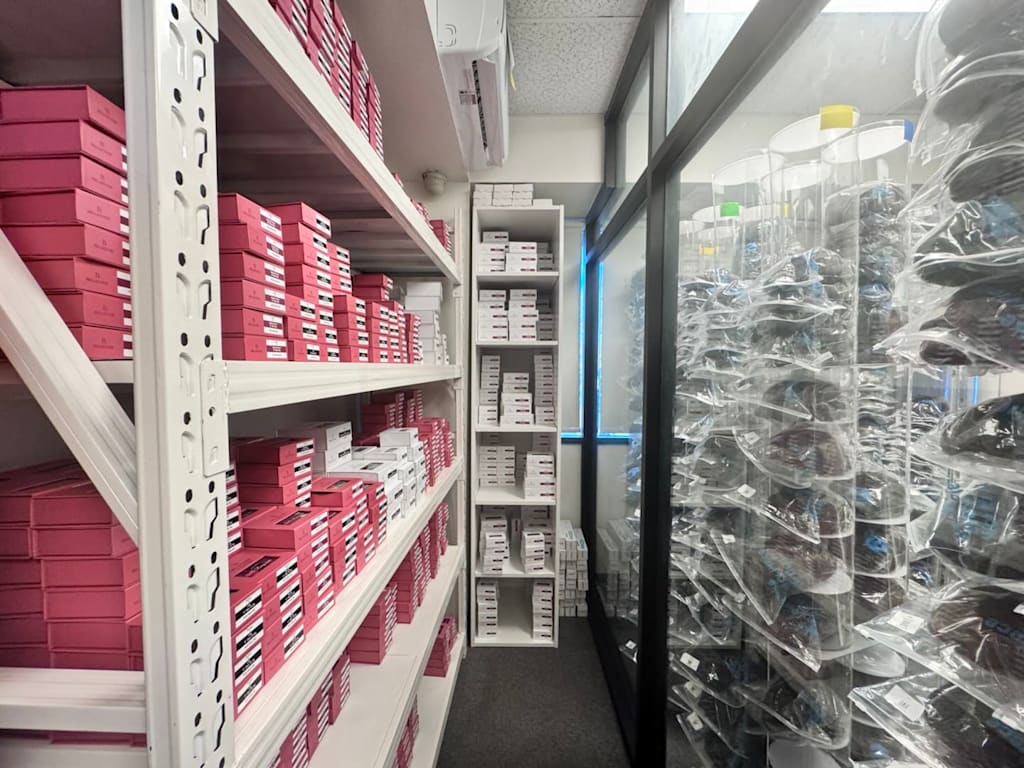
How can I evaluate a hair system factorys production capacity
A Hair System Factory might sound great on a quick sales call, but fail the second you place a massive purchase order. You have to verify their production capacity using hard numbers, which means checking their output records, lead-time consistency, defect rates, and backup capacity. We're handing distributors the exact audit checklists and templates you need to compare suppliers side-by-side, spot hidden risks, and build a scalable purchasing plan.
Key Takeaways
Six months of production records reveal reliable output better than quoted capacity.
Capacity reservations should use each supplier's lowest documented monthly output.
Custom lead times require dated milestones from approval through final dispatch.
Live video audits confirm real workshops, active orders, and traceable production.
Material stock, skilled staffing, and base-specific bottlenecks limit scalable output.
Strategic Framework for B2B Hair System Factory Evaluation
You should judge a hair system factory on how reliably they handle wholesale orders, not on empty sales pitches. Start with a clear, written audit that covers their production controls, quality checks, sourcing stability, and how well they communicate about orders.
Use the exact same scorecard for every single supplier. Ask for proof of their daily workflows, find out who's in charge of escalations, and check exactly how the factory deals with material shortages, bad batches, or sudden volume spikes. Map out their supply chain risks, like relying on one material source or farming out production steps to subcontractors. A solid partner shows you actual records instead of just giving vague guarantees. From there, production metrics will tell you if those controls actually lead to consistent output, reliable lead times, and low defect rates.
Key Quantitative KPIs to Measure Factory Output and Volume
Production Capacity only means something when a factory can actually document the units completed per line and the output per ventilation worker. For a Hair Replacement System buyer, these KPIs show if the quoted volume comes from real, repeatable production records or just a sales estimate during a normal month and a sudden demand spike.
Plus, monthly records expose the bottlenecks that a total factory headcount can easily hide.
Evaluating Monthly Unit Output per Production Line
You should evaluate each line by system category, not just a single factory-wide total. Monthly throughput is just the accepted finished units divided by the active lines. Make sure to keep each Hair Replacement System category separate since the labor demand differs for each.
Ask for six months of line logs that show scheduled days, completed units, rework, and open backlog. Don't count work-in-process and reworked units in your first-pass output. When you're handling Wholesale planning, compare the quoted order volume with their lowest documented month. Then, reserve your capacity against that specific number.
Assessing Ventilation Worker to Output Ratios
Ventilator headcount only matters when it's tied to active labor days and actual accepted output. To figure out the accepted units per ventilator-day, just divide the accepted units by the total active ventilation days. Make sure you use full-time-equivalent workers rather than just the payroll headcount. That way, absences and part-time staff won't artificially inflate the Production Capacity.
Get a roster broken down by Ventilation Methods, along with attendance logs and accepted units by system type. Compare this ratio across a six-month period. If you spot a drop paired with rising rework or a growing backlog, it usually signals a major strain in the Production Process. The only exception? If the records show a much more labor-intensive order mix.
Evaluating Lead Time Capabilities for Stock vs. Custom Orders
You measure lead time a bit differently depending on whether you're dealing with stock or custom hair systems. A standard stock order just moves from inventory straight to shipping. But a custom piece? That process includes design approval, gathering materials, actual production, quality checks, and then final dispatch.
When you're mapping out wholesale plans, always weigh supplier promises against these individual steps. Don't just rely on one big headline delivery date. A super fast timeline only makes sense if the supplier clearly shows which phases are already finished. Simple.
Comparing Stock and Custom Timelines
Keep track of when your order hits the queue, the promised shipping day, and when it actually leaves the facility. With stock items, make sure the units are actually set aside for you, not just sitting around waiting to be transferred.
For custom jobs, log the exact dates for design approval and the start of production. If a supplier promises custom work at the exact same speed as ready stock—without giving you clear, dated milestones—that's usually a massive red flag. It's almost always an unrealistic claim.
How to Verify Genuine Production Capacity vs. Trading Companies
A Hair System Factory needs to show their production work in real time, rather than just sending over polished product photos. The best proof mixes a live workshop audit with documents matching the supplier's legal name, address, and stated Quality Control (QC) steps.
Trading companies can coordinate orders just fine, but hidden middlemen bring capacity and communication risks. Keep an eye out for red flags before you commit to wholesale volumes. Simple.
Conducting Live Video Audits Across Key Workshops
Ask for a scheduled live video call that walks through the receiving area, production floor, QC station, packing area, and shipment staging space. Tell the camera operator to point out today's work orders, active staff, and units sitting at different production stages. If a supplier only shows a meeting room or finished samples, they haven't actually proved their production process.
Just use a simple audit checklist: workshop name, local time, number of active workstations, visible order labels, QC checkpoints, and packing records. Note if the factory can actually trace a single order from production straight to dispatch. Refusing to walk between areas, showing pre-recorded footage, or slapping on labels that don't match the supplier name are major red flags.
Reviewing ISO and BSCI Compliance Documentation
Make sure to ask for current ISO and BSCI documents issued to the factory's exact legal entity and site address. ISO certification backs up documented QC systems, while BSCI audit records cover labor and workplace practices. Neither piece of paper proves output capacity on its own. But together, they help verify if a wholesale supplier really operates under formal controls.
Double-check the certificate number, issue date, expiry date, audit scope, factory address, and the certification body's name. Compare every single detail with your purchase contract and the location from the video audit. Expired files, photoshopped logos, or documents given to a completely different company demand a clear answer before you place any production-dependent order. That's it.
Assessing Raw Material Inventory and Hair Sourcing Capabilities
A supplier's human hair inventory puts a hard limit on how much of your order they can start without waiting around for new sourcing. So, for every hair grade, ask for the opening stock weight, reserved weight, incoming purchase orders, and the replenishment lead time. Figure out the available-to-produce weight by taking the opening stock and subtracting the reservations. Then, just match it up with your order's bill of materials. A massive warehouse doesn't mean a thing if most of that hair is already spoken for. That's it.
Always ask for an inventory report broken down by grade, length, color, and origin, and check it against their receiving records. Keep track of stock-cover days—basically, the available material divided by daily use. This tells you right away if their output is completely at the mercy of the supply chain. When materials show up unevenly, workers just end up standing around waiting. And that kills labor efficiency.
Analyzing Workforce Stability and Technical Skill Depth
Big production runs stall out when trained technicians quit faster than new hires can get up to speed. Having enough hair keeps the benches stocked, sure. But keeping your staff is what actually decides if a factory can repeat ventilation methods at scale without having to redo the work. You'll want to check the monthly technician retention, 90-day new-hire retention, empty seat rates, and how long it takes to get people fully trained on each production line.
Measure Line-Level Retention Risk
Ask for a 12-month line roster showing the starting headcount, exits, hires, and trained replacements. Make sure to flag any constant turnover and slow training periods.
Lace and thin skin bases require extremely steady hands. Even tiny shifts in technique can easily ruin a product's durability. That's why having a stable team is so important—it protects your output whenever these complex builds hit the schedule.
Evaluating Base Material Capacity Across Lace, Skin, and Mono Systems
Base materials create different production bottlenecks, even when suppliers quote the exact same monthly output. A solid Hair Replacement System capacity review breaks down lace handling, skin-base curing, and mono-base work instead of lumping them into one big production line.
Just ask each supplier to report their capacity by base type, planned output, actual output, rejects, and late orders for the same reporting period.
Production Throughput Differences for Swiss vs. French Lace Bases
Swiss lace usually needs tighter handling controls than French lace. Its finer construction gets damaged much easier during assembly. French lace might support a steadier workflow, but real capacity still comes down to trained operators, inspection times, and the actual number of usable pieces left after quality checks.
Set up a supplier template that tracks scheduled units, completed units, rejected bases, rework units, and average lead times separately for Swiss and French lace. A blended lace total can easily hide a shortage in the specific base material you need for a Natural Hairline.
You'll also want to ask if their quoted output is based purely on standard orders or if it includes custom contours and reinforcement work. Those little details eat up available line time without ever changing the supplier's headline capacity numbers.
Manufacturing Dynamics of Ultra-Thin Poly and Injected Skin Bases
Ultra-thin poly bases often create a massive capacity bottleneck when curing stations get fully booked. Base thickness really matters here. Each skin-base spec might need its own production sequence, inspection standard, and cure schedule. A supplier could have plenty of open labor capacity but still miss delivery dates simply because they ran out of curing space.
Ask for weekly numbers on curing-station loads, batches released on time, batches held back for defects, and the average delay from curing to final inspection. Then, compare those stats against the supplier's promised volume—not just their completed shipments.
Injected skin bases need their own separate reporting from standard poly units, too. Keep an eye on rework and failure rates by base type. Weak numbers in those records usually point straight to a Durability issue or a rocky production schedule.
Auditing Quality Control Protocols and Sampling Rates at Scale
Producing a lot of units only matters if the factory actually tracks defects per production lot, rather than just lumping them into total monthly shipments. Any decent Quality Control (QC) review needs to show lot-level records. We're talking about first-pass yield, rework rates, defect types, who signed off, and the final-release rate. Make sure to compare these numbers across at least three recent production periods, broken down by base type.
You need a written sampling plan for every single lot. This should clearly spell out the lot size, how many units get inspected, limits for acceptable defects, and what happens when a sample actually fails. Don't let inspectors get away with a quick visual check. Make them record Hair Density against your approved specs at several specific, marked points. Written reports look great on paper, but physical test orders prove if that quality holds up across the finished units. That's the real test.
Stress-Testing Factory Reliability with Trial and Sample Orders
A factory's real capacity only shows up when an order forces them to follow their normal workflow, not just when they send over a hand-picked sample. A two-stage test gives distributors actual, usable proof. First, approve a custom sample based on your written Quality Control (QC) rules. Then, just place a small trial order under standard production conditions.
During this trial run, jot down the promised versus actual dates for confirming materials, starting production, final QC, and shipping. Track the pass rate, rework numbers, types of defects, and daily completed units. That's it. Now compare every number against the factory's quote and your initial sample results. Ask the factory to use the exact same customization, workers, inspection forms, and packing methods you'd expect for a full wholesale order. If late changes or hidden reworks pop up, run the trial again.
Identifying Red Flags of an Overextended Hair System Manufacturer
Red flags usually show up in the gap between a factory's promised schedule and what they actually get done. Sure, one late shipment happens. But a repeated pattern across your trial orders? That points to a factory that's stretched too thin, not just a random delay.
Just use a simple KPI sheet for every order. Track the quoted versus actual dates for material confirmation, production start, final QC, and shipping. Keep an eye on daily completed units, defect and rework counts, and how many times they change the dates. Watch out for lead times that drag on after order approval, spotty daily output reports, or quality control getting pushed to the very last day. And definitely flag any requests to simplify custom details after you've already paid. These signals help distributors match their order volume to a factory tier that can actually handle the work.
Differentiating Capacity Needs for Boutique vs. Wholesale Buyers
High-end salon buyers want proof a factory can repeat detailed custom work at low volumes. On the flip side, wholesale distributors need to know you can push out huge, consistent runs without breaking the supply chain. Looking at the exact same output total just doesn't answer both questions.
When dealing with salon programs, score the sample-to-production match, the remake rate for custom specs, and how fast they turn around small batches. For wholesale, measure the weekly finished units against your committed capacity. You'll also want to track the on-time shipment rate, lead-time swings, and defect rates across entire lots. Keep your custom orders and bulk orders in totally separate scorecard columns. That simple split makes capacity risks crystal clear in your production tracking data. Simple.
Evaluating Factory Automation and ERP Order Tracking Infrastructure
Factory automation only boosts capacity control if the ERP logs each order at the exact same checkpoints used on the floor. For wholesale distributors, the real test is whether the Production Process ties purchase orders, work orders, material allocation, quality release, and shipment status into a single record. That builds actual traceability across the Supply Chain, instead of just relying on a spreadsheet someone updates after the fact.
Ask suppliers to show you time-stamped order statuses. Then, measure queue time, work-in-progress aging, on-time completion, and rework by order type. Compare planned dates against actual ones, and don't forget to flag any orders with missing scans or repeated status changes. Those records give your capacity audit checklist the hard evidence it needs to verify everything. That's it.
Comprehensive Hair System Factory Capacity Audit Checklist
A Hair System Factory capacity audit needs to check actual production records, rather than just taking a factory's word on their monthly output. Wholesale buyers want solid proof that a supplier can finish their specific order mix on time without letting quality control (QC) slip.
Make sure you're looking at the exact same timeframe for every supplier. The last 12 completed weeks works well for this. Cross-check their ERP system exports against factory floor records, QC logs, and actual shipping data.
Audit checklist
Capacity: Write down the planned units, finished units, and current backlog. Figure out their true utilization by dividing the finished units by the planned amount.
Flow: Track queue times, how old the work-in-progress is, and if they finish different order types on schedule.
Quality: Look at first-pass QC releases, rework rates, reasons for defects, and their final rejection numbers.
Risk: Check for material shortages, machine downtime, worker absenteeism, and corrective-action reports to spot any recurring delays.
Benchmarking Procurement Standards with Newtimes Hair
Newtimes Hair needs benchmarking based on verifiable records, rather than just taking their word on broad capacity claims. A Hair System Factory builds real trust only if its output, backlog, and Quality Control (QC) numbers actually line up with their shipping and production logs.
Just ask Newtimes Hair for the exact same 12-week paper trail you'd request from any potential supplier: planned versus finished units, open-order backlog, work-in-progress age, first-pass QC release, rework, final rejection, and corrective-action logs. Figure out their utilization simply by dividing finished units by planned ones. Then, look at the defect reasons and on-time completion across different order types. This tells you right away if their capacity actually holds up when the product mix shifts.
Frequently Asked Questions About Hair System Factory Evaluation
What key characteristics should be evaluated when testing hair quality?
Hair origin, cuticle alignment, texture consistency, color stability, and shedding. Test finished units, not showroom samples.
What four factors about the hair should be considered in a hair analysis?
Texture, density, color, and length. Also check whether density matches approved specs at marked points.
How is a hairpiece made?
Hair is sorted, colored, ventilated into lace, skin, or mono bases, then trimmed and QC-checked. Hand-tied work is the bottleneck.
What are the limitations of machine-made weft wigs compared to hand-tied bases?
They're faster and cheaper, but bulkier. Machine wefts lack the natural scalp movement, flexible parting, and low-profile finish of hand-tied bases.
About the Creator
Leo
Passionate men's hairstylist with a keen eye for detail and a knack for creating on-trend looks. Dedicated to delivering hair restoration education that enhances individual style.
Enjoyed the story? Support the Creator.
Subscribe for free to receive all their stories in your feed.
Comments
There are no comments for this story
Be the first to respond and start the conversation.