
How can I audit a hair system manufacturer remotely?
Remote Hair System Factory Audit Guide for Salons 2026

How can I audit a hair system manufacturer remotely?
A Remote Factory Audit gives salon owners an easy way to check out an overseas hair system supplier without ever leaving the salon. Proper supplier verification needs to nail down exactly how the factory handles production capacity, lead times, and daily order communication. Newtimes Hair can help you set up a fully transparent remote review. This lets you easily compare suppliers before putting your clients' business on the line.
Key Takeaways
The manufacturer should control its factory before you commit your salon's funds.
Live workload should match staffing records before you accept promised production lead times.
Multi-batch pilot orders reveal whether remote audit findings hold up during production.
Why Remote Audits Are Essential for Hair System Buyers
A remote audit lets you check out an overseas Hair System Manufacturer before an order ties up your salon's cash. When it comes to Asia Sourcing, this early look really matters. Why? Because a supplier's claimed capacity and lead time directly impact every single client appointment you book.
Just ask for a live video tour of the production floor, their order workflow, and the team handling updates. You aren't trying to inspect every tiny detail through a screen. You're just checking to see if the factory can explain what they do clearly and consistently. Newtimes Hair fully supports these open remote reviews. This way, you can easily compare their capacity, timing, and communication style before you actually commit.
How Do You Prepare for a Virtual Factory Audit?
Get ready for the audit before you even turn your camera on. Send over a quick agenda outlining the hair system types you want to source, your expected order volume, their current production capacity, and estimated lead times. Also, ask for a recent workflow outline and their Quality Management System documents. You'll want to see exactly how the factory handles quality checks and order updates.
This makes the whole supplier verification process actually useful. Both sides know exactly what evidence to talk about, rather than just pointing a camera at random rooms. Newtimes Hair can review these requests ahead of time. Once the supplier gets back to you, just make sure your contact really represents the manufacturer.
Step 1 — How to Verify the Supplier's Legal Identity and Factory Ownership
First, look at the legal entity behind your sales contact. Ask them for controlled documents that show the registered company name, the factory address, and who the authorized rep is. Match every single detail against your contract and payment account. A mismatch doesn't automatically mean someone is trying to trick you, but you'll definitely need a clear, written explanation for it.
Factory ownership needs its own separate check. Ask for records proving who actually owns or leases the production site, and see if the named legal company is the one running it. Have Newtimes Hair send these documents over before you do the remote audit. This helps you figure out if the promised production capacity and lead times are coming directly from the real factory, rather than just a middleman.
Step 2 — What Technology Do You Need for a Seamless Remote Audit?
Good video actually matters way more here than on a regular sales call. When you're doing a Remote Factory Audit, just ask Newtimes Hair to grab an HD phone or camera hooked up to a solid internet connection. And make sure they switch to the rear camera rather than a blurry front lens. Throw in a gimbal or a tripod, and the feed stays smooth while their team walks you through the shop floor.
You'll want bright, even lighting plus a decent mic or headset. That way, you can actually see the work areas and hear their answers without struggling. Plus, screen sharing lets you check their current capacity records live. Basic tech like this turns a simple video chat into a real, practical business check. Once everything's tested and working, go ahead and book that live factory walk-through. Just make sure your questions are ready to go.
Step 3 — What Should You Look At During a Live Video Factory Tour?
A Live Factory Tour needs to show real work, not just some polished showroom. Ask Newtimes Hair to walk through the production floor in real time. Have them keep the camera close and answer your questions as they pop up.
For salon owners, this walkthrough tells you if a Hair System Manufacturer can actually handle your order volume. It also shows if they maintain steady workmanship and give realistic lead-time estimates. Simple.
Ventilation and Knotting Workstations
Start at the ventilation and knotting workstations. This is where the base and hair finally turn into a hair system. Ask the technician to hold a unit right up to the camera. Look closely at the underside, hairline, crown, and side areas. You're checking to see if the knot size, spacing, and hair direction match up with your order requirements across the board.
Have the host pan the camera across both occupied and empty stations. Then, get them to explain how everything moves from ventilation to knotting. A room full of chairs doesn't prove they can hit targets. But seeing active work, counting the technicians on shift, and spotting your order in the queue? That gives you a much better read on actual lead times.
Raw Hair Sorting and Grading Area
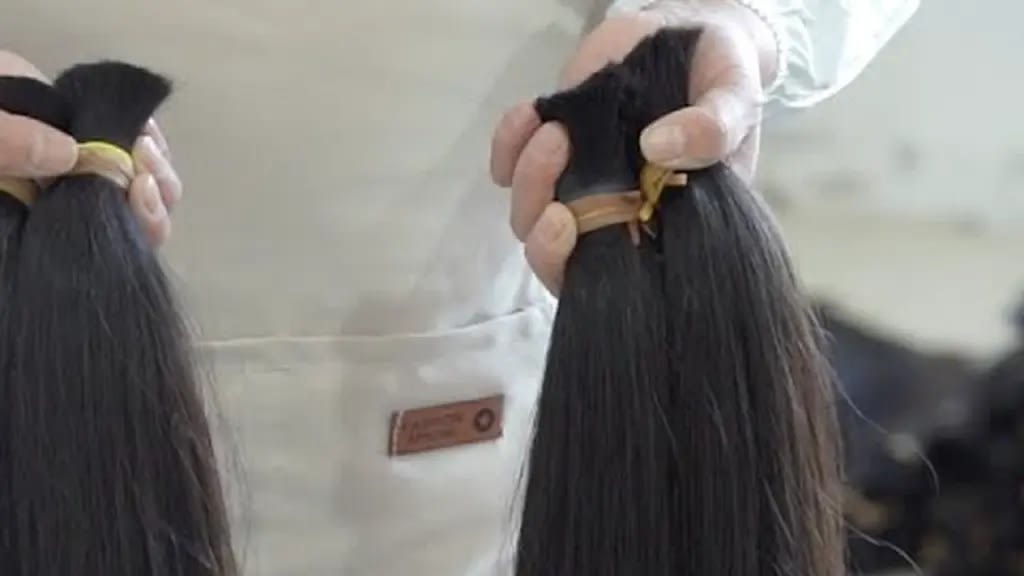
Use the raw hair sorting and grading area to check traceability, rather than just taking their word for where it came from. During Asia Sourcing, ask the host to show labeled lots. Pick a bundle from one of those lots right on camera. The label needs to connect that bundle straight to the factory's internal batch record and the exact hair type for your order.
Next, ask for a close-up of the bundle's root-to-tip alignment. The team can show how they check cuticle direction by handling and combing the same bundle both ways. Sure, this doesn't totally prove the hair source on its own. But it does show if the Hair System Manufacturer actually separates and grades hair properly before production starts.
Quality Control Bench and Final Inspection
Have the QC team inspect one finished hair system from your order before they box it up. A solid Quality Management System lets the inspector compare the unit directly against production requirements. They'll look at the base for damage, check hair placement and direction, and inspect the front edge up close on camera.
Ask them what happens when a unit fails inspection. Who writes down the issue? Do they repair it or remake it entirely? How do they check the final result? Watch out for red flags like a rushed wide shot, skipping the underside or hairline, or an inspector who can't explain the rejection process. These quick checks help you judge quality before you tie up money in salon inventory.
How to Instruct Factory Staff to Perform Live Proxy Tests
When you're on a live factory tour, the person on camera can basically act as your hands. You just need to ask for one test at a time. Have a Newtimes Hair worker grab a finished unit and bend the base. Then, get them to run their fingers across the front edge and comb the hair both ways. Doing this quickly spots stiff bases, shedding, tangles, or uneven ventilation.
Keep your directions simple. Tell them things like, "show the underside," "gently pull in three spots," and "hold up the hairline against a light background." Watch out for major red flags. This includes swapped units, the camera cutting away, or a worker dodging the exact spot you asked to see. After all, a factory's workflow and capacity are what really dictate if the quality stays consistent and if those lead times are actually realistic.
How to Accurately Assess Production Capacity and Lead Times
Production capacity only really matters when a hair system manufacturer can prove their current output right next to their open workload. A polished sample doesn't tell you much about whether your salon can actually reorder on schedule.
Remote auditing works best when you look at production records, workshop activity, and staffing, then compare them to the lead time promised for your order. That turns a simple supplier claim into a practical sourcing decision.
Evaluating Monthly Production Volume and Backlog
Ask for the total completed units from the last three months, the booked orders for the current month, and the backlog organized by due date. Then, find out how much of that covers stock hair systems versus custom work. A single combined number can easily hide a completely backed-up custom queue.
Ask for a live look at the production floor, order boards, or anonymous work tickets, along with packed boxes waiting to ship. Match those visuals up with the numbers they gave you. Whether you're dealing with Newtimes Hair or another supplier, lay out your expected monthly volume and reorder pattern. Then, just ask exactly where those units would fit into their current schedule.
Verifying Workforce Scale and Turnaround Timelines
The number of workers only matters when it's directly tied to the work each team actually does. Ask how many active workers they have in ventilation, base prep, quality inspection, and packing. You'll also want to know if they bring in temp staff during the busy seasons.
While on an Asia Sourcing call, ask for a live video tour of each work area. Find out exactly how they separate stock-unit orders from custom toupee orders. Custom units usually take more steps and approvals, so don't accept a single blanket timeline. Make the factory confirm the promised dispatch date in writing, then stack that up against the visible queue and the staff on hand.
What Essential Quality Documents Should You Request Before Ordering?
Make sure to ask for controlled documents showing exactly how the factory checks every hair system before it gets packed. A solid paperwork set includes their current quality-control steps, inspection checklists, material specs, and logs of any failed checks or fixes. These documents prove they actually rely on a repeatable process, rather than just giving the box a quick glance before shipping. Simple.
Product-specific records are just as big of a deal. You'll want to ask for the order sheet, base and hair details, inspection results, packing logs, and shipping confirmations for your specific units. Newtimes Hair can easily hand over this kind of paperwork whenever you ask. It helps your salon track exactly what got approved and sent out.
How Does a Multi-Batch Pilot Order Validate Your Audit Findings?
A Multi-Batch Pilot Order lets your salon test if a remote audit actually matches real-world production. Instead of just looking at a single sample, you get to compare consistency, production capacity, and lead times across a few different runs.
Have Newtimes Hair write down the agreed specs and the production timing for each batch. See if the base, hair, and finish standards stay the same across every run, and check if those promised lead times actually hold up. If a batch falls short? Ask for a Corrective Action to spot the problem, fix it, and show proof in the next round. That's how you turn regular audit notes into solid purchasing evidence.
What Are the Top Red Flags to Watch for During a Remote Audit?
A Remote Factory Audit can spot warning signs before you ever place a salon order. If a supplier keeps the camera glued to finished hair systems, dodges live views of active work areas, or constantly reschedules the visit time, they might be controlling exactly what you see.
Watch out for rushed camera pans near the hair ventilation, base cutting, or packing stations. Vague answers about daily output and lead times are a major issue, too. This is especially true when the capacity they claim doesn't match the staff or equipment shown on screen. Newtimes Hair should be able to discuss its production flow openly.
These red flags don't automatically mean poor quality. But they do put a hard limit on what a remote review can actually prove.
What Are the Limitations of Remote Audits (And How Do You Overcome Them)?
Remote audits can't tell you how a hair system actually feels in your hand, if it has a weird chemical smell, or what the factory floor looks like right outside the camera's view. They also can't physically check the finished goods before shipping. Because of that, picking between on-site and remote isn't just an either-or choice for salon owners.
Use a remote review to check out production capacity, workflow, and promised lead times. After that, ask for samples and set up a Third-Party Inspection to get eyes on the physical products before placing a massive order. Newtimes Hair fully supports this mixed approach by giving you complete, open visibility into production.
How Newtimes Hair Facilitates Transparent Remote Audits
A Remote Factory Audit with Newtimes Hair lets salon owners see production right as it happens, rather than just relying on polished sales photos. Live video shows active work areas, the real scale of current output, and how orders actually move through the workflow.
For a Hair System Manufacturer, transparency matters most when you're planning client orders. Ask the team to walk through the production flow, explain how they schedule capacity, and talk about the lead time for your order. Record the call. Then, compare the answers with your sample and inspection plan, and keep the review focused on facts you can verify. That's it.
Frequently Asked Questions About Remote Hair System Audits
How do you conduct a remote factory audit?
Start with a live HD rear-camera tour. Verify legal ownership, walk production, match staffing to live workload, then inspect a finished unit on camera.
What should be included in a remote audit checklist?
+
Ownership records, capacity, lead times, workflow, QMS documents, labeled hair lots, QC checks, and order-update procedures. Demand live proof, not polished slides.
Can you verify a hair system manufacturer without visiting the factory?
Yes, but don't blindly trust one video call. Verify ownership, inspect live operations, then place multi-batch pilot orders to test whether quality and lead times hold.
About the Creator
Leo
Passionate men's hairstylist with a keen eye for detail and a knack for creating on-trend looks. Dedicated to delivering hair restoration education that enhances individual style.
Enjoyed the story? Support the Creator.
Subscribe for free to receive all their stories in your feed.
Comments
There are no comments for this story
Be the first to respond and start the conversation.