
From Antique Lamps to Modern LEDs: How Family-Owned Lighting Businesses Preserve Craftsmanship and Embrace Innovation
The LED Lighting

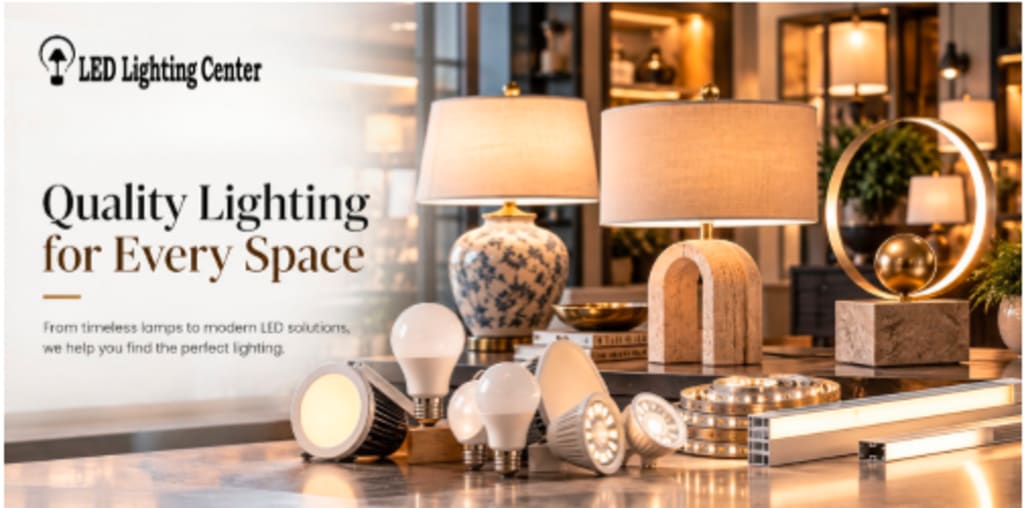
Every lamp has a purpose, but some lamps carry a story that goes far beyond illumination.
Imagine an antique table lamp resting beside a sofa in a traditional American home. Its decorative base has been part of the family for decades, its lampshade has gradually faded, and its electrical components have begun showing signs of age. Although replacing it with a modern fixture might seem convenient, doing so would mean losing a piece of the home's history.
Now consider a completely different situation. A restaurant owner wants to create a welcoming atmosphere while reducing electricity costs. The existing lighting works, but it consumes too much energy and no longer complements the restaurant's updated interior.
Elsewhere, a homeowner is renovating a living room and trying to decide whether to purchase new decorative lighting, restore an older floor lamp, or upgrade existing fixtures with modern LED technology.
These situations reveal something interesting about the lighting industry: choosing the right lighting is not always about purchasing something new.
Sometimes, it involves preserving the past. Other times, it means adapting to new technology. And occasionally, it requires combining traditional craftsmanship with contemporary design.
Across the United States, family-owned lighting businesses continue to play an important role in connecting these different needs. Their work reflects a broader story about changing technology, evolving interior design preferences, and the continued importance of practical lighting knowledge.
The Changing Role of Traditional Lighting Stores in America
There was a time when visiting a local lighting store was a common part of maintaining a home.
Homeowners brought in damaged lamps, searched for replacement shades, compared decorative fixtures, and asked questions about bulbs and electrical components.
As large retailers and online marketplaces expanded, the way Americans purchased lighting changed considerably.
Consumers gained access to thousands of products, competitive pricing, and convenient home delivery. Modern LED technology also introduced new lighting categories that were not widely available in earlier decades.
However, not every lighting requirement can be addressed through an online product listing.
A vintage lamp may need a replacement socket that matches its construction. A decorative lampshade may require a particular fitter. A commercial property may need compatible LED drivers, specific beam angles, or lighting suitable for its operating environment.
These situations often involve technical details that are difficult to evaluate from photographs alone.
This is where specialized lighting knowledge remains relevant.
Traditional lighting stores have increasingly combined familiar services, such as lamp repair and restoration, with modern product categories, including LED bulbs, strip lighting, recessed fixtures, and commercial lighting solutions.
Rather than disappearing entirely, the role of the local lighting specialist has evolved.
Why Family-Owned Lighting Businesses Still Matter
Family-owned businesses occupy an important place in the American retail and service landscape.
Unlike businesses that focus exclusively on high-volume product sales, smaller specialist operations may develop their services around particular customer needs, local relationships, and practical expertise.
In the lighting industry, those needs can be unusually diverse.
One customer might need a simple lamp switch replaced. Another might own an elaborate antique fixture with unusual electrical components. A third might be designing a lighting layout for a restaurant or commercial office.
Each situation requires a different approach.
The value of a specialist lighting business often lies in understanding these differences.
Knowledge That Goes Beyond Product Specifications
Modern lighting products come with technical specifications covering wattage, brightness, color temperature, voltage, dimming compatibility, and other performance characteristics.
While these details are important, they do not always explain whether a product will work properly in a particular fixture or environment.
For example, replacing an incandescent bulb with an LED bulb may seem straightforward.
However, the replacement must be compatible with the socket, electrical supply, fixture dimensions, dimmer, and any applicable enclosure restrictions.
Similarly, installing a replacement lampshade requires understanding more than its height and diameter.
The fitter, harp, finial, bulb clearance, and proportions of the lamp all affect the final result.
Experienced lighting specialists can help customers understand these practical considerations before selecting products or approving repairs.
Why Personal Attention Matters
Lighting is both functional and decorative.
A technically suitable fixture may still be inappropriate for a particular interior. An attractive lampshade may not fit the lamp correctly. A restoration that improves appearance could unintentionally alter the character of a valuable antique.
Taking time to understand how a customer intends to use a fixture can influence the recommendation.
That combination of technical knowledge and individual attention remains one of the distinguishing characteristics of specialized lighting services.
Every Antique Lamp Has a Story Worth Preserving
Among the most interesting aspects of traditional lighting craftsmanship is the restoration of antique and vintage lamps.
An older lamp may represent a particular design period, incorporate unusual materials, or carry sentimental value that cannot easily be measured in dollars.
Consider a brass floor lamp inherited from a grandparent.
Over time, its original wiring may deteriorate, its socket may become unreliable, and its shade may become discolored.
To someone unfamiliar with antique lighting, the fixture might appear to be beyond practical use.
But electrical deterioration does not necessarily mean the entire lamp must be discarded.
Professional antique lamp restoration can sometimes preserve the original design while addressing damaged electrical and mechanical components.
The feasibility of restoration depends on the lamp's construction, condition, and the availability of suitable parts.
Common Problems Found in Antique and Vintage Lamps
Older lighting fixtures can develop several problems through prolonged use, material aging, and previous repairs.
Common issues include:
Damaged electrical cords: Insulation may become brittle, cracked, or worn.
Faulty sockets: Electrical contacts and socket components may deteriorate.
Broken switches: Rotary, push-through, and other switches can become unreliable.
Loose structural components: Lamp bases, stems, and internal fasteners may require attention.
Missing hardware: Finials, harps, and decorative fittings may be lost or damaged.
Aging finishes: Metal, ceramic, glass, and painted surfaces may show discoloration or wear.
Incorrect replacement shades: A poorly fitted shade can affect appearance and bulb clearance.
Not every issue requires comprehensive restoration.
A lamp with a damaged switch may need a limited repair, while a fixture with deteriorated wiring and structural problems may require a more extensive assessment.
Electrical damage should always be treated seriously. Lamps with exposed wiring, damaged cords, burning odors, or other warning signs should be unplugged and evaluated by a qualified professional before further use.
Restoration Versus Replacement
Deciding whether to restore an antique lamp involves several considerations.
Sentimental value is often the most important factor. A family heirloom may be worth preserving even when restoration costs exceed the price of a new lamp.
Craftsmanship and design also matter. Some vintage fixtures feature materials, construction techniques, or decorative details that are difficult to reproduce.
Electrical condition must be evaluated to determine whether the fixture can be made suitable for continued use.
Replacement-part availability can influence both cost and feasibility.
Finally, collectible value may affect the restoration approach. Aggressive polishing, refinishing, or replacement of original components can sometimes reduce the value of an antique.
For particularly valuable pieces, conservation advice may be appropriate before irreversible changes are made.
The goal of thoughtful restoration is not always to make something look new. Sometimes, preserving its original character is the most important outcome.
The Small Details That Can Change an Entire Lamp
Not every lighting project involves electrical repairs.
Sometimes, an existing lamp functions perfectly but no longer complements the room.
A ceramic lamp that looked appropriate in a traditional living room may seem out of place after a contemporary renovation. A beautiful vintage base may be paired with an oversized shade. A floor lamp may simply need a different color or material to fit its surroundings.
In these situations, replacing the lampshade can significantly change the fixture's appearance.
Understanding Lampshade Shapes
Different lampshade shapes create different visual effects.
Drum lamp shades have a cylindrical appearance and are often associated with contemporary or minimalist interiors.
Empire lamp shades feature a narrower top and wider bottom, giving them a classic tapered shape that works with many traditional fixtures.
Bell lamp shades have curved sides and are frequently used with decorative or antique-style bases.
Square and rectangular lamp shades can complement geometric lamp bases and work well in spaces where a more structured silhouette is desired.
Oval lamp shades may provide a useful alternative when a lamp is positioned near a wall or on narrow furniture.
The best choice depends on the lamp's proportions, the room's design, and the desired lighting effect.
Why Lampshade Fittings Matter
Finding the right lampshade involves more than choosing an attractive shape.
The fitter determines how the shade attaches to the lamp.
A spider fitter typically rests on a harp and is held in place with a finial. Clip-on shades attach directly to compatible bulbs, while Uno fitters connect around suitable lamp sockets.
These mounting systems are not automatically interchangeable.
A shade that appears to be the right size may still sit too high, too low, or fail to attach properly if the fitting is incorrect.
This is one reason professional lampshade fitting remains useful, particularly for antique and unusually constructed lamps.
Lamp Finials: Small Components with a Lasting Design Impact
Decorative lamp finials may appear insignificant compared with the lamp base or shade.
However, they serve both functional and aesthetic purposes.
On many traditional lamps, the finial secures the lampshade to the harp.
Its shape, finish, and proportions can also influence the overall appearance of the fixture.
Finials are available in numerous materials and decorative styles, including metal, glass, crystal, ceramic, and other finishes.
A traditional brass lamp might look more cohesive with a classic metal finial, while a contemporary lamp could benefit from a simpler geometric design.
Replacement hardware also plays a role in restoration projects.
Harps, sockets, switches, cords, washers, and other components must be selected for compatibility rather than appearance alone.
Even small replacement parts can affect how securely and safely a lamp functions.
When Ordinary Objects Become Custom Lighting
One of the more creative developments in decorative lighting is transforming existing objects into functional lamps.
A vase purchased during a memorable trip may have an appealing shape and finish.
A ceramic vessel inherited from a family member may complement a room's design.
A decorative object might have suitable dimensions for a table lamp but lack the necessary electrical components.
With appropriate assessment, some of these objects can be converted into custom lighting.
How Custom Lamp Transformations Work
The process typically begins by evaluating the object's material, dimensions, stability, and construction.
The specialist must determine whether the object can safely support a lighting assembly.
If conversion is appropriate, the project may require a suitable socket, cord, mounting hardware, base, shade, and other compatible components.
The finished lamp should be structurally stable and constructed with electrical safety in mind.
Not every decorative object is suitable for conversion. Fragile, unstable, or unusually constructed pieces may present limitations.
Nevertheless, custom lamp transformations illustrate how lighting can become deeply personal.
Instead of purchasing a mass-produced product, a homeowner may be able to incorporate an existing meaningful object into the home's design.
How LED Technology Changed the American Lighting Industry
While traditional lamp repair focuses on preserving existing fixtures, modern LED lighting represents another important shift in the industry.
For decades, incandescent and fluorescent products were widely used throughout American homes and businesses.
LED technology introduced new possibilities for reducing energy consumption, improving lighting control, and designing fixtures for different applications.
Today, LEDs are common in residential lighting, commercial buildings, retail spaces, hospitality environments, and outdoor applications.
Why Energy Efficiency Matters
LED lighting products generally consume less electricity than comparable incandescent lighting while delivering similar levels of brightness.
This can reduce energy consumption, particularly in spaces where lights operate for extended periods.
Commercial properties may experience significant cumulative savings depending on their existing lighting system, operating hours, electricity rates, and replacement products.
However, savings are not identical for every project.
A proper lighting evaluation should consider the existing installation, target illumination levels, product efficiency, maintenance needs, and total upgrade costs.
Understanding Brightness and Color Temperature
When selecting modern LED lighting, wattage alone does not indicate brightness.
Lumens describe the amount of visible light produced by a source, while watts measure electrical power consumption.
Color temperature, measured in Kelvin, influences how warm or cool the light appears.
Lower color temperatures generally produce warmer-looking light, while higher values produce cooler-looking light.
For example, a living room may benefit from soft, warm illumination, while certain workspaces may require a different lighting appearance and higher illumination levels.
The appropriate choice depends on the activity, interior finishes, and personal preferences.
Choosing Compatible LED Products
An LED bulb or fixture should not be selected solely because it appears energy-efficient.
Compatibility remains essential.
Important considerations include electrical ratings, socket types, dimmer compatibility, fixture dimensions, ventilation, driver requirements, and installation conditions.
For older lamps, a modern LED bulb does not eliminate the need to inspect damaged wiring or other electrical components.
Traditional repair knowledge and contemporary LED expertise therefore remain closely connected.
LED Lighting Beyond Residential Spaces
Modern lighting requirements extend well beyond homes.
Restaurants, offices, stores, hotels, commercial properties, and outdoor environments all have different lighting needs.
A restaurant may prioritize atmosphere and comfortable visibility.
A retail store may use carefully positioned lighting to highlight merchandise and improve the shopping experience.
An office may need consistent illumination that supports visual tasks without excessive glare.
Outdoor lighting must account for environmental exposure, fixture placement, and suitable illumination.
Common LED Lighting Applications
LED bulbs are commonly used in compatible decorative, residential, and commercial fixtures.
LED strip lighting is useful for accent illumination, shelving, cabinets, displays, and selected architectural applications.
LED panel lights can provide broad, relatively uniform illumination in offices and commercial spaces.
Track lighting offers directional flexibility for artwork, retail displays, and interior accents.
Landscape lighting can illuminate paths, architectural features, and selected outdoor areas.
Picture lights provide focused illumination for artwork and decorative displays.
LED drivers and power supplies support compatible lighting systems and must be selected according to their electrical requirements.
Each product category serves a different purpose, making lighting selection an important part of designing functional and attractive spaces.
Why Lighting Consultations Still Matter in the Digital Age
Online shopping has made it easier than ever to compare lighting products.
A homeowner can browse thousands of lampshades, LED bulbs, and decorative fixtures without leaving home.
However, having more options does not always make choosing the right product easier.
A photograph cannot always demonstrate how a lampshade will fit an existing lamp.
Product descriptions may not fully explain compatibility with older electrical components.
And selecting commercial lighting involves more than comparing prices and brightness claims.
These challenges help explain why lighting consultations continue to have value.
Residential Lighting Considerations
Homeowners often need to balance aesthetics with practical lighting requirements.
A kitchen may need task lighting over work surfaces and softer ambient illumination elsewhere.
A bedroom may require a combination of general lighting, bedside lighting, and decorative accents.
A living room may benefit from multiple light sources rather than one overly bright fixture.
Layering lighting can make a space more adaptable to different activities.
Commercial Lighting Considerations
Businesses face additional factors, including operating hours, maintenance requirements, energy consumption, visual comfort, and installation costs.
A lighting consultation may help identify suitable product categories, potential compatibility issues, and areas requiring specialist installation or evaluation.
For complex projects, professional lighting design and qualified electrical installation may be necessary.
The overall objective is to select lighting that supports the way a space is actually used.
The Role of Local Lighting Specialists in Metro Atlanta
The importance of specialized lighting services is particularly visible in metropolitan areas where traditional homes, renovated properties, modern residences, and commercial buildings exist alongside one another.
Metro Atlanta provides a useful example.
Communities such as Sandy Springs, Buckhead, Roswell, Dunwoody, Alpharetta, Brookhaven, and Marietta include a wide variety of residential and commercial lighting environments.
A traditional home may contain antique table lamps or decorative floor lamps that require careful repair.
A newly renovated property may need compatible modern fixtures.
A restaurant or retail location may be exploring energy-efficient lighting options.
These differing needs create continued demand for services such as lamp rewiring, antique lighting repair, lampshade fitting, custom lighting, and LED product guidance.
Local lighting showrooms can provide opportunities to compare products in person and assess fittings, finishes, and fixture proportions.
For repairs, physical inspection may also help identify issues that are difficult to diagnose through photographs or online descriptions.
The value of local expertise lies less in the number of available products and more in whether the selected solution suits the customer's particular circumstances.
What Homeowners Should Consider Before Repairing or Replacing Lighting
When a lighting fixture stops working or no longer complements a space, replacement may seem like the simplest solution.
However, a few practical questions can help determine whether repair, restoration, or replacement is more appropriate.
1. Is the Problem Electrical or Decorative?
A broken switch, damaged socket, or deteriorated cord may require repair.
An outdated shade or mismatched finial may only require a compatible accessory.
Identifying the issue helps avoid unnecessary replacement.
2. Does the Fixture Have Sentimental or Collectible Value?
Family heirlooms and unusual antique fixtures may deserve additional consideration before alterations are made.
Preserving original finishes and components can be important for historically significant pieces.
3. Are Suitable Replacement Parts Available?
Older lamps sometimes use uncommon components.
Replacement hardware should be compatible with the fixture's construction and electrical requirements.
4. Would Modern LED Lighting Improve the Result?
For compatible fixtures, an LED upgrade may reduce operating energy consumption.
However, electrical safety and compatibility should always be evaluated first.
5. Is Professional Assistance Necessary?
Complex wiring problems, damaged electrical components, unusual antique fixtures, and custom conversions can require specialist knowledge.
Professional evaluation may help prevent unsafe modifications and unsuitable purchases.
Preserving Traditional Craftsmanship in a Technology-Driven Industry
The evolution of lighting reveals an interesting contrast.
Modern technology continues to change how buildings are illuminated, but traditional craftsmanship remains relevant because people still own, appreciate, and use older fixtures.
A vintage lamp may need electrical attention without losing its original appearance.
An antique shade may need replacing with something that respects the lamp's historical style.
A decorative object may find a second purpose as a functional light.
Meanwhile, an office may benefit from efficient LED panels, and a restaurant may achieve a different atmosphere through carefully designed lighting.
These situations are not opposites.
They demonstrate how preserving existing objects and adopting modern technology can be complementary approaches.
The future of lighting is unlikely to depend exclusively on either traditional craftsmanship or technological innovation.
Instead, it will continue to involve understanding when each approach is most appropriate.
How Local Family-Owned Businesses Connect the Past and Future of Lighting
The continued presence of specialized lighting businesses demonstrates that there is still a place for practical expertise in an increasingly digital marketplace.
For many customers, the most useful solution is not necessarily the newest or most expensive product.
It may be a repaired lamp, a properly fitted shade, a compatible electrical component, or an efficient LED fixture selected for a particular application.
Family-owned lighting businesses can play a role in meeting these needs by combining product knowledge, repair services, and familiarity with their local markets.
In Sandy Springs, Georgia, The LED Lighting Center is one example of a family-owned business that brings traditional lamp repair and restoration together with replacement lampshades, decorative accessories, custom lighting, and modern LED products.
Its range of services reflects a broader development within the American lighting industry: the growing importance of businesses that understand both the value of older fixtures and the practical advantages of contemporary lighting technology.
Final Thoughts: Good Lighting Is About More Than Brightness
Lighting shapes how people experience their homes, workplaces, and shared spaces.
It affects visibility, atmosphere, comfort, energy use, and interior design.
Yet some of the most meaningful lighting decisions involve the fixtures people already own.
An antique lamp may deserve another generation of use. A different shade may transform an existing table lamp. A decorative object may become a personalized lighting feature. And a carefully selected LED fixture may help a business reduce electricity consumption without compromising its lighting needs.
The lesson is simple: good lighting is not always about replacing the old with the new. It is about understanding what is worth preserving, what needs improving, and which technology best serves the space.
As lighting continues to evolve, the combination of traditional craftsmanship, practical repair knowledge, thoughtful design, and modern LED innovation will remain an important part of how American homes and businesses are illuminated.
About the Creator
Gulshan
SEO Services, Guest Post & Content Writter.
Enjoyed the story? Support the Creator.
Subscribe for free to receive all their stories in your feed.
Comments
There are no comments for this story
Be the first to respond and start the conversation.