
At what hair loss stage should I consider a hair system?
When to Get a Hair System: Norwood Scale Guide

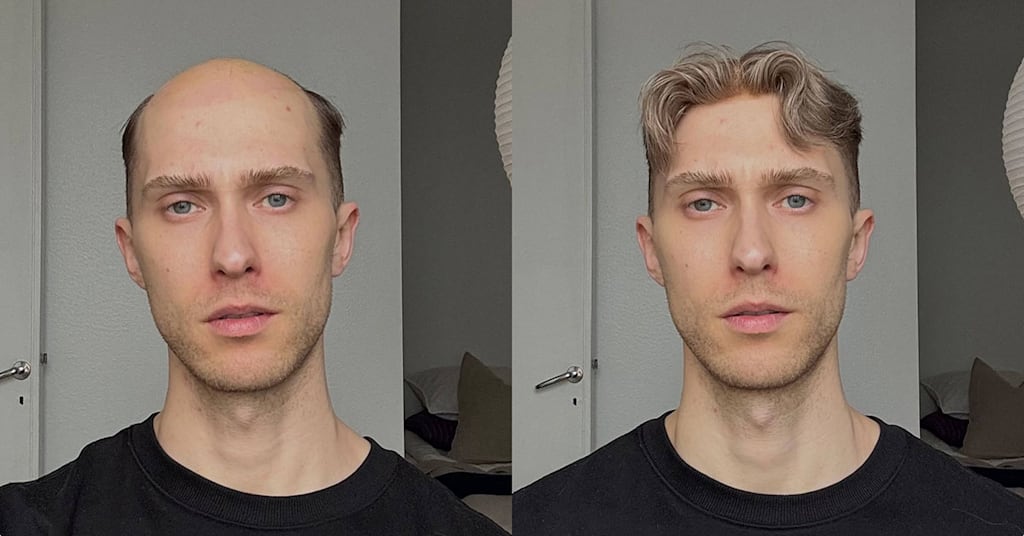
At what hair loss stage should I consider a hair system?
Choosing non-surgical hair replacement really comes down to your specific stage of hair loss. Waiting too long can take a real psychological toll, slowly chipping away at your everyday confidence. Finding the right point to start with a Lordhair system can change that. To understand the "when," you need to look at the standard way hair loss progression is measured: the Norwood Scale.
Key Takeaways
- Treat early hair loss (Norwood 1-3) with preventative medications rather than a hair system.
- Adopt a hair system at Norwood 3-Vertex or 4; transitioning before severe baldness makes the upgrade look natural to others.
- Choose hair systems over transplants for Norwood 5-7, as depleted donor areas make surgery ineffective.
- Select a base material—like breathable lace or secure polyurethane—that matches your daily activity level and sweat rate.
- Plan for replacement cycles every 1-4 months, knowing the process is completely reversible without scalp damage.
Understanding the Norwood Scale: The Roadmap of Male Pattern Baldness
Male Pattern Baldness (MPB) doesn't show up overnight. It follows a pretty predictable pattern. Dermatologists track this progression with the Norwood Scale, a scientific classification system that helps you see exactly where your hair loss stands.
Pinpointing your current stage is key for self-diagnosis. If you don't know where you are on the scale, you might wait too long to act. That delay often hits hard psychologically, wearing down your confidence as thinning becomes tougher to hide. You need a clear framework to make the right move at the right time. Once you know your stage, you can use the "Decision Traffic Light" system to weigh your options.
Norwood Stages 1 to 3: The "Green Light" for Prevention
At this stage, you're dealing with small changes. You might notice slight recession at the temples or early thinning. This is the "Green Light" phase.
A full Lordhair system usually isn't necessary yet. Instead, your focus should be on prevention and holding onto the hair you still have. Scalp miniaturization is just starting, which means your follicles are shrinking but not gone.
Medical treatments and topicals work best in these early stages. They can slow shedding and sometimes thicken what’s already there. But hair loss rarely stops here for good. Eventually, the recession moves further back, pushing you into the more critical "Yellow Light" phase where choices get trickier.
Norwood Stages 3-Vertex to 4: The "Yellow Light" Transition
This is the turning point. Norwood Stages 3-Vertex to 4 mark the moment when receding hairlines deepen and crown balding becomes obvious to others. The psychological impact tends to hit hardest here.
We call this the "Golden Entry Point" for non-surgical replacement. Your hair loss is now visible, which makes it the most strategic time to start wearing a Lordhair system. Why? Because making the switch now looks natural to friends and coworkers. They already see your hair changing, so the upgrade fits smoothly into your everyday life.
Waiting until advanced baldness sets in makes a sudden full head of hair look much more noticeable. Stepping in during the "Yellow Light" phase lets you rebuild your confidence right away, without the stress of trying to hide more severe bald spots.
Why Norwood Stage 4 is the Strategic "Sweet Spot" for Lordhair Units
At Norwood Stage 4, you still have enough of your own hair for a subtle upgrade. A Lordhair system can match your current density, so everything blends in naturally. If you wait until the "Red Light" stage of severe baldness, systems become your only real option. And that delay builds a much bigger mental hurdle.
The Psychological Advantage of Early Adoption
Holding off slowly chips away at your confidence. Watching your crown thin out and empty over time hits your mental health hard.
Acting early removes the stress of a sudden, dramatic change. Coworkers just think you got a really good haircut.
Waiting makes the switch tougher to explain. It also takes you past the point where other medical treatments have any real chance of working.
Norwood Stages 5 to 7: The "Red Light" and the Only Solution
Reaching Norwood Stages 5 to 7 means the hair loss is severe. Pills can't bring dead follicles back at this point. Surgery doesn't do much either once things get this advanced. So, modern toupees and hair units end up being the only realistic fix. Why do medical options stop working? It comes down to simple scalp math.
When the Donor Area is Depleted: Why Surgery Isn't Always an Option
Hair transplant surgery moves healthy hair from one spot to another. But by Norwood 6, the donor area is already used up.
Doctors may run a scalp biopsy, but the results usually don't support going ahead with FUE or FUT. Trying to spread a small amount of hair over a large bald crown just leaves you with a thin, uneven look.
A Lordhair system gets around this issue. Instead of a patchy surgical result, you get full density right away.
Comparing the "Big Three": Medication vs. Surgery vs. Hair Systems
Waiting too long to deal with hair loss can really wear on you mentally. Choosing between a hair regrowth treatment, surgery, or non-surgical hair replacement can feel like a lot. The right option depends entirely on your current stage. So let’s lay out which path actually makes sense.
The Decision-Making Flowchart: Which Path is Yours?
Are you dealing with temporary hair loss? Medication is usually the safest place to start.
If you’ve got mild diffuse thinning but a strong donor area, a transplant could be a solid option.
But if you’re a Norwood 3 or higher and want guaranteed density right now, a Lordhair system wins. No need to overthink it. Once you know your path, you can move straight into picking the right base material for your lifestyle.
Choosing Your First Lordhair System: Base Materials for Your Stage
Picking the right Lordhair base really comes down to how active you are day to day. Polyurethane/Skin bases hold firmly and give a natural look. Lace offers the most airflow if you sweat a lot. Monofilament is known for strong durability. Before you decide, make sure a system actually makes more sense than surgery for your stage.
At What Stage of the Norwood Scale is a Hair System Better Than a Transplant?
Procedures like FUE and FUT tend to work only at Norwood 2 or 3. Once you reach Norwood 4, the numbers start working against surgery.
A system comes with predictable ongoing hair replacement costs, while transplant expenses can climb quickly. You also avoid the year-long recovery process. Systems stand out for how fast they deliver results—you get full density right away. Next, let’s look at the attachment methods that keep everything in place.
Lifestyle Compatibility: Can Your Hair System Keep Up?
Putting off dealing with hair loss often hits your confidence harder than the thinning itself. A Lordhair system won’t hold you back at the gym, while traveling, or in the pool.
The key is in modern attachment methods. Medical-grade tapes and waterproof liquid bonding lock the base right onto your scalp. Your hair stays in place through heavy sweating and swimming. To make this work smoothly, you need a clean, natural-looking front edge.
Maintaining an Undetectable Hairline at Any Stage
An undetectable hairline can completely change how you feel in public. You get there by matching the unit’s density closely to your natural hair.
Trimming excess base material right up to the knots helps avoid visible edges. Daily brushing keeps the hairline looking sharp and natural. Over time, though, adhesive buildup and regular washing wear down the base, so you’ll need to plan your replacement cycles.
The Maintenance Reality: Longevity and Replacement Cycles
Hair systems aren't permanent. How long they last really comes down to the base and how you take care of them day to day. A standard Lordhair unit usually holds up for about three to four months. Thinner bases need to be replaced more often, typically every four to eight weeks. The ongoing cost can add up and make you think twice. So what happens if you decide to stop?
The "Exit Strategy": What if You Want to Stop?
You're never locked in. If you change your mind, removing a hair system is completely reversible. Just apply a solvent to loosen the adhesive and wash your head.
Your scalp stays perfectly healthy. From there, you can go for a shaved look or start medical treatments again. You're always in control of your image.
Frequently Asked Questions About Hair Loss Stages
What is the most effective non-surgical treatment for hair regrowth?
Finasteride and oral Minoxidil. Period. Hit it at Norwood 1-3. One blocks the hormone, the other forces blood to the follicle. Skip the snake oil shampoos.
Can rapid weight loss drugs cause permanent hair thinning?
Usually temporary. Rapid calorie drops trigger telogen effluvium. Your body panics and dumps hair. Expect regrowth in 6 months. Unless you have the baldness gene. Then it just fast-tracks the inevitable.
Is a hair system a viable option for diffuse thinning across the entire scalp?
Yes. But standard toppers won't work. They need dense sides to blend. Diffuse thinners need a full cap system. Covers the whole head. Lordhair makes them.
Can high cortisol and stress cause hair loss?
100%. Cortisol literally poisons the follicle cycle. It shoves hair straight into the shedding phase. The fallout hits exactly 3 months after the stress peak. Biology doesn't care about your deadlines.
About the Creator
Leo
Passionate men's hairstylist with a keen eye for detail and a knack for creating on-trend looks. Dedicated to delivering hair restoration education that enhances individual style.
Enjoyed the story? Support the Creator.
Subscribe for free to receive all their stories in your feed.
Comments
There are no comments for this story
Be the first to respond and start the conversation.