
When a Portrait Finds Its Voice: A Practical Guide to Talking-Photo Storytelling
Guide to Talking-Photo Storytelling

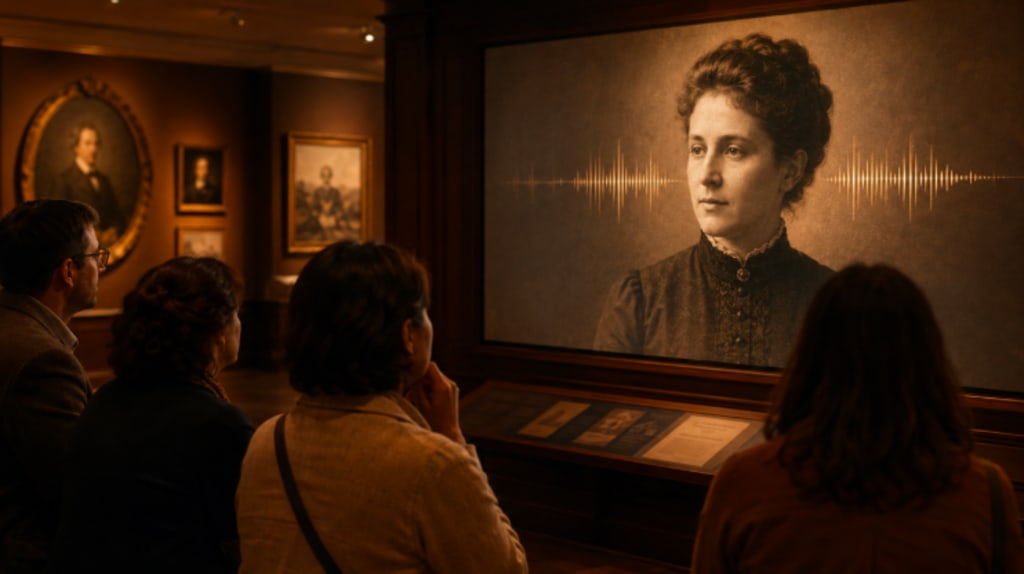
When a Portrait Finds Its Voice: A Practical Guide to Talking-Photo Storytelling
Archives, museums, schools, and family historians hold thousands of portraits with meaningful stories behind them. A photograph can preserve a face and a moment, but audiences may still need help understanding why that moment matters. Talking-photo technology offers a new format: a still portrait can introduce a person, narrate a short memory, or guide viewers through historical context.
The most successful examples do not pretend that the photograph is a newly discovered recording. They use animation transparently and respectfully, with a clear script, appropriate voice, and careful limits on what the subject appears to say.
Choose a portrait that can animate clearly
Start with a high-quality image where the face is visible and not covered by hair, hands, or heavy shadows. A front-facing or slightly angled portrait is generally easier to animate than a strong profile. Restore dust and major damage if necessary, but avoid changing distinctive facial features in the process.
For group photographs, crop one speaker into a separate frame or select a primary subject. A crowded image makes it harder for viewers to understand who is speaking, even if the animation itself is technically successful.
Write for the ear, not the display case
Museum labels and archive notes are usually written to be read. Spoken narration needs shorter sentences, a natural rhythm, and a clear point of view. A 20-second script should communicate one idea rather than compress an entire biography.
A useful structure is:
Identity: who the person is.
Moment: what was happening around the photograph.
Meaning: why the audience should care.
For example, an animated portrait might say, “My name is Lillian Chen. This photograph was taken outside our family shop in 1948. The store became a meeting place for neighbors rebuilding their lives after the war.” The language is direct and easy to follow.
An AI talking photo generator can turn a portrait, character, pet, or avatar into a talking video using typed text, uploaded audio, or a recorded voice. It can also add subtitles and guide facial expression or subtle head movement, which makes it useful for short interpretive pieces.
Be explicit about authorship
Historical people should not be made to deliver invented first-person claims without disclosure. When authentic letters, diaries, interviews, or oral histories exist, base the script on those sources and identify any adaptation. If no first-person material exists, use third-person narration or clearly label the segment as a dramatized interpretation.
For living people—or recently deceased family members—obtain permission from the subject or rights holder when appropriate. Do not clone a recognizable person’s voice without consent. A neutral narrator can preserve emotional impact without implying authenticity that the project cannot support.
Direct expression with restraint
Subtle movement usually works best for archival storytelling. Gentle blinking, a small nod, and calm speech preserve the dignity of the original portrait. Exaggerated smiles, large gestures, or rapid head movement can make a historical image feel comic or unsettling.
Match the emotional direction to the subject matter. A celebratory community story may support a warm expression, while testimony about hardship calls for stillness and restraint. The animation should serve the story rather than advertise the effect.
Design for accessibility and context
Enable subtitles, check names and dates carefully, and ensure that the text remains readable on the intended display. If the video will appear in a gallery, account for ambient noise and viewing distance. Online, provide a brief description explaining that the portrait has been animated with AI.
A wider AI video generator can help create supporting establishing shots, atmospheric transitions, or visual context from text and reference images. These additional clips should remain distinct from documentary evidence. Label generated reconstruction whenever viewers might otherwise mistake it for original footage.
Keep the experience short
Talking portraits are most effective as invitations. A concise introduction can encourage viewers to read a full story, explore an archive, or listen to a longer interview. Several short voices can also form a compelling exhibition sequence, provided each one has a distinct role.
Before publishing, review the video with someone who was not involved in production. Ask what they believed was authentic, what they understood, and whether any part felt misleading. Their answers reveal whether the disclosure and storytelling are clear enough.
Animating a portrait is not simply a technical effect. It is an editorial decision about voice, identity, and trust. With sourced writing, restrained motion, accessible presentation, and transparent labeling, a talking photograph can help audiences feel closer to a story while respecting the difference between historical record and creative interpretation.
About the Creator
Gulshan
SEO Services, Guest Post & Content Writter.
Enjoyed the story? Support the Creator.
Subscribe for free to receive all their stories in your feed.
Comments
There are no comments for this story
Be the first to respond and start the conversation.