
How to Plan a Maternity Photoshoot Without the Stress
When to book, studio or outdoors, what to wear, and how to feel comfortable in front of the camera.
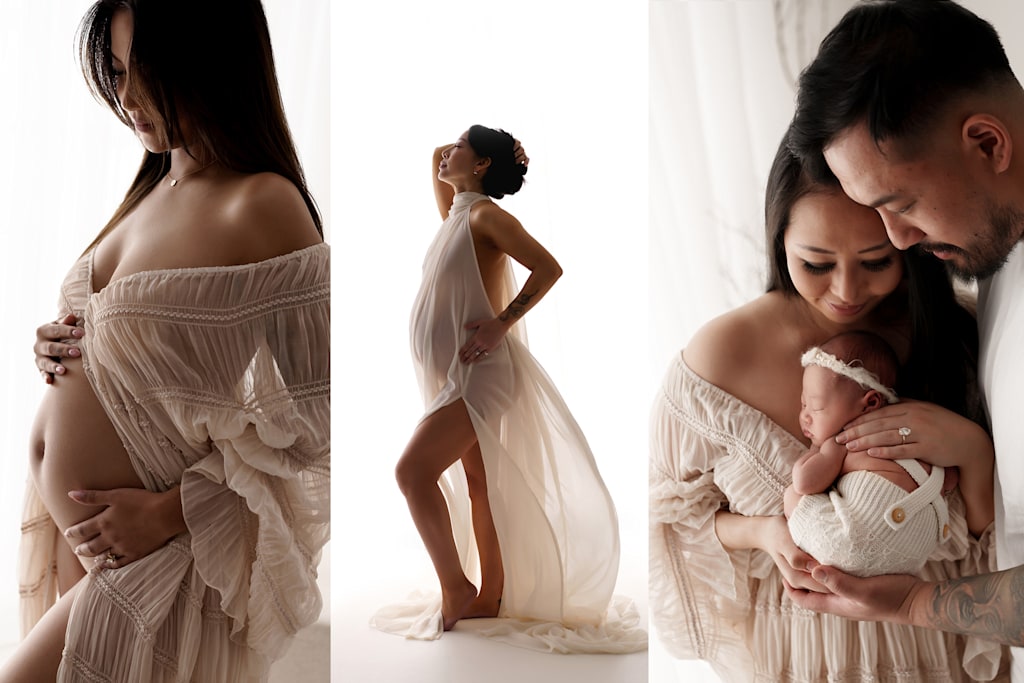
There's a moment most expecting parents describe in almost the same words. You catch a glimpse of yourself in a mirror, or a friend snaps a candid photo, and something clicks. The bump is here. It's real. And it won't be here forever.
That quiet realisation is usually followed by another: you want maternity photos, but you have no idea where to start. What should you wear? How far along should you be? Inside or outside? What started as a warm impulse can quickly start to feel like a logistics project.
It doesn't have to. I've photographed expecting families for more than ten years, and the parents who enjoy their sessions most are almost always the ones who made a few simple decisions early. Here's how I'd approach each one.
The right time in pregnancy
Timing is worth getting right. Book too early and the bump may not show as prominently. Leave it too late and you may be dealing with fatigue, swelling, and the real possibility of a baby arriving ahead of schedule.
Most maternity photographers, myself included, suggest the early third trimester, around 28 to 32 weeks. The bump is round and prominent, but most people are still comfortable enough to move, pose, and enjoy themselves. The heaviness and swelling that tend to arrive in the final weeks haven't set in yet, and the risk of an early arrival is still low enough to plan with confidence.
If you're expecting twins or triplets, the timeline shifts earlier. The bump becomes prominent sooner and late pregnancy can be far more uncomfortable, so around 24 to 28 weeks is usually better.
It also helps to book ahead. Popular photographers often fill their calendars weeks in advance, so reserving a date in your second trimester means you're not scrambling at 30 weeks.
Studio or outdoors?
This decision shapes the whole feel of your images. Neither option is better for everyone, but one is probably better for you.
Outdoors. Natural light, open space, and greenery can produce beautiful, airy portraits, which is why parks, waterfronts, and gardens are so popular. The trade-offs are real, though. Weather can change, golden hour is a narrow window, public spaces bring foot traffic, and walking on uneven ground late in pregnancy is less pleasant than it sounds.
Studio. A studio removes most of those variables. The light is consistent, the temperature is controlled, and the styling is already set up. You can move between a draped-fabric look, a floral composition, and an intimate close-up without packing up and relocating. It's also easier to manage comfort, with even floors, seating close by, and a pace that suits you.
A tip on lighting: natural window light inside a studio gives a soft, warm, editorial feel with glowing skin tones, while controlled studio lighting allows more dramatic, structured results. When you're comparing photographers, ask to see examples of both. The difference in mood is real, and knowing which you prefer will help you find the right match.
What to wear
What you wear affects the final images, but it doesn't need to be complicated.
Fabrics and shapes. Flowy, bump-hugging fabrics work best. Chiffon, lace, jersey, and crepe all move softly and photograph well. Floor-length gowns, wrap dresses, and fitted styles that taper at the bump flatter most body shapes. Steer away from loud patterns, big logos, and very dark colours, which can flatten the image or pull attention away from the bump.
How many outfits. Two to three is the practical sweet spot. It gives you enough variety without decision fatigue on the day. Soft, muted tones and pastels tend to suit both skin tones and studio backdrops better than bold, saturated colours. If your partner or children are joining you, coordinate rather than match exactly. Complementary tones look cohesive without feeling staged.
Accessories and personal touches. Keep accessories simple: delicate jewellery, a meaningful heirloom, or a soft wrap. Many studios provide their own styling elements, but what's available varies, so ask in advance. Personal items, like a handwritten letter to your baby, an ultrasound scan, or a pair of tiny shoes, add real emotional weight to a handful of frames and make the images feel like yours.
Posing without feeling awkward
Posing is the part most people quietly dread. Most walk in half-convinced they'll look awkward in every frame, and they almost never do. A few basic principles help you relax and let your photographer guide you.
A 45-degree turn to the side is the most consistently flattering position. It emphasises the curve of the bump and gives a more dimensional silhouette than standing straight on.
Shifting your weight onto one leg creates a gentle S-curve and removes stiffness.
Hands above and below the belly draw the eye naturally to the bump.
Seated and silhouette poses add variety, especially with backlighting for a softer, more ethereal look.
Including your partner and children. Partner poses that work well include arms wrapped from behind with hands resting on the bump, forehead to forehead, or the partner kneeling to connect with the belly. With children, simple and natural beats formal: a sibling kissing the belly, or standing beside mum with one small hand on the bump, creates genuine warmth without anyone holding a pose for long.
Being guided. A good photographer directs gently and continuously, adjusting angles, hand placement, and expressions as you go. You shouldn't be left to figure anything out alone. Your job is to breathe, trust the process, and be present. The poses that look effortless in the final images almost always come from quiet, steady guidance behind the camera.
Comfort and safety
A maternity session should never ask more of your body than it can comfortably give. It's worth confirming this with any photographer you're considering.
Session length. Studio sessions typically run 60 to 90 minutes, with rest breaks built in.
What to bring. Water, a light snack, and comfortable shoes for getting to and from the studio.
Speak up. Tell your photographer what feels good and what doesn't. No shot list is worth discomfort, and a good photographer adapts the session to your energy rather than the other way around.
Poses to avoid. Responsible photographers avoid poses that compress the belly and use chairs, cushions, and walls for support during any floor-level or elevated work.
Questions to ask. If a studio session includes draped fabric looks or extended floor poses, ask about heating, seating, and accessibility before you book. A studio that takes those questions seriously has thought about your experience, not just the images.
What a calm session feels like
There's a real difference between a session that feels efficient and one that feels special. Warm lighting, considered styling, a comfortable temperature, and an unhurried pace all signal the same thing: this space was made for you. The best sessions I've run have felt less like a shoot and more like a quiet celebration, and the images that come out of them tend to feel timeless rather than trend-led.
Booking with other sessions in mind. If you're planning newborn photos too, consider using the same photographer for both. The continuity of lighting, styling, and familiarity means the two sessions read as one story, from bump to baby.
You're more ready than you think
Go back to that moment in the mirror, when you realised you wanted to capture this. That instinct was right, and a little preparation is all it takes to go from overwhelmed to ready.
The short version: book around 28 to 34 weeks, choose a setting for its comfort and consistency, pack two to three outfits in soft, coordinated tones, trust your photographer's guidance, and speak up whenever you need a break. The rest tends to take care of itself.
[Author bio: Reka Choy is a newborn, maternity, and family photographer based in Oatley, Sydney, with more than ten years of experience. Visit her website to learn more.]
About the Creator
Enjoyed the story? Support the Creator.
Subscribe for free to receive all their stories in your feed.
Comments
There are no comments for this story
Be the first to respond and start the conversation.