
How to Photograph Museum Architecture and Interiors Like a Pro
Leading lines, symmetry, and the ceiling shots I almost walked past
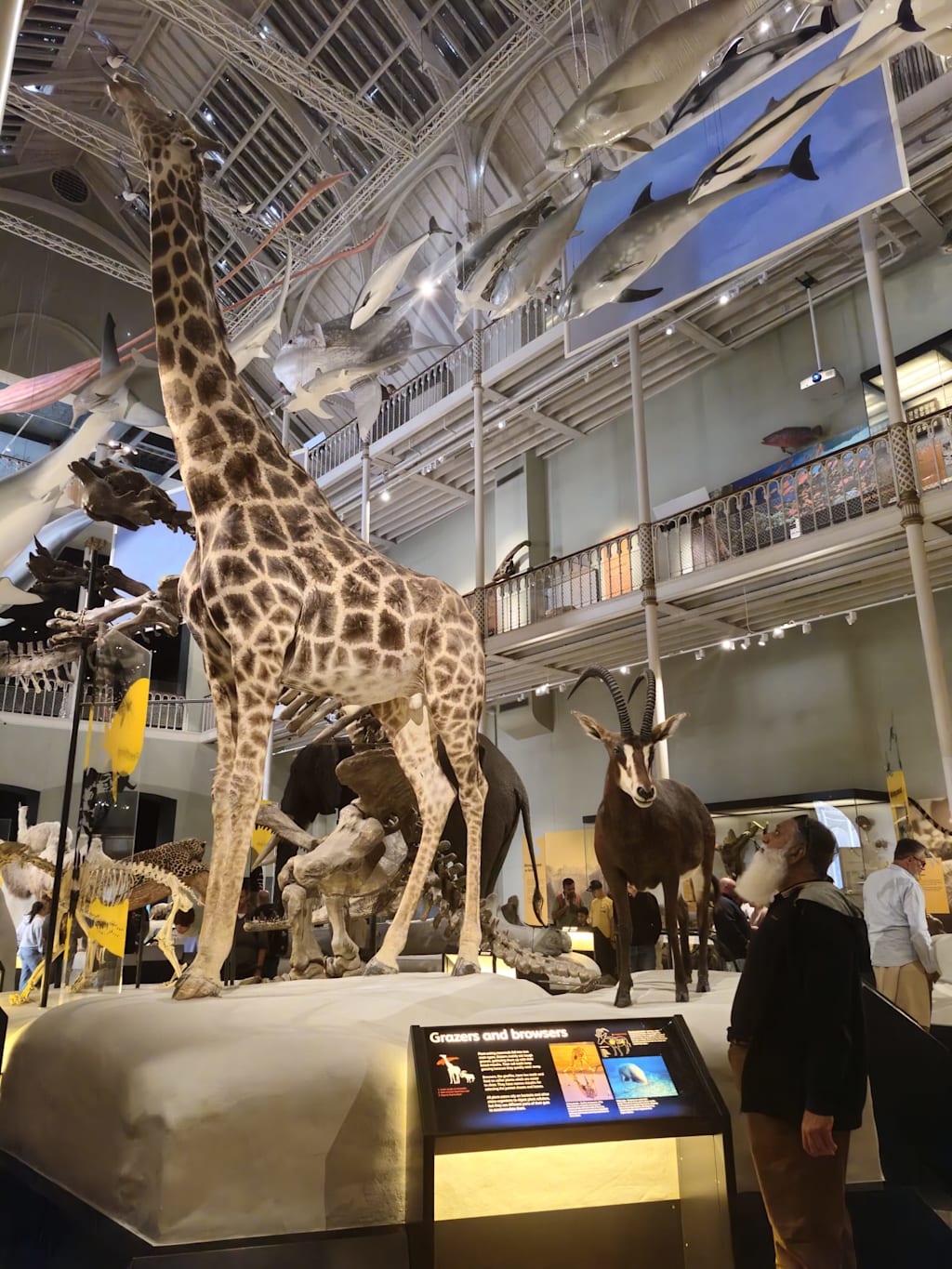
I was standing in the middle of a museum rotunda, neck craned all the way back, spinning slowly in a circle like a man who had lost something on the ceiling. Which, in a way, I had. A shot. The right shot. My uncle stood a few feet away, watching me spin, and said nothing for a solid minute before finally offering, “You look like you’re trying to summon something.”
I probably was. What I actually wanted was the ceiling itself — the ribs of the dome, the way the light fell through the glass panels above us, the whole architecture of the room laid out like a diagram of itself. I didn’t know yet how to ask my camera for it.
Let me back up. I will try to walk you through what I learned that day. OK, six lessons.
Lesson one: the floor is not your subject, but it will ruin your photo anyway
My first instinct, standing in that rotunda, was to point my camera straight up and shoot. Simple enough, I thought. Except every photo came out lopsided, the dome tilting off at some drunken angle, half the frame eaten by a pillar I hadn’t even noticed.
My uncle walked over, tilted his head at my screen, and said the thing that actually fixed it: “Stand in the center. Actually in the center. Not near it.” I moved two feet to my left, found the exact middle of the floor pattern beneath me, and pointed the lens straight up. The dome snapped into symmetry like it had been waiting for me the whole time. Turns out grand old buildings were built around a center point for a reason, and your photo needs to sit on that same point too.
Lesson two: let the building do the pointing
Edinburgh’s older museum buildings are full of lines that want to lead somewhere — a corridor stretching off into shadow, a staircase spiraling up toward a skylight, a row of columns marching toward a far door. I used to photograph the whole hallway and call it done. Flat. Boring. A hallway is a hallway.
What changed things was standing at the very start of one of those long corridors and letting the lines in the floor tiles, the ceiling beams, and the wall moldings point toward a single distant spot—a window, a statue, a patch of light. Suddenly the photo had somewhere to go. My eye traveled through it instead of just landing on it. My uncle calls this “giving the picture a destination.” I think that’s about right.
Lesson three: symmetry is a gift, so stop wasting it
There’s a particular hallway I keep going back to, lined with identical arches on either side, each one catching the light slightly differently as it recedes into the distance. The first time I photographed it, I stood off to one side, trying to be artistic, and ended up with a lopsided mess.
My uncle, predictably, walked to the dead center of the hallway and just stood there. “When a building hands you symmetry,” he said, “you don’t get clever. You stand in the middle and say thank you.” I’ve thought about that more than I probably should. Some buildings are already doing the composing for you. Your only job is to not mess it up by standing somewhere crooked.
Lesson four: ceilings deserve their own trip
I used to treat ceiling shots as an afterthought — a glance up, a rushed photo, move on to the next room. That changed the day my uncle spent nearly fifteen minutes photographing nothing but a single painted ceiling panel while I waited, increasingly impatient, by the doorway.
“You’re missing half the building,” he told me afterward, not unkindly. He was right. Older museums were often designed with as much care above your head as around it — painted panels, gilded moldings, domes within domes. Lie on a bench if you have to. Crouch low and angle up if that works better. Just don’t treat the ceiling like it’s optional, because whoever built the place clearly didn’t.
Lesson five: wide isn’t always the answer
I went through a phase of trying to cram entire rooms into a single frame, convinced that “wide” automatically meant “impressive.” What I got instead were photos that felt distant and a little cold, like architectural blueprints instead of actual places.
My uncle nudged me toward something narrower — picking one detail, one arch, one shaft of light hitting one section of floor, and letting that single piece stand in for the whole room. A photo of one perfect corner, it turns out, can say more about a building than a photo trying to say everything at once.
Lesson six: come back when the light changes
The rotunda that started all this looked completely different two hours later. What had been flat, grey daylight through the dome’s glass panels turned into something warmer and more directional as the afternoon wore on, throwing long shadows across the floor pattern I’d been standing on earlier.
My uncle has a habit of returning to the same room more than once during a single visit to see how the light behaves differently. I used to think this was him being fussy. Now it might be the smartest habit in his entire kit. The building doesn’t change. The light photographing it never stops changing.
I did eventually get my dome shot. Stood dead center, waited for a gap in the crowd, pointed straight up, and there it was — symmetrical, quiet, the ribs of the ceiling fanning out like something drawn with a compass. My uncle glanced at the screen when I showed him, gave a small nod, and went back to whatever ceiling he was studying next.
That’s the thing about photographing old buildings, I’ve come to think. You’re not really capturing the architecture. You’re catching up to it — standing still long enough, in the right spot, for it to finally show you what it already was.
About the Creator
Enjoyed the story? Support the Creator.
Subscribe for free to receive all their stories in your feed.
Comments
There are no comments for this story
Be the first to respond and start the conversation.