
I was always on the periphery of photography. Never quite in it. On the edge, looking in. I loved taking pictures, but I would never have called myself a photographer. Shutter shy and maybe with some aperture apathy. Camera curious, perhaps. But fascinated with the idea that a thing in your hand can immortalize what you briefly see in your eye, to share it with others.
And so I was always casually doing that. Snapping what I see and sharing it with others. With whatever I had at hand. For the most part, that would be the camera of whatever phone I was using at the time.
Somewhere in the 2000's, I found a 35mm Pentax in an antique shop that was in working condition. It had a rather ordinary 50mm prime attached to it. I exposed many innocent frames of film with that camera. Pointing it at something, only to wait days to see if I had all the settings in an optimal configuration to have a decent print. That Pentax was the closest thing I ever had that could be described as a proper camera.
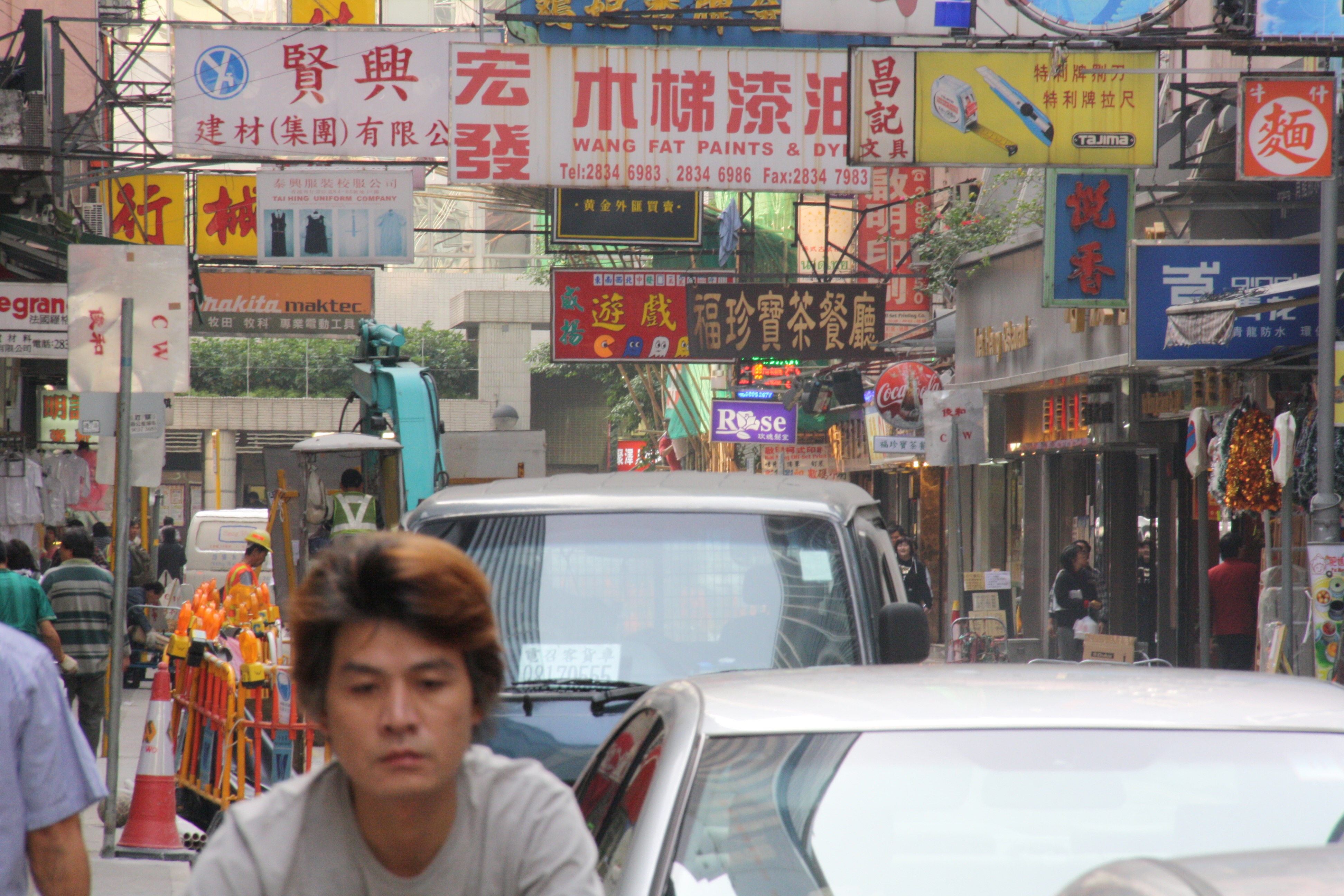
During these years, I moved from Cape Town to Hong Kong and eventually to Switzerland. I also became a father. And these different cities and travels - and fatherhood of course - gave me plenty of material to photograph.
It was then that I discovered Flickr. Flickr was an online platform dedicated to photography. In many ways, it was so far ahead of anything else on the Internet. The platform had a pure intention. Create a place where people who like to pictures can share their work, discuss photography and how to get better at it. Incredible communities arose. Not just around camera types and lenses, but also around the things people like to take pictures of.
It was lively. It was bustling. Like the cities I was flying to. And full of interesting people.
Somewhere along the way, Flickr got acquired by Yahoo! And even though they kept most of it in tact, it was the beginning of a long, slow decline. The independent spirit had gone. At the same time, the phones didn't just become the cameras, they were also how we were looking at our pictures. The depth of building galleries and albums receded into the background while the emphasis was on filters - and of course: likes and shares.
Somewhere along this point on the timeline, I stopped using Flickr. Every picture I took remained, but I stopped contributing. I lost contact with most people who shared my interests in old French cars, Burmese cats and getting your friends and colleagues to pose like tigers.
Until recently.
My relationship with photography shifted. I climbed off the fence and decided to take it more seriously. I spent forever researching the new mirrorless cameras that I knew almost nothing about and eventually decided on a Lumix S5II. Really great value camera for the price, plus it was a useful entry into the world of L-mount lenses where the soft, creamy Leica lenses camp out too.
And of course, very quickly I realized, shooting with a camera like this, begets a new kind of problem. Storage. Having a copy of my edited images, with clear permissions set, and easily searchable by tags and titles.
I also started yearning also for the kind of community support that I knew I would have gotten from a Flickr community.
On a whim, I opened up Flickr.com. I was pleasantly surprised that it was all still quite functional and seemed to never lose its initial intention. Which was to be a place of sharing photography. It wasn't trying to be Instagram, Youtube, or even TikTok. It was about photography.
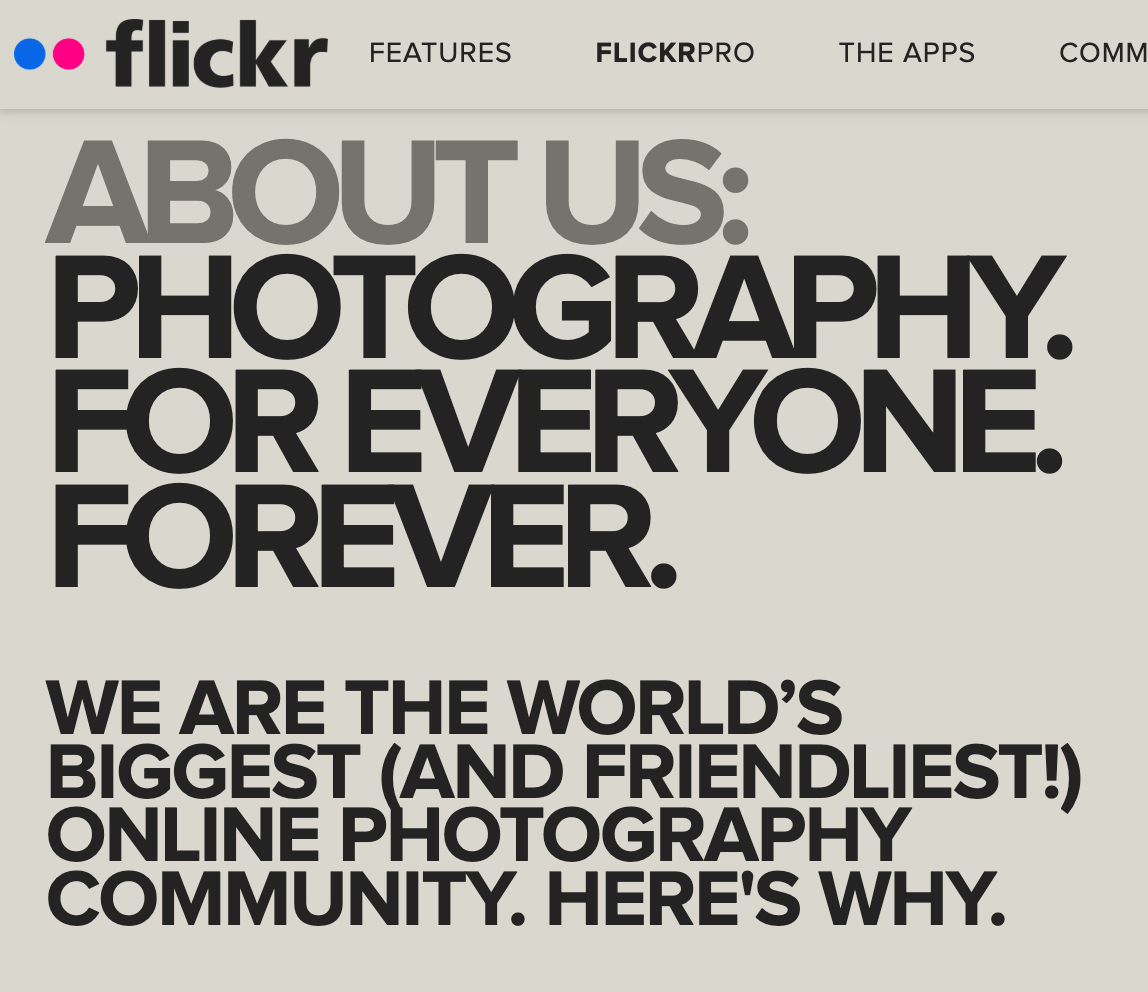
In fact, it seemed to more closely resemble the Flickr of the past. I did some reading and discovered that it was acquired by Smugmug in 2018, after being kicked like a can down Silicon Valley, which I guess explained the return to its foundations.
This encouraged me to look more closely at the features, the price plan and decided to try a pro account for a year. To mostly be a repository for the things I want to keep and share. And to try and seek out the community I crave.
So far, everything works as advertised. It follows my newish workflow pretty well. I shoot stuff. I edit and when I am ready, I export the large JPEGs to a folder on my machine that is in sync with Flickr and auto-uploads them. So far so good.
But what I found is that it is a ghost city on the ruins of an ancient land.
There are still plenty of groups and lots of uploads. But the discussions have died down. In some active groups, the last new post on a thread is at least a year old. I am not seeing active moderation.
Maybe there are still very active communities out there, but I haven't found them. Yet.
According to Flickr's own statistics, published in 2024, 25 million images are still uploaded every day, and more than 10 billion photos have been shared in total. So not dead by any means.
So maybe my realization is just this. My Flickr is dead. The people I followed or who followed me don't post anymore. Their past images are still there for the most part, but almost everybody stopped uploading around 2015. Like a great rapture happened and we were all uploaded to a different server in another dimension.
Browsing Flickr now is like traveling back to one of the cities I used to live in. To walk its streets, to see a familiar face behind a shop counter, to look down the street to an address where a friend lives, or on the market square where my daughter learned to ride a bike, but to realize what made it a place was its people.
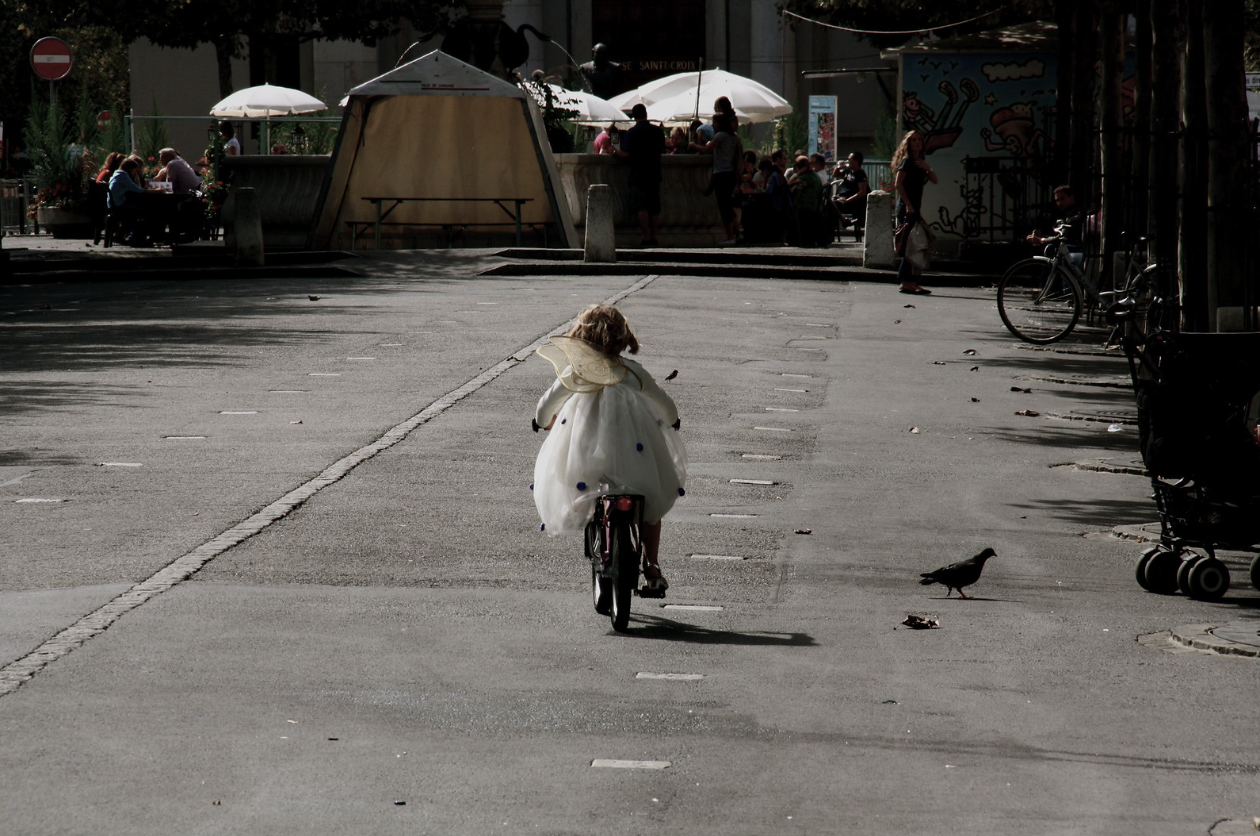
I am going to keep using it. Slowly, I find myself seeking out groups and communities and posting. I am not following up and not keeping an eye on likes, comments or shares. I am just planting the seeds and seeing what comes up.
Because for me, Flickr represents a time when the Web was a better place. A time before the algorithm ruled all. It represents the kind of Website that is in service of the people it is designed for. Not trying to subvert the attention of its audience for financial gain.
Every time I upload something, I hope a little part of that spirit lights up somewhere. And I live in hope that if more of us do that, places like Flickr will come back into their own and use what is there to celebrate what we are. Not ghosts, but living, breathing, creative human beings.
About the Creator
Leon Jacobs
Writing is a way of figuring out what you really think or feel. Naming the abstraction that can give rise to the chaos of existence. Words can lasso those stray thoughts and feelings - and tame them.
Read mine here.
Enjoyed the story? Support the Creator.
Subscribe for free to receive all their stories in your feed.
Comments
There are no comments for this story
Be the first to respond and start the conversation.