
Chasing the Perfect Angle: My Week of Beach Photography in the Caribbean
How slowing down at the shoreline taught me to see color, light, and even an uninvited iguana through a completely different lens
Chasing the Perfect Angle: My Week of Beach Photography in the Caribbean
How slowing down at the shoreline taught me to see color, light, and even an uninvited iguana through a completely different lens
I did not plan to become obsessed with a beach. I went there to switch my brain off for a week, to lie under an umbrella and let the sound of water do all the thinking for me. But somewhere between my second cup of coffee and my first proper look at the horizon, my camera came out of my bag, and it did not go back in for the rest of the trip. What started as a lazy summer break turned into something closer to a small personal project, one photograph at a time, one angle at a time, until I had genuinely learned to see an ordinary stretch of sand in a way I never had before.
I want to walk you through that week, because I think there is something worth sharing in how a place you visit purely to relax can quietly turn into the thing that teaches you the most.
Why I Started Looking at the Beach Differently
On my first morning, I did what most people do. I sat under a thatched palapa roof, looked out at the water, and took the obvious photo, the wide horizon shot with the sea stretching out in front of me. It was fine. It was also completely forgettable, the kind of photo that looks exactly like a thousand other holiday photos taken from a thousand other beach chairs.
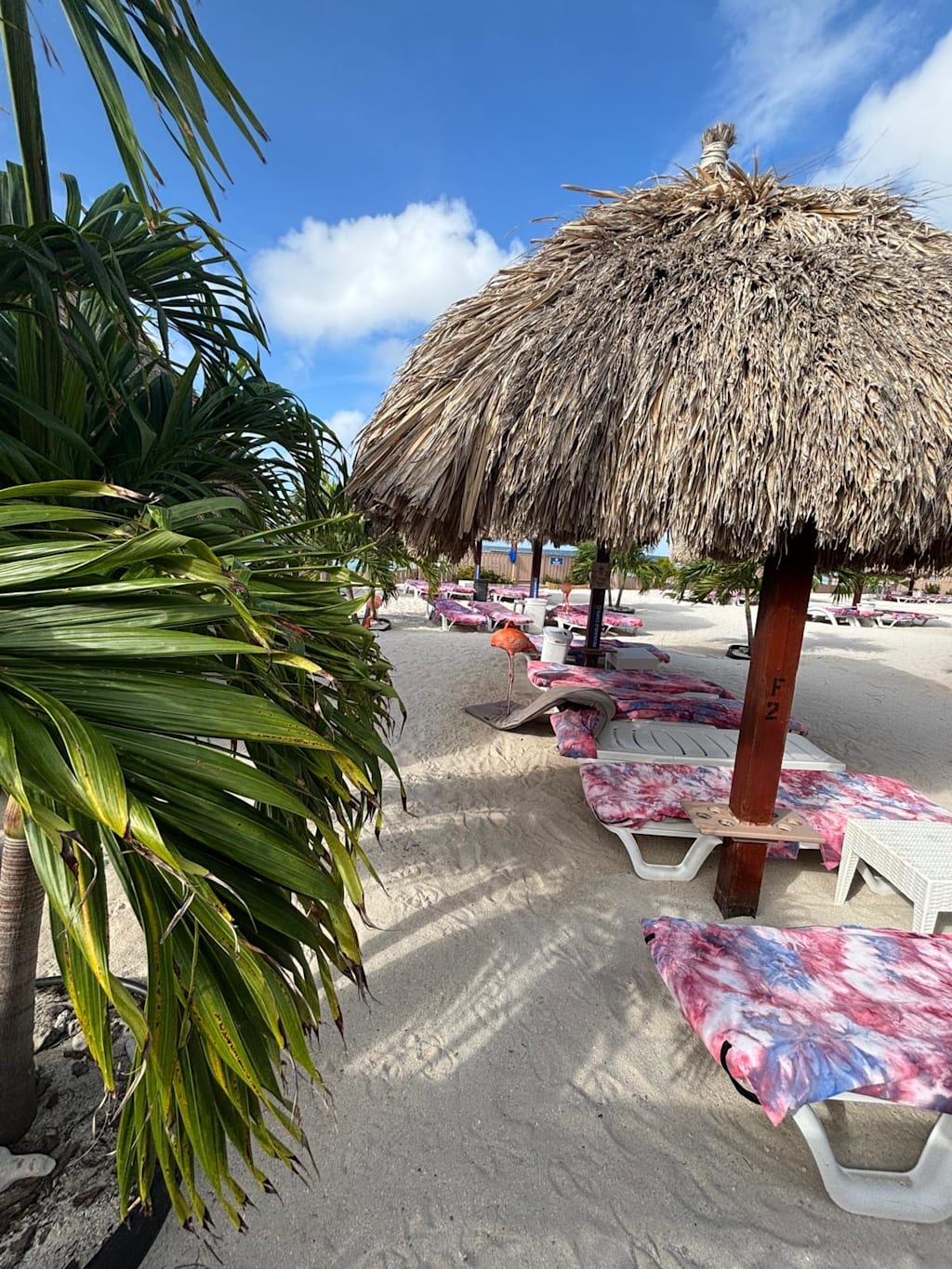
Something about that bothered me more than it probably should have. I had spent enough time photographing museums and old buildings back home to know that the most interesting image is rarely the obvious one, it is usually the one hiding just slightly to the side of it. So on my second morning, instead of standing up and shooting straight out at the sea, I stayed seated under that same palm-thatched roof and let the dried palm leaves hang into the top of my frame. Suddenly the ordinary horizon shot had texture, shadow, and a sense of shelter to it, like the viewer was sitting right there beside me rather than just looking at a postcard. That one small change, letting the roof of the palapa frame the shot instead of cropping it out, taught me more about composition in five minutes than most of my holiday photography ever had.
That became my rule for the rest of the week. Before I took a photo, I asked myself what I would be tempted to crop out, and then I tried keeping it in instead.
Getting Low, Getting Close, and Meeting an Unexpected Model
A couple of days in, I was setting my things down near a lounge chair when something moved in the sand a few feet away. An iguana, completely unbothered by my presence, was calmly chewing on a piece of fruit someone had clearly left for it. My first instinct was to stand where I was and snap a quick photo from above, the kind of shot you take mostly to prove to people back home that yes, there really was a lizard just walking around the beach.
Instead, I got down onto the sand myself, camera low, almost at the iguana's eye level, and waited. It took a minute of patience and probably looked a little strange to anyone watching, a grown adult lying flat on warm sand for a lizard. But the photo that came out of it was worth every slightly sandy elbow. Shot from that low angle, with the pale beach behind it and its striped tail curling off to one side, the iguana looked less like a random beach creature and more like the actual subject of a proper wildlife photograph. It taught me something I think applies well beyond animals or beaches, that getting physically closer to your subject's own perspective almost always beats standing above it and shooting down.
I ended up spending nearly twenty minutes with that iguana, and honestly, it became one of my favorite subjects of the entire trip.
The Wider Shots That Told a Bigger Story
Not every good beach photograph needs to be tight and close. Some of my favorite images from that week were the ones where I deliberately stepped back and let the whole scene breathe. One afternoon, I photographed the resort's pool area from beneath a tall palm tree, with a thatched umbrella on one side and a splash of water frozen mid-motion in the middle of the frame. On its own, a pool is not particularly interesting. But framed by that palm trunk running straight up through the image, with the lounge chairs and wooden decking leading the eye toward the water park in the distance, it suddenly told a story about a whole afternoon rather than just a single moment.
I noticed the same thing happen down by the water, where rows of white sun loungers sat beneath a large open umbrella, with a bright yellow water taxi boat bobbing in the sea just behind them. I could have photographed just the boat, or just the loungers, but keeping both in frame together, along with the wooden cabana bed draped in white curtains in the middle distance, gave the photo a sense of layers. There was something happening in the foreground, something else happening slightly further back, and the ocean tying it all together behind everything. I found myself thinking about depth in a way I usually only think about when I am photographing architecture, not sun loungers on a beach.
Learning to Slow Down On a Weekday
Maybe the most unexpected part of this whole experience was realizing how different a beach feels on an ordinary weekday afternoon compared to a busy weekend. There was no rush of people crowding into my shots, no line for a lounge chair, just quiet stretches of sand, the occasional boat drifting past, and enough time for me to actually wait for the right light instead of grabbing whatever shot I could before someone walked into frame.
I think that quiet is really what allowed the photography to happen at all. If I had been dodging crowds or rushing to fit everything into a single busy Saturday, I doubt I would have lain down in the sand for an iguana or waited patiently for the palm leaves above me to sway into just the right position. Weekday summer travel, at least for me, turned out to be less about avoiding people and more about giving myself the actual time to notice things properly.
By the middle of the week, I had stopped thinking of my camera as something I picked up occasionally and started thinking of it as part of how I was experiencing the whole trip. Every walk down to the water became a small hunt for a new angle. Every lounge chair became a potential foreground object. Even the shadows cast by the palapa roofs across the sand became something I found myself studying rather than just walking past.
What This Beach Actually Taught Me
I came home with more than just a collection of photographs. I came home with a slightly different habit of looking at places, any places, not just beaches. I think it is easy to assume that good travel photography happens because of an exotic location or perfect weather, and while both certainly help, what actually made the difference for me was simply slowing down enough to ask what a familiar scene looked like from an unfamiliar angle. A thatched roof became a frame instead of just a shelter. A lizard became a subject instead of a curiosity. A pool became a layered scene instead of just a pool.
I do not think you need a tropical shoreline to try this for yourself. The same idea works on a local park bench, a busy street corner, or even your own back garden. Get low when everyone else stands, step back when everyone else zooms in, and let the messy, slightly imperfect edges of a scene stay in frame instead of cropping them away.
Let's Talk
I would genuinely love to know how you approach photographing a place you already know well, or a spot you have visited so many times it almost stops feeling worth photographing at all. Have you ever changed your angle on purpose and been surprised by what came out of it? Tell me about it in the comments, I read every single one.
If this story made you want to pick your camera back up, give it a clap, follow along for more honest travel and photography stories, and share it with a friend who always takes the same postcard shot on every holiday. They might just need this nudge to try something different.
About the Creator
Enjoyed the story? Support the Creator.
Subscribe for free to receive all their stories in your feed.
Comments
There are no comments for this story
Be the first to respond and start the conversation.