
We All Have Some Dog in Us
This is a playful look at human nature when it comes to dogs.


Recently, a friend told me, “Everybody has some dog in them.” At first, I said, "That's not true. There is no dog in me." When he told me that even I have some dog in me, I laughed and told him, “If that’s true, then I’m a Chihuahua, and you’re a Greyhound.”
Some conversations stay with me long after they are over. And the more I thought about it, the more I realized he was right. People really do move through life with dog‑like tendencies, each of us shaped by our own breed of instinct.
He wasn’t talking about biology. He meant instinct — the way people protect their territory, guard what matters, and show flashes of loyalty or stubbornness that feel downright canine.
Of course, he meant it metaphorically and not literally. When people say “Everyone has some dog in them,” they’re usually talking in symbols, not biology. “Dog” becomes shorthand for a cluster of human traits we all recognize. Here are just six of those common traits.
1. Loyalty and attachment
Most people have someone or something they cling to — family, faith, routine, a calling. Dogs are famous for devotion, and humans share that instinct to bond deeply.
2. Protectiveness
Even quiet, gentle people have moments when they guard what matters — their peace, their children, their boundaries. That’s a “dog” trait in the metaphorical sense.
3. Curiosity and playfulness
We all have a part of us that wants to explore, sniff around new ideas, wander, or enjoy simple pleasures. That’s what dogs do.
4. The need for companionship
Humans are wired for connection. Even introverts need a circle, a touchpoint, a safe person. Dogs embody that longing for closeness.
5. Instinct
Everyone has moments when they act from gut rather than logic — a nudge, a warning, a pull toward or away from something. People call that “the dog in you” because dogs live by instinct.
6. Persistence
Dogs don’t give up easily — and neither do humans when something truly matters. Dogs and humans share that trait.
My friend was basically saying:
“We’re all a mix of loyalty and attachment, protectiveness, curiosity, playfulness, the need for companionship, instinct, and persistence.”
The Chihuahua
Some people carry Chihuahua energy. They’re smaller than most breeds, but they guard their peace, their routines, and their boundaries with surprising intensity. They’re alert, perceptive, and quick to speak up when something feels off.
Chihuahua people aren’t aggressive, but they’re protective. They defend their emotional territory with a bark that says, “I may be soft spoken, but I matter.”
They’re loyal to the few they trust, and they don’t waste time trying to impress the crowd.
And yes — I see myself in this one.
The Greyhound
Then there are the Greyhounds — sleek, calm, and built for momentum. They don’t bark much, but when they do, their bark is worse than their bite. They don’t hesitate. They move fast. Greyhound people glide through life with quiet confidence, saving their energy for the things that truly matter.
They’re protective too, but in a different way.
They guard their goals, their direction, and their pace.
They don’t fight for territory. They outrun anything that threatens their peace.
My friend? Definitely a Greyhound.
The Shepherd: Watchful and Steady
Some folks carry Shepherd energy — the guardians of the group. They notice everything. They stand between danger and the people they love. They’re the ones who check on you, pray for you, and make sure you got home safely. Their territory isn’t physical. It’s emotional. They protect hearts, not just houses.
The Labrador: Friendly, Open, and Unbothered
Labrador people are the peacemakers. They love everybody, trust easily, and bring joy wherever they go. They don’t guard territory — they expand it, making room for newcomers and outsiders. Their instinct is connection. Their territory is community.
The Terrier: Determined and Unshakeable
Terrier people don’t quit. They dig into projects, problems, and passions with fierce determination. They protect their purpose the way a terrier protects a yard — with grit and focus. They’re small but unstoppable. They don’t need permission to pursue what they believe in.
The Bulldog: Calm Strength
Bulldog people carry quiet power. They don’t rush. They don’t panic.
They protect their peace with a slow, steady presence that says, “I’m not moving unless I choose to.” Their territory is stability. Their instinct is endurance.
Why The Dog Metaphor Works
When we talk about people having “some dog in them,” we’re really talking about instinct:
What we protect
What we defend
What we cling to
What we run toward
What we refuse to let go
Every person has a territory — emotional, spiritual, relational, or internal. And every person has a way of guarding it, whether by barking, biting, running away, or being gently petted.
So yes — my friend was right. We all have some dog in us. The trick is knowing your breed, honoring your instincts, and enjoying the strengths they bring to your life and to those around you.
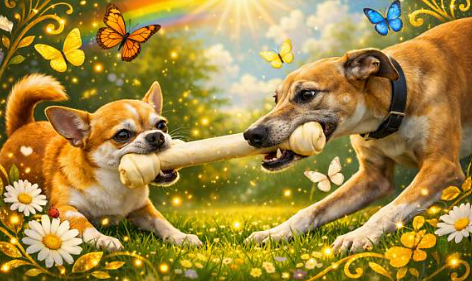
As for me? I’ll keep my Chihuahua energy — quiet demeanor, big spirit, and a bark that protects my peace.
And my friend can keep his Greyhound stride — graceful, focused, and always moving forward.
Because together, we prove the point:
Human nature comes in many breeds, but instinct is universal.
Your Turn
Please comment below which dog represents your tendencies?
About the Creator
Margaret Minnicks
Margaret Minnicks has a bachelor's degree in English. She is an ordained minister with two master's degrees in theology and Christian education. Thanks for reading and sending TIPS her way.
Enjoyed the story? Support the Creator.
Subscribe for free to receive all their stories in your feed. You could also become a paid subscriber, letting them know you appreciate their work.
Comments
There are no comments for this story
Be the first to respond and start the conversation.