wild animals
Animals the way nature intended it; explore the world of wild animals and the controversies surrounding domestication and hunting of feral beasts.
A Voice for the Voiceless
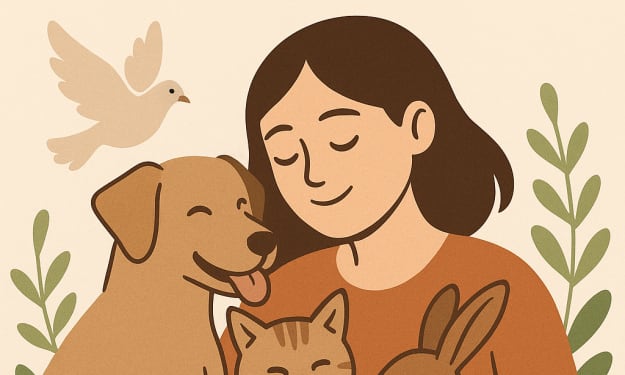
⸻ A Voice for the Voiceless: A Story of Love and Animal Rights In a quiet town nestled between hills and rivers, lived a girl named Leena. She wasn’t the loudest in class or the most popular in the neighborhood, but everyone knew her for one thing—her deep, unshakable love for animals.
By Hawa Barrowabout a year ago in Petlife
The Circle of Majesty: Mating and Pregnancy in the Life of a Lioness"
Lions are one of the most majestic and iconic creatures of the animal kingdom. Known as the "King of the Jungle," their powerful presence and complex social structure have fascinated scientists and wildlife enthusiasts for generations. Among the most intriguing aspects of lion life are their mating behaviors and the journey of a lioness through pregnancy. This article explores how lions mate, how a lioness becomes pregnant, and what life is like for her during this crucial period.
By Sophia Graceabout a year ago in Petlife
Battle of Giants. AI-Generated.
The sun glowed like a giant ball of fire, hanging low in the sky and spreading its red and golden colors across the clouds. In a mysterious land where time had no rules, two powerful creatures from very different worlds were about to face each other for the first time: a towering dinosaur and a mighty lion.
By Bilal Mohammadiabout a year ago in Petlife
He wasn’t trained, but he trained my heart.
When I brought Milo home, I thought I knew what I was doing. I had read books. I had watched training videos. I had stocked up on chew toys, training treats, baby gates, and even a whiteboard to track his progress. I was ready to raise a docile, obedient, emotionally balanced dog.
By Echoes of Lifeabout a year ago in Petlife
The Silent Killer: Understanding High Blood Pressure
Imagine a deadly threat quietly lurking inside your body — one that doesn’t announce itself with pain or clear symptoms. You feel fine, so you assume you’re safe. Meanwhile, this silent enemy is slowly damaging your arteries, heart, kidneys, and brain. By the time you finally sense something is wrong, it may already be too late. This is the reality of hypertension, also known as high blood pressure — often called "the silent killer." Unlike a heart attack or a broken bone, hypertension doesn’t cause obvious pain or visible signs. That’s what makes it so dangerous. The Stealthy Nature of Hypertension Blood pressure is the force of blood pushing against the walls of your arteries. When it’s too high over time, it can cause serious health problems, including heart disease, stroke, kidney failure, and even vision loss. Globally, over 1.3 billion people live with high blood pressure, yet almost half don’t even know they have it. This lack of awareness allows the condition to progress unchecked, leading to tragic outcomes that could have been prevented. What makes hypertension particularly insidious is that it often develops gradually. You may feel energetic and healthy while damage accumulates beneath the surface. By the time symptoms like headaches, shortness of breath, or chest pain appear, the risk of a catastrophic event — such as a stroke or heart attack — is significantly higher. Who Is at Risk? Anyone can develop high blood pressure, but certain factors increase your risk: Age: The risk rises as we grow older. Genetics: Family history plays a strong role. Lifestyle: Poor diet, excessive salt intake, alcohol consumption, smoking, and lack of exercise all contribute. Weight: Being overweight or obese greatly increases your chances. Chronic conditions: Diabetes and kidney disease often go hand in hand with hypertension. Hypertension doesn’t discriminate — it affects men and women, young and old, across every race and income level. The Power of Early Detection Since high blood pressure rarely announces itself, regular screening is vital. A simple, painless test at your doctor’s office or even at home can reveal dangerous trends long before they become life-threatening. Medical guidelines recommend that adults over 18 have their blood pressure checked at least once every two years, and more often if you have risk factors. How to Take Control The good news is that hypertension can be managed — and even prevented — with proactive steps. Here’s how you can take control before it’s too late: 1. Know Your Numbers Understand what normal blood pressure is (generally below 120/80 mmHg) and monitor yours regularly. 2. Eat Smart Choose a diet rich in fruits, vegetables, whole grains, and lean proteins. The DASH (Dietary Approaches to Stop Hypertension) diet has been shown to be particularly effective. 3. Move Your Body Regular physical activity — even brisk walking for 30 minutes most days of the week — can make a significant difference. 4. Limit Salt and Alcohol Excess sodium and heavy drinking are major contributors to high blood pressure. Reduce your salt intake and drink alcohol in moderation. 5. Manage Stress Chronic stress can raise your blood pressure over time. Techniques such as meditation, deep breathing, yoga, and even spending time in nature can help. 6. Quit Smoking Smoking damages your blood vessels and raises your risk of heart disease and stroke exponentially. 7. Take Medications as Prescribed If your doctor prescribes medication, take it consistently. Never stop on your own, even if you feel fine. Beyond the Numbers Managing high blood pressure is more than just hitting target numbers. It’s about protecting your future self — your ability to walk your daughter down the aisle, play with your grandchildren, or travel the world in retirement. It’s about preserving your quality of life for years to come. We live in a world where many health threats are visible and dramatic. But sometimes, the most dangerous enemies are the ones we can’t see or feel — the ones that creep in quietly and strike when we least expect it. Don’t let high blood pressure steal your life in silence. Take charge today. Check your blood pressure, adopt healthier habits, and encourage your loved ones to do the same. Because when it comes to "the silent killer," awareness and early action are your most powerful weapons.
By Noor Hussainabout a year ago in Petlife
The Little Intruder That Stole Hearts
In the quiet, tense night at a military camp, where boots crunch gravel and tired eyes scan the horizon, a surprise guest tiptoed into a tent that housed 26 soldiers. It wasn’t an enemy or a commanding officer doing a surprise inspection. It was something far smaller, fluffier, and infinitely more adorable — a puppy. This tiny wanderer sneaked its way into the soldiers’ tent under the cover of darkness. Cold, hungry, and curious, the pup didn’t ask permission. Instead, he went straight to what mattered most — the food. He gobbled up leftover rations, pawed through half-open packs, and knocked over a tin of sugar. In the process, he managed to spill coffee grounds everywhere, creating a mini disaster zone that would usually spark frustration. But that wasn’t the end of his night. After the little feast and a clumsy bit of chaos, the pup curled up in a supply box lined with jackets and drifted off into a peaceful, puppy-sized slumber. There he remained, tucked away in the warmth, as the soldiers continued their watch unaware of the furry chaos inside their quarters. When morning came and the soldiers stumbled into their tent expecting routine, they were met instead with a surprise no one saw coming — a tiny puppy curled up in their gear, his belly full and his face dusted with sugar. What could have been just another day in the life of soldiers turned into one filled with laughter, warmth, and smiles that stretched wide across tired faces. For a group of men likely used to high tension, discipline, and the rough edge of military life, this little four-legged stowaway brought something deeply needed — joy. In a world full of order and routine, the chaos of a puppy was not just tolerated, it was celebrated. The story quickly became legend among the unit. Soldiers took turns feeding him, sharing their rations, and giving him a proper name. Though his surprise arrival began as an uninvited raid on their supplies, he became a welcomed mascot — a symbol of innocence and comfort in an otherwise harsh environment. Soldiers reported that having the puppy around boosted morale in ways nothing else had. He didn’t know of battles, orders, or stress. He only knew how to wag his tail, tilt his head in curiosity, and fall asleep on a pair of boots. And sometimes, that was more than enough. For many, pets — even temporary ones — become lifelines. They remind people of home, of childhood, of warmth and trust. For these soldiers, the pup became a reminder of what they were fighting for. In his tiny eyes, they saw loyalty without condition, comfort without cost, and joy without reason. The puppy’s unexpected visit taught an important lesson: that even the smallest creature can make the biggest difference. In a place designed for order, discipline, and survival, a bit of spontaneous chaos brought balance. It reminded them that life wasn’t only about enduring hardship — it was also about recognizing beauty when it walks (or wobbles) into your tent. No one knows exactly where the puppy came from. Perhaps he was born nearby and wandered off from his litter. Perhaps he was lost and searching for warmth. But one thing is certain — he found the right place. Stories like this one show us that compassion and happiness can show up in unexpected ways, even in the most unlikely places. It only takes a moment, or in this case, a mischievous puppy, to melt away fatigue, spark laughter, and turn a long, lonely night into a memory worth keeping. In the end, the little puppy didn’t just steal food and sugar — he stole hearts. And that’s one mission he completed perfectly.
By DigitalAddiabout a year ago in Petlife