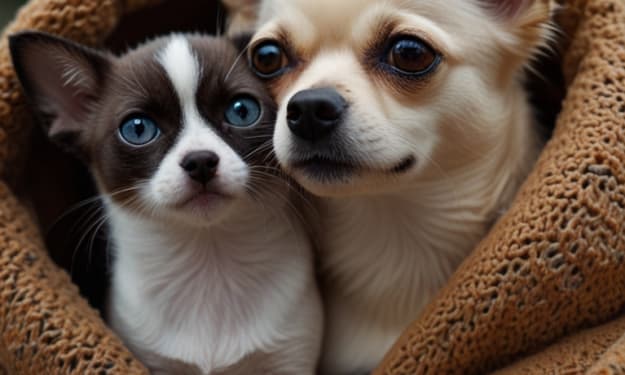
humanity
Isn't it ironic that the very best of humanity is seen through the love and empathy we show to our pets?
Mother Hedgehog and her babies
Wildlife is a treasure trove of remarkable stories of survival, nurturance, and the relationship between mothers and their young. Natural fauna presents a great diversity of amazing things, but today, we will teach you everything about hedgehogs and their maternal instincts.
By Rohitha Lanka2 years ago in Petlife
The Art and Impact of Horse Breeding on Farms: A Bond Between Humans and Horses
Horse breeding on farms is an ancient practice that has shaped human civilization, from agricultural development to modern sports and leisure activities. The presence of horses on farms not only supports economic endeavors but also fosters deep emotional connections between humans and these majestic animals. Their gentle nature and intelligence make them ideal companions, impacting both adults and children in profound ways. This essay explores the significance of horse breeding on farms, its effects on individuals, and the inherent friendliness of horses toward humans.
By yusuf selho2 years ago in Petlife
Essential Tips to Keep Your Horse Healthy During Winter. Content Warning. AI-Generated.
Essential Tips to Keep Your Horse Healthy During Winter When temps drop and winter hits, keeping your horse healthy and comfy is a top priority. Care of horses in winter requires diligence, knowledge, and good management skills. Here’s a complete guide to help you get through the season.
By Shariq Mehmood Khan2 years ago in Petlife
End Captivity
Cheyenne Mountain Zoo keep the following African elephants captive in their zoo. Missy Kimba Lucky LouLou Jambo As mentioned above, all are African elephants, the largest land animal on earth. African elephants have two species: forest (a bit smaller and endangered) and savanna elephants. Reproduction in zoos is rare, and those born in zoos don't usually live long. Gestation for elephants is eighteen to twenty-two months. Of course, captive elephants are not hunted or poached, but their captive life is not ideal.
By Andrea Corwin 2 years ago in Petlife
In fact, this pit bull fought off a shark to save his owner, proving to be man's best friend.
There's no way the shark would rip a piece out of his owner—not under Darby's watch. A piece of the dog that was given a piece of the shark was something that everyone desired." I received emails from individuals located in Russia. The offer of one individual was one hundred euros. I was working when I was approached by another man who promised me $575 in "cash right now." I told him, "Keep walking, buddy," I urged. In reference to the offers that he received for his dog, Darby, James White said. "It got to the point where I started saying, 'No, no, no, that's not me,'" she said.
By QuirkTales2 years ago in Petlife
Why Do Pets Need Extra Care in Winter?
Why Do Pets Need Extra Care in Winter? Winter brings a magical transformation to the world, with frosty mornings, chilly breezes, and sometimes snow-covered landscapes. However, as we bundle up to face the cold, we must remember that our pets also need extra care during this season. Winter can pose unique challenges to their health and comfort, and understanding these challenges is the first step to ensuring their well-being.
By Mirza Afzal Baig2 years ago in Petlife
5 Surprising Facts About 'Lesbian' Albatrosses"
The natural world is full of surprises, and one of the most fascinating revelations is the prevalence of same-sex pairing among animals. Among these, albatrosses—those majestic, long-lived seabirds—stand out for their unique approach to love and partnership. While the term "lesbian albatrosses" may sound unusual, it’s a way to describe the same-sex female pairs observed in certain albatross colonies. Here are five surprising facts about these remarkable birds and their unconventional love lives: 1. Same-Sex Pairing Is Common in Albatross Colonies Research has revealed that same-sex female pairs are not rare among certain species of albatrosses, such as Laysan albatrosses. In some colonies, same-sex pairs can constitute up to 31% of all pair bonds. This phenomenon was first documented in detail in the Hawaiian islands, where researchers observed two female albatrosses raising chicks together. These pairs form long-term bonds, much like male-female pairs, and engage in cooperative parenting. They share the responsibility of incubating eggs and feeding their chicks. While one of the females in the pair typically mates with a male to produce an egg, the bond between the two females is the cornerstone of their partnership. 2. It’s a Solution to Skewed Sex Ratios One reason for the prevalence of same-sex pairing among albatrosses is the skewed sex ratio in some colonies. For instance, in certain Laysan albatross populations, there are significantly more females than males. This imbalance leaves many females without potential male partners. Rather than forgoing reproduction altogether, these unpaired females team up with one another to raise chicks. This adaptive behavior ensures that more offspring are raised successfully, contributing to the survival of the colony. It’s a remarkable example of how animals can adapt their social structures to environmental challenges. 3. Female-Female Pairs Are Just as Committed as Male-Female Pairs Albatrosses are known for their monogamous relationships, often staying with the same partner for life. Female-female pairs exhibit the same level of commitment, with some pairs remaining bonded for decades. They engage in the same courtship rituals, such as elaborate dances, and demonstrate strong pair bonding through mutual grooming and synchronized behaviors. This long-term partnership is not just a practical arrangement for raising chicks; it’s also a testament to the emotional depth of their bonds. Researchers have noted that these pairs exhibit the same affection and dedication as their male-female counterparts. 4. Their Parenting Success Is a Mixed Bag While female-female pairs can successfully raise chicks, their parenting success is often slightly lower than that of male-female pairs. This is primarily because they must rely on a male—often an unpaired or extra-paired male—to fertilize the egg. The availability and willingness of such males can vary, which sometimes affects the reproductive success of these pairs. However, once the egg is laid, the female-female pair demonstrates impressive teamwork. They alternate incubation duties and take turns foraging for food to feed their chick. This cooperative parenting increases the likelihood of the chick’s survival, even in challenging conditions. 5. It Challenges Traditional Views of Animal Behavior The existence of same-sex pairing among albatrosses challenges traditional notions of animal behavior and reproduction. For a long time, animal studies focused almost exclusively on heterosexual pairings, assuming they were the norm. Observations of female-female albatross pairs highlight the diversity and complexity of social structures in the animal kingdom. These findings also contribute to the broader understanding of homosexuality in animals, a phenomenon documented in over 1,500 species. By studying same-sex pairing in albatrosses, scientists gain insights into how animals adapt their behavior to environmental and social pressures, as well as how they form bonds that go beyond reproduction. The Bigger Picture: Lessons from Albatrosses The story of "lesbian" albatrosses is more than a quirky curiosity; it’s a reminder of the resilience and adaptability of life. These birds demonstrate that love and partnership in the animal kingdom can take many forms, driven by both necessity and emotional connection. As researchers continue to uncover the complexities of albatross relationships, they also challenge us to rethink our understanding of love, family, and cooperation in the natural world. Perhaps the most surprising fact of all is how much we can learn from these extraordinary seabirds about building strong partnerships and thriving in the face of adversity. So the next time you see an albatross gliding effortlessly over the ocean, remember: their lives and loves are as boundless as the skies they soar through.
By INFO INSIDER 2 years ago in Petlife