health
Playing is fun, but a pet owner's primary responsibility is to monitor their pet's health and look out for medical problems.
Everything You Need To Know About The Calico Tabby Cat
Calico Tabby Cat: Everything You Need to Know About This Unique Feline If you’ve ever seen a calico tabby cat, you probably noticed how special and eye-catching it looks. With a mix of beautiful colors and striped patterns, these cats are truly one of a kind. But there’s more to them than just their appearance.
By Anna Smith6 months ago in Petlife
Complete Guide to Pet Vaccinations: What Every Owner Should Know. AI-Generated.
Keeping your pet healthy involves more than just good nutrition and regular exercise. Vaccinations are one of the most important steps in protecting your furry companion from serious and potentially life-threatening diseases. Whether you have a playful puppy, a curious kitten, or an adult pet, understanding vaccination schedules and their importance is essential. For pet owners looking for reliable pet vaccinations Columbia, staying informed helps ensure long-term wellness.
By Animal Mansion Veterinary Hospital6 months ago in Petlife
Save Capron Zoo Before It’s Too Late
Some places quietly become part of who we are. They’re not always world-famous landmarks or sprawling tourist destinations. Instead, they’re places woven into everyday life–the ones where kids press their faces against exhibit glass in wonder, where families stroll on warm afternoons, and where generations share simple moments.
By Jenna Deedy6 months ago in Petlife
HTMA Hair Test: Understanding Hair Tissue Mineral Analysis and the Role of Interpretation
Hair Tissue Mineral Analysis (HTMA) refers to a laboratory method used to evaluate mineral content and patterns through a small hair sample. The analysis is often associated with identifying longer-term trends in mineral balance rather than short-term fluctuations.
By CEO A&S Developers7 months ago in Petlife
American Man Injected Snake Venom for 20 Years, His Blood May Lead to a Universal Antivenom
Scientists say that antivenom has been developed from the antibodies of an American man who deliberately injected himself with snake venom for two decades. Antibodies found in Tim Friede’s blood suggest they may provide protection against the venom of various snakes, whereas current treatments require doctors to know the specific type of snake that bit a person. Friede’s 18-year mission to find a single antivenom effective against different types of snakebites could mark an important step forward. It is worth noting that more than 140,000 people worldwide die each year from snakebites or suffer lifelong disabilities as a result. In total, Friede was bitten by snakes more than 200 times and also received over 700 injections of snake venom, prepared from some of the deadliest snakes such as mambas, cobras, and taipans. Initially, Friede documented his feats on YouTube and aimed to build immunity to protect himself from snakebites. However, the former truck mechanic said that when he was bitten by two cobras in succession, he fell into a coma. “I didn’t want to die. I didn’t want to lose a finger,” he said. Friede says he wanted to find better treatments for the rest of the world. “It just became a part of my life. I kept preparing myself, preparing more and more, for the people who die from snakebites 8,000 miles away from me.” “I want to study your blood.” Currently, antivenom is produced by injecting snake venom into animals. The animals’ immune systems then produce antibodies to fight the venom, and scientists extract these antibodies to create antivenom treatments. However, venom and antivenom must be closely matched because each species’ venom differs from another’s. Even within the same species, there are wide variations—for example, antivenom developed from snakes in India is less effective against the same species in Sri Lanka. Researchers began searching for a type of immune defense known as broadly neutralizing antibodies. Instead of targeting the unique components of each venom, scientists focused on the parts common to all venoms. That’s when Dr. Jacob Glanville, chief executive of the biotech company Centivax, met Tim Friede. “It immediately occurred to me that if anyone in the world had developed antibodies capable of broadly neutralizing venom, it would be Friede,” he said. “So I contacted him.” “I told him this might sound strange, but it would be better if we could match against your blood.” Friede agreed, since the process only involved drawing blood and did not require further venom exposure. The study focused on one of the two main families of venomous snakes, the elapids, which include coral snakes, mambas, cobras, taipans, and kraits. Elapids use neurotoxins in their venom, which can cause paralysis or stop vital muscles from functioning. The researchers selected 19 of the most dangerous elapids identified by the World Health Organization and began testing Friede’s blood. Details of their work were published in the journal Cell. They identified antibodies that neutralize two classes of neurotoxins. They also added a drug targeting a third class to create their antivenom cocktail. This cocktail was tested on mice and protected them against venom from 13 of the 19 snake species. It provided partial protection against the remaining six. The team is continuing to work on the antibodies and is investigating what a fourth component might be to neutralize all elapid venoms. The second major group of snakes, vipers, rely more on hemotoxins rather than neurotoxins. These directly affect the blood. Overall, snake venom contains about a dozen different types of toxins, including cytotoxins that directly kill cells. Professor Peter Kwong, a researcher at Columbia University, said, “I believe that within the next 10 to 15 years, we will have some effective solution against all types of venom.” Meanwhile, analysis of Friede’s blood samples continues. Professor Kwong added, “Tim’s antibodies are truly extraordinary. He has significantly enhanced his immune system.” The ultimate hope is to develop either a universal antivenom that works for everyone or a single injection effective against elapids. Professor Nick Casewell of the Liverpool School of Tropical Medicine said the report is new and provides strong evidence. However, he cautioned that much work remains to be done. He also emphasized that extensive testing is required before this antivenom can be used in humans. Friede said, “I feel good being part of an effort to do something positive for humanity. I’m proud of it.
By Pets and animals 7 months ago in Petlife
Dogs are reverse domesticated due to the conflict in Ukraine.
After months of continuous fighting, the surviving canines near Ukraine's front lines have clearly changed to resemble wolves in both appearance and behaviour. Their changed bodies demonstrate how characteristics formed by centuries of human friendship can be quickly erased by battle.
By Francis Dami7 months ago in Petlife
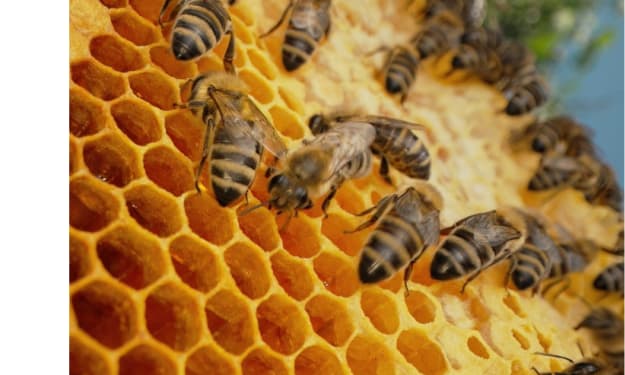
The hive has a designated "dance floor" that honey bees use.
Within a certain, quantifiable patch of comb inside the hive, honey bees focus their recruitment dances. Now that its exact outline has been established, scientists can monitor how and when colonies rearrange that common communication area in response to shifting circumstances.
By Francis Dami7 months ago in Petlife
Massachusetts ESA Law Explained (2026): Documentation Standards and Housing Protections
If you live in Massachusetts and rely on an emotional support animal, understanding your legal rights in 2026 is essential. Tenants and housing providers across the state frequently misunderstand what is required, what is allowed, and what protections actually exist under current law. This guide breaks down Massachusetts ESA law from the ground up, covering documentation standards, the reasonable accommodation process, what landlords can and cannot do, and how to make sure your rights stay protected.
By Robert Barrett7 months ago in Petlife
Are Emotional Support Animals Allowed in Restaurants?
The question of whether emotional support animals (ESAs) are permitted in restaurants has become increasingly relevant in recent years. As more people rely on these animals for mental health support, conflicts have emerged between patrons with ESAs, restaurant owners, and other diners. Unlike service animals, which have clear legal protections under the Americans with Disabilities Act (ADA), emotional support animals occupy a more ambiguous legal space. Understanding the distinction between service animals and ESAs, knowing the applicable laws, and recognizing the practical challenges restaurants face is essential for anyone seeking to bring an emotional support animal into a dining establishment.
By Robert Barrett7 months ago in Petlife