fact or fiction
Is it fact or merely fiction? Fact or Fiction explores the myths and beliefs we hold about our pets, like why dogs wag their tails and cats purr.
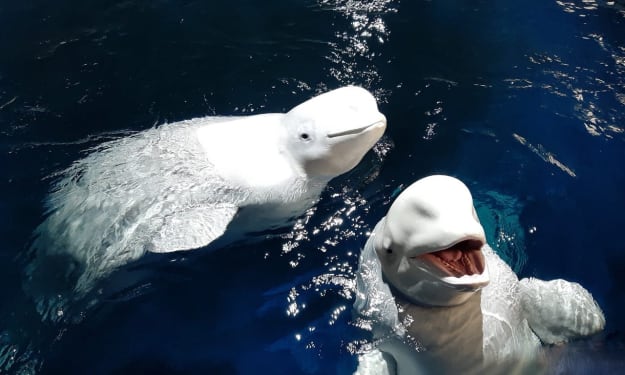
Questioning the Effectiveness of Iceland's Beluga Sanctuary in Ensuring Improved Welfare for Cetaceans in Captivity
In 2019, the SEA LIFE Trust established a beluga sanctuary in Iceland for two female beluga whales, Little Grey, and Little White, moved from Changfeng Ocean World in Shanghai, China. After spending over a year in an indoor quarantine facility, the marine mammals were moved to an open-water sanctuary in Klettsvik Bay the following summer. However, in August 2022, a boat sinking caused oil and fuel contamination in the bay, forcing the whales back to the indoor facility for two years of cleanup and repairs. Despite SEA LIFE Trust's assurances of their return to the sea pen, there have been no updates as of January 2025, raising public concerns about the project’s success and effectiveness.
By Jenna Deedy2 years ago in Petlife
Human Foods Dogs Should Never Eat
Dogs are beloved members of our families, and it’s natural to want to share the joys of our meals with them. However, not all human foods are safe for dogs. Some can cause mild discomfort, while others can lead to severe health issues or even prove fatal. This blog will cover common human foods that dogs should never eat and explain why they can be dangerous. 1. Chocolate
By INFO INSIDER 2 years ago in Petlife
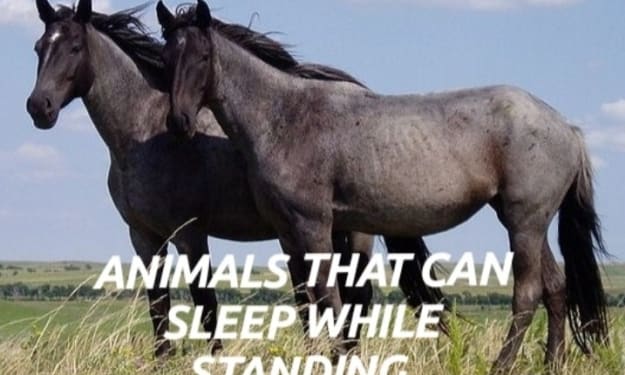
Animals That Can Sleep While Standing
In the animal kingdom, sleep is essential for health and survival, but not all creatures follow the same sleep patterns as humans. While most of us need a comfy bed to rest, some animals have evolved to sleep while standing up, allowing them to remain alert and ready to flee from predators at a moment’s notice. These animals have developed unique adaptations that enable them to rest without collapsing to the ground. Let's dive into the fascinating world of animals that can sleep while standing. Horses: A Natural Ability for Survival
By INFO INSIDER 2 years ago in Petlife
In fact, this pit bull fought off a shark to save his owner, proving to be man's best friend.
There's no way the shark would rip a piece out of his owner—not under Darby's watch. A piece of the dog that was given a piece of the shark was something that everyone desired." I received emails from individuals located in Russia. The offer of one individual was one hundred euros. I was working when I was approached by another man who promised me $575 in "cash right now." I told him, "Keep walking, buddy," I urged. In reference to the offers that he received for his dog, Darby, James White said. "It got to the point where I started saying, 'No, no, no, that's not me,'" she said.
By QuirkTales2 years ago in Petlife
5 Surprising Facts About 'Lesbian' Albatrosses"
The natural world is full of surprises, and one of the most fascinating revelations is the prevalence of same-sex pairing among animals. Among these, albatrosses—those majestic, long-lived seabirds—stand out for their unique approach to love and partnership. While the term "lesbian albatrosses" may sound unusual, it’s a way to describe the same-sex female pairs observed in certain albatross colonies. Here are five surprising facts about these remarkable birds and their unconventional love lives: 1. Same-Sex Pairing Is Common in Albatross Colonies Research has revealed that same-sex female pairs are not rare among certain species of albatrosses, such as Laysan albatrosses. In some colonies, same-sex pairs can constitute up to 31% of all pair bonds. This phenomenon was first documented in detail in the Hawaiian islands, where researchers observed two female albatrosses raising chicks together. These pairs form long-term bonds, much like male-female pairs, and engage in cooperative parenting. They share the responsibility of incubating eggs and feeding their chicks. While one of the females in the pair typically mates with a male to produce an egg, the bond between the two females is the cornerstone of their partnership. 2. It’s a Solution to Skewed Sex Ratios One reason for the prevalence of same-sex pairing among albatrosses is the skewed sex ratio in some colonies. For instance, in certain Laysan albatross populations, there are significantly more females than males. This imbalance leaves many females without potential male partners. Rather than forgoing reproduction altogether, these unpaired females team up with one another to raise chicks. This adaptive behavior ensures that more offspring are raised successfully, contributing to the survival of the colony. It’s a remarkable example of how animals can adapt their social structures to environmental challenges. 3. Female-Female Pairs Are Just as Committed as Male-Female Pairs Albatrosses are known for their monogamous relationships, often staying with the same partner for life. Female-female pairs exhibit the same level of commitment, with some pairs remaining bonded for decades. They engage in the same courtship rituals, such as elaborate dances, and demonstrate strong pair bonding through mutual grooming and synchronized behaviors. This long-term partnership is not just a practical arrangement for raising chicks; it’s also a testament to the emotional depth of their bonds. Researchers have noted that these pairs exhibit the same affection and dedication as their male-female counterparts. 4. Their Parenting Success Is a Mixed Bag While female-female pairs can successfully raise chicks, their parenting success is often slightly lower than that of male-female pairs. This is primarily because they must rely on a male—often an unpaired or extra-paired male—to fertilize the egg. The availability and willingness of such males can vary, which sometimes affects the reproductive success of these pairs. However, once the egg is laid, the female-female pair demonstrates impressive teamwork. They alternate incubation duties and take turns foraging for food to feed their chick. This cooperative parenting increases the likelihood of the chick’s survival, even in challenging conditions. 5. It Challenges Traditional Views of Animal Behavior The existence of same-sex pairing among albatrosses challenges traditional notions of animal behavior and reproduction. For a long time, animal studies focused almost exclusively on heterosexual pairings, assuming they were the norm. Observations of female-female albatross pairs highlight the diversity and complexity of social structures in the animal kingdom. These findings also contribute to the broader understanding of homosexuality in animals, a phenomenon documented in over 1,500 species. By studying same-sex pairing in albatrosses, scientists gain insights into how animals adapt their behavior to environmental and social pressures, as well as how they form bonds that go beyond reproduction. The Bigger Picture: Lessons from Albatrosses The story of "lesbian" albatrosses is more than a quirky curiosity; it’s a reminder of the resilience and adaptability of life. These birds demonstrate that love and partnership in the animal kingdom can take many forms, driven by both necessity and emotional connection. As researchers continue to uncover the complexities of albatross relationships, they also challenge us to rethink our understanding of love, family, and cooperation in the natural world. Perhaps the most surprising fact of all is how much we can learn from these extraordinary seabirds about building strong partnerships and thriving in the face of adversity. So the next time you see an albatross gliding effortlessly over the ocean, remember: their lives and loves are as boundless as the skies they soar through.
By INFO INSIDER 2 years ago in Petlife
10 Weird Ways Animals Have Outsmarted Humans
Humans love to brag about being the smartest species on Earth. Sure, we’ve built skyscrapers, landed on the moon, and even invented apps to remind us to drink water (hydration is hard). But for all our self-congratulatory genius, animals have been quietly plotting. Whether it’s outsmarting scientists, tricking their trainers, or just proving they don’t need us, animals have shown time and again that they’re not just cute—they’re cunning. Here are 10 hilarious, jaw-dropping examples of animals who’ve outfoxed humanity, proving that the phrase “dumb animals” needs to be retired immediately.
By Julius Thandi2 years ago in Petlife
Mammals with the Most Babies: 5 Remarkable Examples in the Animal Kingdom
Mammals are known for their diverse reproductive strategies, with some species giving birth to just one offspring at a time and others producing litters so large they almost defy belief. 🐾🌿🐶 While most people might picture a mother cat nursing her kittens or a kangaroo caring for her joey, there are mammals whose prolific reproduction places them in a league of their own. Here are five remarkable examples of mammals known for having the most babies. 🤠🐿🐶 1. African Wild Dogs: Coordinated Reproducers African wild dogs, also known as painted wolves, are exceptional pack animals native to sub-Saharan Africa. 🐕🌾🌿 A dominant female within a pack can give birth to litters ranging from 10 to 20 pups in a single season. These highly social animals ensure the survival of their young through a cooperative approach to raising them. 🌿🐶🐕 The entire pack, including non-breeding adults, helps care for the pups by providing food, protection, and training. This collaborative strategy is vital in the harsh environments where they live, where every pup represents hope for the pack's future. 🐕🌿🐶 2. Tenrecs: Tiny Mammals, Massive Litters Tenrecs, small insectivorous mammals found primarily in Madagascar, are fascinating creatures that resemble a mix of hedgehogs and shrews. 🐿🐾🌿 Some species of tenrecs, like the common tenrec (Tenrec ecaudatus), can give birth to litters of up to 32 offspring! 🌿🐾🌿 These tiny mammals achieve this incredible feat thanks to their highly efficient reproductive systems. The mother tenrec nurtures her numerous young with remarkable efficiency, although not all may survive to adulthood due to predation and competition for resources. 🐾🌿🐶 3. Virginia Opossums: Nature’s Baby Machines The Virginia opossum, a marsupial native to North America, is another prolific breeder. 🐶🌿🐾 A single female can give birth to as many as 20 young at a time. However, due to the limited number of teats in her pouch, usually only about half survive. 🐾🌿🐕 Virginia opossums have a short gestation period of just 12-13 days, after which the underdeveloped young crawl into the pouch to continue their development. This rapid reproduction helps maintain their population despite high predation rates. 🐶🌿🐾 4. Rabbits: The Quintessential Breeders Rabbits are often synonymous with prolific breeding, and for good reason. 🐇🌿🐾 A single female rabbit, or doe, can produce up to 14 kits per litter and have multiple litters per year, depending on environmental conditions and food availability. This rapid reproduction is a survival strategy that offsets the high predation rates they face. 🐿🐇🌿 Rabbits’ ability to conceive shortly after giving birth further enhances their reputation as one of the most reproductive mammals in the world. 🐇🌿🐾 5. Naked Mole Rats: Queens of Fertility Naked mole rats, native to East Africa, have a highly unusual social structure similar to that of ants or bees. 🐔🌿🐾 Each colony has a single breeding female, known as the queen, who produces all the offspring. The queen can give birth to as many as 30 pups in a single litter, and she may produce multiple litters each year. 🐿🐶🌿 Non-breeding individuals within the colony assist in raising the young, ensuring their survival in the subterranean tunnels where they live. This cooperative breeding strategy makes the naked mole rat one of the most fascinating examples of mammalian reproduction. 🐔🌿🐶 Why Do Some Mammals Have So Many Babies? The ability to produce large litters is often a response to environmental pressures. Species that face high predation rates or live in unstable environments tend to have more offspring to increase the likelihood of survival for at least some of their young. 🐿🐕🌿 Additionally, animals with shorter lifespans and faster reproductive cycles often produce more babies to ensure their genes are passed on to the next generation. 🐕🌿🐶 Final Thoughts These five mammals exemplify the incredible diversity of reproductive strategies in the animal kingdom. From the cooperative care of African wild dogs to the queen-led colonies of naked mole rats, each species demonstrates how nature adapts to ensure survival. 🐶🌿🐾 Whether you find these prolific breeders fascinating, adorable, or downright surprising, they remind us of the ingenuity and resilience of life on Earth. 🌿🐾🌿
By INFO INSIDER 2 years ago in Petlife