bird
A bird's eye view of a life in flight.
Walking into the Light
Walking into the Light How Early Morning Strolls at Dawn Can Transform Your Mind, Body, and Day Every morning at 5:45 AM, before the world begins to stir, I lace up my sneakers, zip up my jacket, and step outside into a world that still feels half-asleep. The sky is deep blue, tinged with the faintest promise of sunrise. My street is quiet, save for the soft rustle of leaves and the distant hum of a lone car. This is my sacred hour — the dawn walk. It started as a simple way to add movement to my day. I was working from home, sitting far too long, and needed an excuse to stretch my legs. But I didn’t expect this small habit to become a daily ritual that would shift the way I see everything. There’s something almost magical about walking while the world is still waking up. The air is cooler, crisper, and somehow more honest. I pass the same old trees and sidewalks as I would at any other time, but at dawn, they seem more alive — like they’re sharing a quiet secret with those few of us awake early enough to listen. Some mornings, the mist clings to the ground, curling around my ankles as I walk. Other days, the sky blooms with oranges and pinks, as if the sun is painting the day ahead just for me. Birds begin their chorus slowly, one curious chirp at a time, then a full-blown melody. I find myself walking slower just to take it in. There’s science behind this peace, too. Morning sunlight helps reset our circadian rhythms, improving sleep and mood. Studies show that low-intensity aerobic activity, like walking, reduces stress hormones and increases endorphins. But even without the data, I can feel the difference. On the mornings I skip my walk, I’m foggier, more irritable. When I walk, I’m clear-headed and grounded. One of the most surprising benefits is the space for reflection. With no phone in hand and no agenda, my thoughts wander freely. I’ve solved problems during these walks that stumped me for days. I’ve had ideas for projects, remembered old friends I needed to call, and even processed emotions I didn’t realize I was carrying. It’s not just exercise — it’s therapy. Sometimes I pass another dawn-walker — an older man with a slow, steady gait and a beagle trotting beside him, or a young woman in a hoodie, earbuds tucked away, also choosing silence over sound. We nod, a quiet camaraderie passing between us. We’re part of a quiet club: the ones who rise to meet the day before it arrives. It’s not always perfect. Some mornings are cold and gray, and it takes willpower to get out of bed. There are days when I feel too busy or too tired. But I remind myself: it’s just 20 minutes. And it always gives back more than it takes. Walking at dawn has become more than a habit — it’s a way of coming home to myself before the noise of the day begins. It’s a gentle rebellion against rushing. A way to claim a piece of time that belongs only to me. If you’ve never tried it, I encourage you: set your alarm a bit earlier. Don’t overthink it. Just get up, put on something warm, and walk out the door. You don’t need a destination. Let your feet find their rhythm. Let the quiet fill you. Let the light guide you. You may discover, as I did, that the world is different at dawn — softer, wiser, more generous. And you may find, slowly but certainly, that you are different too.Start writing...
By Muhammad Saad about a year ago in Petlife
The IUCN has officially declared the once-widespread migratory bird known as the slim-billed curlew extinct.
There are now even more animals on the list of those driven to extinction. A charismatic bird, Australian marsupials, and a few plants are among the species that the International Union for Conservation of Nature (IUCN) has formally declared extinct in its most recent report.
By Francis Damiabout a year ago in Petlife
Thinking of choosing a pet? . AI-Generated.
The journey of selecting a pet is an exciting yet sometimes overwhelming experience. Pets bring joy, companionship, and endless love into our lives—each one uniquely suited to different lifestyles and personalities. I have taken care of a variety of pets from cats, rabbits, hamsters and fish while currently enjoying the company of two Greek Tortoises.
By Aisha Mohammadabout a year ago in Petlife
Golden Conure Lifespan Diet Care Price and Interesting Facts
You do try to imagination about such bird that looks like a living ray of sunshine. For this, you can meet Golden parrots; have other name like as Golden Parakeet, Golden Conure or the classic Queen of Baiern. Its bright yellow feathers, stressed with shine of green on the wings, do not just catch the eye they capture the heart. This unique and excellent parrot is truly gold of the avian world.
By Amelia Koshabout a year ago in Petlife
The Secret of the Black Bee’s Sweet Gift
Most of us, when we think of bees, picture the golden honeybee buzzing from flower to flower, carrying the sweetness of life back to the hive. But hidden in the forests and fields of the world is a lesser-known cousin: the black bee. Sleek, dark, and often misunderstood, the black bee has its own story to tell—one of resilience, cooperation, and the creation of a rare nectar that humans have treasured for centuries.
By Ethan Blakeabout a year ago in Petlife
Peacock
The body length of adult peacocks reaches 130 cm. Their tail is small - up to 50 cm, and what is commonly called a tail is actually a gorgeous upper tail - up to 160 cm long with an "eye" pattern. The weight of males is in the range of 4-5 kg.In addition to the beautiful upper tail, peacocks are also characterised by bright plumage in blue, emerald and brown tones. Females of the common peacock look much more modest than males, but the green peacock does not have sexual dimorphism.
By Oleksandr Koryahinabout a year ago in Petlife
Sulphur Crested Cockatoo as a Pet: Size, Lifespan & Care Needs
The sulphur crested cockatoo is a large Australian bird, called Cacatua galerita scientifically and “garraway” in the Darug language. It has a white body and tail with a bright yellow crest made of long, curved feathers that show its mood. This birds sizes 45 to 55 centimeters long and easily recognized by their striking colors and lively appearance. Sulphur Crested Cockatoo as a Pet: Size, Lifespan & Care Needs
By parrotsexpertabout a year ago in Petlife
The Silent Teacher
M Mehran There’s a saying that pets don’t just live in our homes—they live in our hearts. I never really understood that until Luna, a golden retriever with clumsy paws and a heart too big for her body, bounded into my life. --- The First Hello I adopted Luna on a rainy afternoon. She was the last puppy in the litter, sitting quietly while her siblings scrambled for attention. Her fur was messy, her ears too big, and her eyes had a softness that pulled me in. When the shelter worker placed her in my arms, she didn’t squirm or bark. She simply sighed, as though she had been waiting for me all along. That was the first lesson of pet life: sometimes love finds you quietly, without fireworks, and stays forever. --- Chaos in the Living Room Pet life isn’t glamorous at first. It’s chewed-up shoes, muddy paw prints on white rugs, and squeaky toys that mysteriously vanish under the couch. Luna turned my neat little apartment into her playground. At first, I was frustrated. I yelled when she knocked over a lamp, sighed when she dragged socks into the yard. But every time I looked at her goofy grin, tail wagging like a metronome set to joy, I couldn’t stay mad. That was lesson two: chaos can be beautiful if it’s born out of love. --- The Walks That Weren’t About Walking Every morning, Luna dragged me outside for walks. I thought they were just bathroom breaks. But for her, they were adventures. She sniffed every tree like it held a secret, greeted strangers as if they were old friends, and chased butterflies with a determination I envied. Watching her, I realized I had been rushing through life, missing details. Luna taught me lesson three: life is not about moving fast. It’s about noticing—the rustle of leaves, the warmth of sun on your face, the small joys you’d otherwise ignore. --- The Comforter One winter, I lost my job. The fear of bills and the weight of uncertainty pressed hard on me. I’d spend hours staring at the ceiling, wondering if I had failed. During those days, Luna never left my side. She’d place her head on my chest, her steady breathing grounding me in a way no words could. She didn’t try to fix anything. She simply stayed. That was lesson four: sometimes the greatest gift is presence. You don’t need to say the right thing. Just being there is enough. --- The Unspoken Bond Pet life isn’t measured in years but in moments—wet noses nudging your hand when you’re sad, the thump of a tail against the floor when you walk into a room, the silent understanding in their eyes that says, I’m here. One night, after a long, exhausting day, I collapsed on the couch. Luna jumped up beside me, rested her paw on my arm, and looked at me with eyes that seemed wiser than mine. No words were exchanged, but the message was clear: love doesn’t always need language. --- Growing Together As Luna grew, so did I. She learned not to chew shoes, and I learned patience. She learned to wait at the door before walks, and I learned to slow down and enjoy them. She learned trust, and I learned responsibility. Pet life is not one-sided. It’s a dance, a give and take, a journey of mutual growth. --- The Hard Lesson The hardest part of pet life is time. Pets remind us, with their short lives, that love is precious because it’s fleeting. One spring, Luna fell ill for the first time. It was nothing serious, just a stomach bug, but the sight of her curled up and weak tore me apart. I realized then how deeply she had become part of my world. The thought of life without her was unbearable. That was lesson five: love is valuable because it doesn’t last forever. It teaches you to cherish every wag, every bark, every moment. --- Closing Reflection Pet life is not just about caring for an animal. It’s about being taught, day after day, how to live better. Pets remind us to play, to notice, to love without conditions, to stay close in silence, and to treasure fleeting time. When I look at Luna now—older, calmer, her golden fur turning white around the muzzle—I realize she has been my greatest teacher. I thought I rescued her, but in truth, she rescued me. Because pet life is more than companionship. It’s a reminder that love, in its purest form, doesn’t need words, rules, or reasons. It just needs presence. And that is the kind of lesson that stays with you forever.
By Muhammad Mehranabout a year ago in Petlife
I've Been Doing a Little Bird Listening with Merlin Lately
Many moons ago, I lived a stone's throw from Kennesaw Mountain (Kennesaw, GA). The mountain was not only a wonderful historical spot to visit, but the trails and the road to the summit were both outstanding birdwatching locations. Almost every weekend, I'd take Beau and my binoculars and see what kind of birds I could add to my life list. It was particularly exciting to go birdwatching during March and September, as we were right on the migratory path. I even created a small stir in local birding channels once, by spotting an Oregon Junco (a variety of dark-eyed junco) on one of my hikes. And then, I moved.
By Kimberly J Eganabout a year ago in Petlife
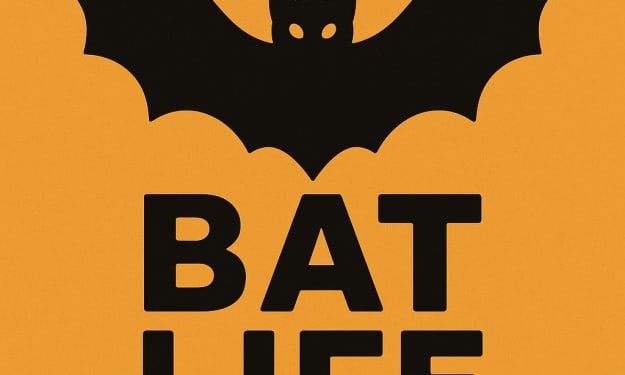
Bat Life: The Silent Guardians of the Night
When most people think about bats, fear and superstition often come to mind. For centuries, these fascinating creatures of the night have been misunderstood, linked with darkness, and shrouded in myths. But the reality is far more beautiful and powerful. Bats are not symbols of fear—they are guardians of ecosystems, silent pollinators, and protectors of balance in nature. The picture “Bat Life” captures more than just the shape of a bat; it speaks of resilience, mystery, and survival. A Creature of Mystery Bats are among the most mysterious animals in the world. With their nocturnal habits, ability to navigate in the dark, and silent wings, they seem almost supernatural. Their silhouettes against the moonlit sky inspire awe and curiosity. The “Bat Life” picture, with its striking black silhouette of a bat against a bold orange background, invites us to look past the shadows. It asks us to reconsider our perception of bats—not as creatures of horror, but as beings of strength, grace, and ecological importance. The True Role of Bats In reality, bats play an essential role in maintaining the balance of our environment. Insect-eating bats consume millions of mosquitoes and pests every night, reducing the spread of disease and protecting crops. Without them, farmers would struggle to keep their fields safe, and entire ecosystems would suffer. Fruit bats and nectar-feeding species act as pollinators, much like bees. They carry pollen from flower to flower, helping plants thrive. In tropical regions, many plants rely solely on bats for pollination and seed dispersal. In this way, bats are not just inhabitants of the night—they are builders of forests and protectors of biodiversity. “Bat Life” reminds us of this unseen service. Behind the simple image lies the story of a species working tirelessly in the shadows for the benefit of all living things. Misunderstood and Feared Despite their importance, bats remain one of the most misunderstood creatures in the animal kingdom. Too often, they are linked with fear, disease, or darkness in popular culture. Movies and myths portray them as dangerous, when in fact, most bat species pose no threat to humans. The truth is that bats are fragile. Habitat destruction, climate change, and human fear are pushing many species toward extinction. White-nose syndrome, a fungal disease, has already wiped out millions of bats in North America. Instead of fearing them, we should be protecting them. The “Bat Life” symbol is bold because it challenges this misunderstanding. It presents bats not as villains, but as icons of survival and strength. A Life in the Shadows To live the “bat life” is to live in the shadows, to thrive where others cannot. Bats are creatures of resilience. They show us that even in darkness, there is beauty and purpose. Their ability to navigate using echolocation—sending out high-pitched sounds and listening for the echoes—teaches us that guidance doesn’t always come from light. Sometimes, clarity is found in silence and patience. In many cultures, bats are symbols of rebirth and transition. They remind us that endings are not final but rather a pathway to new beginnings. Just as bats retreat into caves by day and emerge at night, humans also go through cycles of retreat and reawakening. The Human Connection The “Bat Life” image can also be seen as a metaphor for human strength. Many people live in the shadows of society, unseen and unheard, yet still play vital roles. Just as bats contribute quietly to the health of ecosystems, there are countless individuals who work behind the scenes to nurture, protect, and uplift others. Choosing “Bat Life” is choosing to embrace resilience, to honor those who survive against odds, and to celebrate the beauty of living different A Call to Protect If there’s one message this picture leaves us with, it is this: bats deserve our respect and protection. They are not creatures to fear but to honor. Supporting bat conservation projects, protecting their habitats, and educating others about their importance are small steps we can take to ensure these remarkable beings continue to thrive. “Bat Life” isn’t just an image—it’s a call to action. It invites us to step beyond myths and fear, to see bats for what they truly are: guardians of the night and essential allies in the balance of life. Conclusion The picture of “Bat Life” is more than a graphic—it is a symbol of resilience, mystery, and hidden beauty. It challenges us to reimagine the way we view bats, not as creatures of fear but as silent heroes of nature. Living the “bat life” means thriving in the shadows, finding purpose in the unseen, and embracing the power of resilience. It is a reminder that even in darkness, there is light, and even in silence, there is life.
By Fazal wahid about a year ago in Petlife
The Evolving World of Pet Supplies: Balancing Affordability and Quality
For pet owners, caring for animals extends far beyond providing food and shelter—it involves choosing the right pet supplies, accessories, and products that enhance their comfort, health, and well-being. Today, the market for pet products is expanding rapidly, reflecting not only the growing number of households with pets but also the deeper bond people share with their animal companions. Websites like PetsZone make a wide range of options accessible, from affordable pet products to premium pet accessories that suit different needs and lifestyles.
By charliesamuelabout a year ago in Petlife