bird
A bird's eye view of a life in flight.
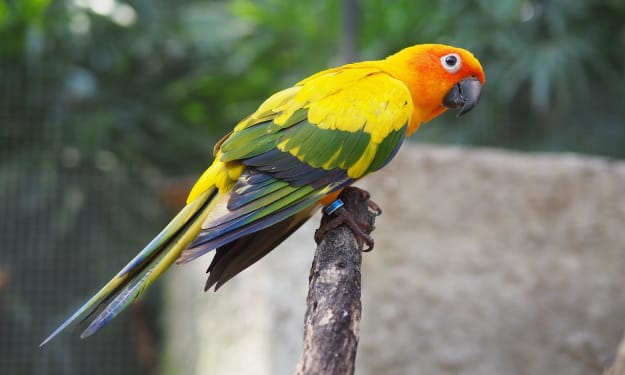
The Vibrant Charm of Sun Conure Parrots: A Guide to Their Care and Personality
Sun Conure parrots, known for their dazzling plumage and lively personalities, are among the most captivating and affectionate pet birds you can bring into your home. With their bright orange and yellow feathers and playful antics, these parrots not only brighten up any room but also bring joy to their owners. In this post, we’ll explore what makes Sun Conures such delightful companions and how to provide them with the best care.
By Emillia Edivane 2 years ago in Petlife
Preparing Your Home for a New Pet. AI-Generated.
Bringing a new pet into your home is an exciting and joyful event, but it also requires careful preparation to ensure your pet feels safe, comfortable, and welcome. Proper planning can help ease the transition for both you and your new companion. This article provides essential steps to prepare your home for a new pet, covering pet-proofing your living space, gathering necessary supplies, creating a routine, and introducing your pet to their new environment.
By Ivan Condes Mier2 years ago in Petlife
Choosing the Right Pet for Your Lifestyle. AI-Generated.
Introduction Choosing the right pet is an important decision that requires careful consideration. The ideal pet should fit seamlessly into your lifestyle, complement your daily routine, and align with your living situation. This article will guide you through the process of selecting the perfect pet, taking into account various factors such as your living space, time commitment, activity level, and personal preferences.
By Ivan Condes Mier2 years ago in Petlife
Murphy’s Unusual Journey to Parenthood: The Disabled Bald Eagle Who Hatched a Rock
In the world of wildlife sanctuaries, stories of resilience and adaptation abound, but few are as heartwarming and unique as that of Murphy, a disabled bald eagle. In 2023, Murphy captured the hearts of many when he made headlines for attempting to hatch a rock, a symbol of his deep parental instincts. His story took an even more touching turn when sanctuary keepers replaced his rock with an orphaned eaglet, allowing Murphy to finally become a real parent. This extraordinary tale is a testament to the incredible bonds that can form in the animal kingdom and the compassionate efforts of those dedicated to wildlife conservation. The Life of Murphy Murphy’s life began like that of many bald eagles, in the wild, soaring the skies and hunting for fish. However, a tragic accident left him with a disability that rendered him unable to fly. Injured and unable to fend for himself, Murphy was brought to a wildlife sanctuary where he would spend the rest of his life. Despite his inability to return to the wild, Murphy adapted to his new environment and became a beloved resident of the sanctuary. Murphy’s disability did not diminish his natural instincts. As a bald eagle, he retained the strong drive to nurture and protect, behaviors that are deeply ingrained in these majestic birds. This instinct was vividly displayed in 2023 when Murphy began an unusual behavior that caught the attention of sanctuary staff and visitors alike. The Rock Episode In early 2023, sanctuary keepers noticed Murphy engaging in a peculiar activity. He had selected a rock from his enclosure and begun treating it as an egg. He built a nest around the rock, carefully turning it and sitting on it as if it were a real egg. This behavior, while unusual, was a clear demonstration of Murphy’s instinctual drive to parent. Murphy’s dedication to his rock egg was both heartwarming and heartbreaking. For hours each day, he would sit atop the rock, protecting it from perceived threats and ensuring it was kept warm. Visitors to the sanctuary were moved by Murphy’s commitment and the tenderness with which he cared for his inanimate egg. His actions highlighted the deep-seated parental instincts of bald eagles and the emotional capacities of animals, often underestimated. The Intervention Sanctuary keepers, touched by Murphy’s actions and aware of his unfulfilled parental instincts, devised a plan to give Murphy a more fulfilling role. Around the same time, an orphaned eaglet in need of care was brought to the sanctuary. The eaglet had lost its parents and required the nurturing attention that only another eagle could provide. The keepers saw this as a unique opportunity to not only provide care for the eaglet but also to fulfill Murphy’s desire to parent. The transition had to be handled with great care to ensure both Murphy and the eaglet’s well-being. Keepers gradually introduced the eaglet to Murphy’s enclosure, allowing the two to become accustomed to each other’s presence. The hope was that Murphy would accept the eaglet as his own and provide the care and protection it needed to thrive. Murphy Becomes a Parent The introduction of the eaglet to Murphy’s nest was a delicate and gradual process, but it quickly became evident that Murphy’s paternal instincts were strong. He began to show interest in the eaglet, initially approaching it with caution. Over time, Murphy’s behavior shifted from curiosity to protective care. He started to feed the eaglet, preen its feathers, and guard it just as he had done with the rock. For Murphy, this was a transformative experience. The rock had been a substitute for his instinctual need to parent, but the eaglet was a living, breathing creature that responded to his care. The eaglet, in turn, thrived under Murphy’s protection. It grew stronger each day, benefiting from the nurturing attention of its adoptive father. The Impact on the Sanctuary and Beyond Murphy and his eaglet quickly became the stars of the sanctuary, drawing visitors and media attention from far and wide. Their story resonated with people on a deep emotional level, highlighting the remarkable bonds that can form in the animal kingdom and the power of compassion in conservation efforts. The sanctuary used this opportunity to educate the public about bald eagles, their behaviors, and the importance of wildlife rehabilitation and conservation. Murphy’s story also sparked broader conversations about the emotional lives of animals. His dedication to the rock and subsequent adoption of the eaglet challenged many preconceived notions about animal behavior and emotions. It underscored the idea that animals, much like humans, have complex emotional needs and capacities for forming deep bonds. Lessons from Murphy’s Story Murphy’s journey to becoming a parent offers several important lessons. First and foremost, it highlights the importance of understanding and respecting the natural instincts of animals. Even in captivity, animals retain their inherent behaviors and drives, and recognizing these can lead to more compassionate and effective care. Secondly, Murphy’s story is a powerful reminder of the impact of wildlife conservation efforts. Sanctuaries play a crucial role in providing safe havens for injured and orphaned animals, giving them a chance to live fulfilling lives even when they cannot return to the wild. The dedication and creativity of sanctuary staff in finding ways to meet the emotional and physical needs of their animal residents are commendable. Finally, Murphy’s story teaches us about resilience and adaptation. Despite his disability, Murphy found ways to fulfill his instincts and purpose. His journey from hatching a rock to nurturing a real eaglet is a testament to the strength and adaptability of animals in the face of adversity. Conclusion: A Heartwarming Legacy Murphy’s story is more than just a tale of a disabled bald eagle; it is a narrative of hope, resilience, and the unbreakable bonds that can form between creatures. His journey from caring for a rock to becoming a devoted parent to an orphaned eaglet is a touching reminder of the emotional capacities of animals and the profound impact of compassionate conservation efforts. As Murphy and his eaglet continue their lives at the sanctuary, they stand as living symbols of the power of instinct, the importance of empathy, and the enduring spirit of the natural world. Their story will undoubtedly inspire future generations to appreciate and protect the incredible creatures with whom we share our planet.
By Deji Akomolafe2 years ago in Petlife
Cuckoo - The Heartless Mother and the Killer Child
The rainy season is a wonderful time for new life to begin to revive in the tropical rainforests. Plants put on a new green coat and somewhere in the forest, wetlands, reeds and reeds also grow. It is an ideal shelter and nesting place for some species of marsh warblers of the genus Locustella. It is also the right time for cuckoos to carry out the "desirable breeding mission" that their ancestors passed down in the struggle for survival.
By Ken Daklak2 years ago in Petlife
The Mystery of the Bird That Heralds Death
The owl calls seven times, death is for men, and nine times, death is for women. It is also rumored that when a person is about to die, they will release a special smell and the owl with its sensitive hearing, has detected and signaled. Because of this belief, when the owl squeals in a long, mournful series in the quiet of the night, it always creates a creepy feeling.
By Ken Daklak2 years ago in Petlife
The only poisonous bird in the world, touching its feathers can kill you
When we think of birds, we often think of beautiful, gentle creatures with sweet songs. However, few people know that in Papua New Guinea there are many species of birds that can kill people with poison - and you should not pet them or intend to pet them.
By Ken Daklak2 years ago in Petlife
10 interesting secrets about woodpeckers
Surprised with interesting facts about woodpeckers 1. Why don't woodpeckers get headaches? Pileated woodpeckers, the largest species in North America, slam their heads into trees at speeds of up to 15 miles per hour, 20 times per second. So why aren't their heads blown to pieces?
By Ken Daklak2 years ago in Petlife