
Scientists are unsure of the reason why city birds are more afraid of women than men.
Walking tests reveal subtle behaviour.

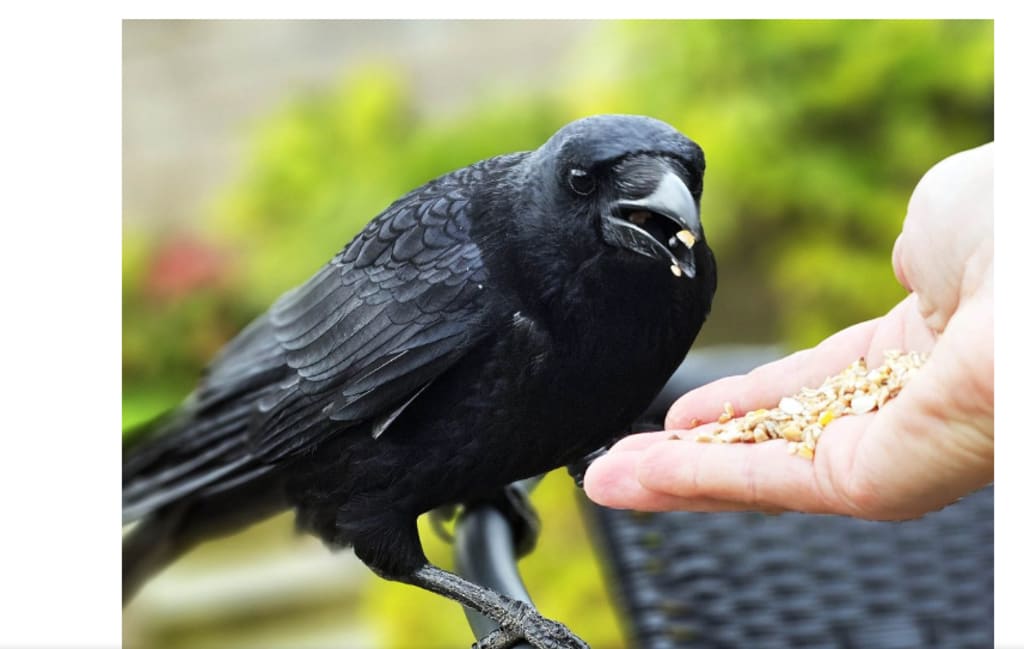
When a woman approaches city birds, they run away more quickly than when a guy does. This finding helps scientists understand how wild animals perceive humans by catching up on signs that humans frequently miss. Everyday bird encounters in urban parks and green areas across five European countries revealed an odd yet persistent pattern.
A group at the University of Turin (UniTo) under the direction of Dr. Federico Morelli compared the distance that humans may approach birds before they fled. The gender gap persisted across nations and animals, the researchers discovered. Despite having rather varying levels of tolerance for humans, both city pigeons and magpies exhibited the same general trend.
Birds respond according to their gender.
The distance between an animal and a threat when it flees is known by behavioural ecologists as the escape point flight initiation distance. Because staying close to a risk is less harmful than leaving, a longer gap causes the bird to stop feeding sooner. In birds, women caused an average escape distance of around 28 feet, whereas men triggered a length of about 25 feet. For birds, especially when looking for food, the three-foot gap may seem negligible.
Walking tests reveal subtle behaviour.
In order to accurately study the bird's response, field crews kept the approaches minimal. Every observer looked squarely at a contented bird as they approached it at a steady pace.
When necessary, pairs of men and women concealed longer hair, dressed similar colours, and were as near in height as possible. These parameters narrow the puzzle to produce more nuanced indications for the birds, but they do not eliminate all human differences.
Many animals adhere to trends
Because common city birds did not exhibit a single personality type, it was more difficult to discount the study's findings. While pigeons and long-tailed tits allowed humans to go closer, magpies and green woodpeckers typically ran early.
The primary study was on 37 species with sufficient repeated records out of the 2,701 observations of 77 species in the entire record. A pattern that spans both tolerant and cautious birds suggests that one peculiar species is not responsible for the outcome.
Birds are more careless when they are male.
In the same metropolitan environment, male birds permitted humans to approach them more closely than female birds. Given that males in many animals benefit from displaying bravery, protecting space, or courting mates, that behaviour may represent risk trade-offs.
When survival, nesting investment, or the need to blend in with their surroundings are at risk, female birds may go earlier. Nevertheless, the birds' general reactions to men and women were the same for both sexes.
A signal that is challenging to recognise
The question was not resolved by obvious explanations because the study controlled for a number of characteristics that people would notice first. The birds' responses could not be entirely explained by height, clothing colour, or apparent hair.
Morelli stated, "We have discovered a phenomenon, but we truly don't know why." This uncertainty is important because movement, smell, body shape, or a combination of these factors might alter the signal.
Odour could affect the response.
In previous studies, smell-linked stress signals were used by laboratory mice to respond to male experimenters. Because stress decreased the rats' reaction to discomfort, male odours altered pain behaviour in that study.
In another experiment, great tits used their sense of smell to avoid nest boxes that smelt like predators. Scent alone is still difficult to confirm, though, as the European team approached birds from a distance.
Cues must be isolated in future research.
Instead of treating the birds' human interaction as a single source, the strongest subsequent experiments would divide observer sex into pieces that the birds might actually perceive. One aspect at a time, researchers might change walking technique, fragrance exposure, body form, or face visibility.
Additionally, larger teams would demonstrate if the spring sampling in 2023 revealed a persistent pattern or a transient reaction. Until then, this information ought to alter research design more than it alters park visitors' daily recommendations.
Perception of wildlife is extremely accurate.
Urban birds track people with surprising accuracy, as evidenced by a three-foot escape gap that is consistent across species and cities. The next stage is straightforward for scientists: note who approaches the animal and determine which human cues are significant in different seasons and locations.
About the Creator
Enjoyed the story? Support the Creator.
Subscribe for free to receive all their stories in your feed.
Comments
There are no comments for this story
Be the first to respond and start the conversation.