
Dog Throwing Up Yellow? 7 Causes & When to Worry
A Veterinarian’s In-Depth Report on the 7 Causes, Critical Warning Signs, and Science-Backed Prevention Strategies That Protect Your Dog’s Health and Your Peace of Mind

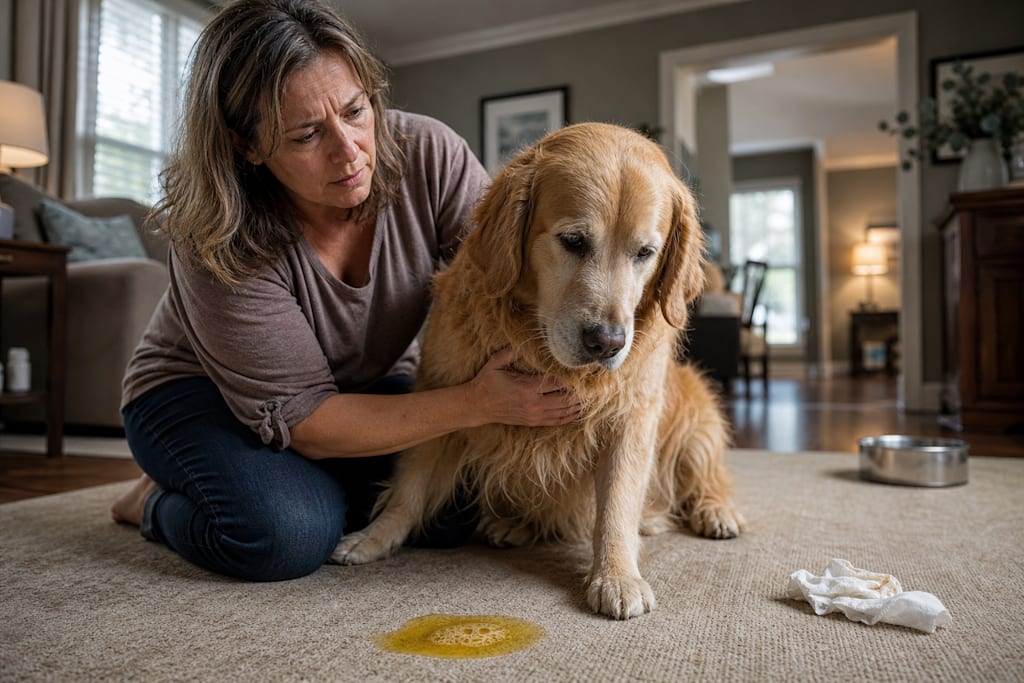
Your dog throwing up yellow is almost always vomiting bile, a digestive fluid produced by the liver and gallbladder that can signal anything from a harmless empty stomach to a life-threatening blockage, and as a veterinarian who has guided countless worried pet parents through this exact scenario, I can tell you that while a single, isolated episode of yellow vomit in an otherwise bouncy, hungry dog rarely spells disaster, repeated episodes, especially when paired with lethargy, pain, or refusal to eat, demand swift veterinary intervention because the root cause could be bilious vomiting syndrome, pancreatitis, food allergies, Addison’s disease, or even an intestinal obstruction, and knowing precisely how to distinguish a minor hiccup from a major crisis is the key that saves lives, spares families thousands in emergency bills, and restores peace to your home before panic takes hold.
What That Yellow Fluid Really Is
When your dog throws up yellow, you are looking at bile, the same greenish-yellow alkaline liquid their body manufactures nonstop to break down fats and shuttle waste products out of the liver, and while bile usually travels from the gallbladder into the small intestine to do its job, an empty stomach, reversed motility, or an obstruction can push it backward, causing it to pool in the stomach lining where it acts as a potent irritant that triggers forceful vomiting, often first thing in the morning or after long gaps between meals, and recognizing its characteristic traits — a bright mustard or greenish tint, often foamy or slimy, and surprisingly odorless compared to partially digested food — helps you differentiate simple bile reflux from the more alarming vomit that resembles coffee grounds or contains visible blood, which is always a red flag demanding an immediate trip to the emergency room.
Why Bile Builds Up in the Stomach
A healthy, well-timed feeding schedule keeps bile flowing downstream, but when a dog’s stomach sits empty for more than eight to twelve hours, the duodenum can spasm and push bile up into the stomach, a process that breeds like Bulldogs, Labrador Retrievers, and toy breeds with their sensitive gastric wiring are genetically wired to experience more frequently, and factors such as stress, erratic meal times, or a sudden diet change further destabilize that delicate rhythm, turning an ordinary night’s sleep into a pre-dawn vomit session that leaves you scrubbing the carpet and your dog pacing in confusion, all because the stomach’s protective mechanisms were overwhelmed by a fluid that was meant to stay downstream.
The 7 Most Common Causes of Yellow Vomit
1. Bilious Vomiting Syndrome Explained
Bilious vomiting syndrome, or BVS, is the prime suspect when your dog reliably throws up yellow foam in the small hours or right before breakfast, since it stems from prolonged fasting that lets bile reflux into the stomach and gnaw at the mucosa, and while the condition itself is not inherently dangerous, the chronic irritation it causes can progress to a thickened, inflamed stomach lining if ignored, which is why veterinarians typically recommend a simple yet powerful fix — a small, easily digestible bedtime snack like a spoonful of plain boiled chicken and rice — that acts like a nightshift scrub crew, occupying the stomach so bile has nothing to attack, and for dogs who do not respond to meal timing alone, prokinetic agents or antacids tailored to the individual case often quiet the cycle within days, allowing both the dog and the owner to reclaim peaceful mornings.
2. Gastrointestinal Inflammation and Infections
When yellow vomit appears alongside diarrhea, a gurgling belly, or a sudden disinterest in chasing the ball, inflammation in the gut — whether from a viral enemy like parvovirus, a bacterial overgrowth, an ulcer burned into the stomach wall, or even a parasite load that has quietly built up over weeks — must be ruled out, because the same bile that froths up could be a smoke signal indicating that the intestinal lining is raw and weeping, and because conditions such as hemorrhagic gastroenteritis can escalate from first vomit to dangerous dehydration in under twelve hours, any dog that vomits yellow more than once in a twenty-four-hour window and seems dull or uncomfortable needs a same-day vet visit for bloodwork, a fecal analysis, and possibly imaging to map the inflammation before it spirals.
3. Pancreatitis The Silent Morning Mimic
Pancreatitis is the great deceiver that often strikes three to five days after a fatty meal — think stolen bacon grease, a holiday roast, or even a rich training treat — but can also emerge within twenty-four hours of the dietary insult, and while the classic sign is a dog standing with an arched back, retching yellow bile, and refusing even a sliver of chicken, the confounding truth is that in roughly ninety percent of cases, the exact trigger remains undetectable, forcing clinicians to rely on a careful history, a snap cPL test, and supportive care that rests the pancreas, quells nausea, and rehydrates the patient, because without early intervention the inflammatory cascade can sweep the liver and kidneys into a dangerous downward spiral that demands days of hospitalization and a substantial financial outlay.
4. Intestinal Blockages A Race Against Time
A dog that vomits yellow relentlessly, paws at its mouth, and tries to vomit but produces nothing — known as non-productive retching — is sounding the loudest alarm for a foreign body obstruction, a scenario in which a sock, a corn cob, a chunk of toy, or even a wad of hair has lodged in the narrow turns of the small intestine, blocking the passage of food and fluid while bile piles up in the stomach, and because pressure can choke off blood supply to the intestinal wall within hours, turning a recoverable surgical case into a necrotic catastrophe, this presentation is never a wait-and-see situation, and any dog who cannot keep water down for more than a couple of rounds of vomiting should be raced to the nearest emergency center for radiographs or ultrasound to give the surgeon the best window to work with.
5. Addison’s Disease The Stress-Sensitive System
Addison’s disease, an adrenal condition where the glands fail to produce enough cortisol to handle even minor stress, frequently masquerades as recurring, intermittent yellow vomiting that owners mistake for a simple sensitive stomach, because a trigger as trivial as a bath, a thunderstorm, or a houseguest can tip an Addisonian dog into a crisis marked by profound lethargy, a slow heart rate, and bile-tinged puddles, and since the disease can go undiagnosed for months while the vomiting waxes and wanes, any dog with a pattern of unexplained bile vomiting paired with a strong stress trigger, a history of waxing and waning weakness, or breed predisposition in Standard Poodles and Portuguese Water Dogs should have an ACTH stimulation test to catch this manageable but life-threatening imbalance before a full-blown Addisonian collapse occurs.
6. Food Allergies and Intolerances That Develop Over Time
It is a startling truth that a dog can suddenly become allergic to a protein it has eaten happily for years, with beef, dairy, chicken, eggs, wheat, and corn leading the list of immunological offenders that spark a delayed, cell-mediated reaction in the gut, resulting in chronic low-grade vomiting of yellow bile, loose stools, a dull coat, and itchy skin that owners may fail to connect to the diet, and because the gold-standard diagnosis is a strict twelve-week elimination diet using a novel protein or hydrolyzed food, during which every single treat, table scrap, and flavored medication must cease, the process demands the meticulous patience of a detective, yet the payoff for those who persevere is a stable, comfortable dog no longer trapped in an inflammatory loop that far outweighs the temporary inconvenience of dietary austerity.
7. Stress-Induced Vomiting in an Hypersensitive World
Your dog’s emotions are not separate from its gut, and the hardwired brain-gut axis means that anxiety from separation, the arrival of a new pet, a chaotic household, or even the owner’s own tension releases a flood of neurotransmitters that slow gastric emptying and tighten the pyloric valve, turning the stomach into a bile-filled balloon that eventually forces itself empty in a dramatic yellow arc, so a dog that vomits predictably before you leave for work or after an afternoon of neighborhood fireworks is not being dramatic but rather experiencing a physiological cascade as real as any virus, and managing these episodes requires a multimodal plan that attacks anxiety from multiple angles, including environmental enrichment, counterconditioning, and sometimes veterinarian-guided anti-anxiety medication that treats the root cause instead of chasing the vomit.
The Hidden Financial and Emotional Cost of Ignoring the Rhythm
Beyond the immediate mess on the rug, chronic yellow vomiting carries a toll that traditional listicles overlook, because a dog that vomits twice a week for six months often rings up a cascade of hidden expenses — the carpet cleaners, the missed workdays while waiting for a vet appointment, the ER visit that finally arrives at 2 a.m. when the blockage became critical, the premium hydrolyzed diets, the endless supplements — and the emotional weight of watching your companion suffer, of second-guessing whether today’s episode is serious, erodes the joy of pet ownership, so taking the time to document every vomit in a dedicated diary that tracks time, color, surrounding stressors, and response to meals transforms you from a frantic bystander into an empowered advocate, and that simple notebook, shared with your vet, often cuts diagnostic dead-ends by weeks and saves an average household anywhere from 800 to 3,500 in avoided advanced imaging, repeat consultations, and unnecessary medication trials, all because a pattern was recognized before the crisis forced a midnight decision.
Practical Prevention Strategies That Work
The most effective defense against yellow bile vomiting is rebuilding the feeding schedule around your dog’s biological clock, which means serving three smaller meals at consistent intervals instead of two large portions, anchoring the ritual to your own breakfast, lunch, and dinner so the stomach never endures a vacuum longer than eight hours, and for dogs wired to vomit at dawn, a bedtime snack made from a quarter-cup of plain canned pumpkin (not the spiced pie filling) mixed with a probiotic powder designed to calm canine guts provides a double layer of protection, while offering ice cubes instead of a full water bowl right after a vomit episode prevents the frantic gulping that can retrigger the reflex, and swapping out food puzzles for morning enrichment keeps anxious guts busy, all strategies that cost pennies but yield thousands in peace of mind, provided you never, under any circumstance, administer human anti-nausea or pain medications without explicit veterinary approval, because common drugs like ibuprofen or acetaminophen are exquisitely toxic to dogs and can convert a treatable vomiting episode into a fatal crisis within a single dose.
What the Next Year Will Mean for You and Your Dog
Looking forward, as veterinary telemedicine expands and wearable health monitors for pets begin tracking gut motility and pH in real time, the default response to yellow vomit will shift from Google panic to personalized data-driven insight, meaning that the pet owner who today starts a rigorous vomit diary and establishes a bank of baseline bloodwork and ultrasound images will be years ahead of the curve, poised to catch subtle shifts long before they become emergencies, and the dogs who benefit most will be those whose guardians recognized early that a splash of yellow foam is not a random nuisance but a language their dog’s body speaks fluently, a language they have now learned to interpret with the confident clarity that saves lives, slashes costs, and preserves the unconditional trust that makes the canine bond so extraordinary.
About the Creator
Kamel Saidani
Psychology graduate passionate about understanding human behavior, mindset, and personal growth. I share simple, practical insights to help people think deeper, grow stronger, and live more intentionally.
Enjoyed the story? Support the Creator.
Subscribe for free to receive all their stories in your feed.
Comments
There are no comments for this story
Be the first to respond and start the conversation.