
DOG INTELLIGENCE UNLEASHED & BIRDS AS CLIMATE INDICATORS
Have you ever watched your dog figure out a tricky puzzle toy and marveled at the moment of triumph in their eyes?

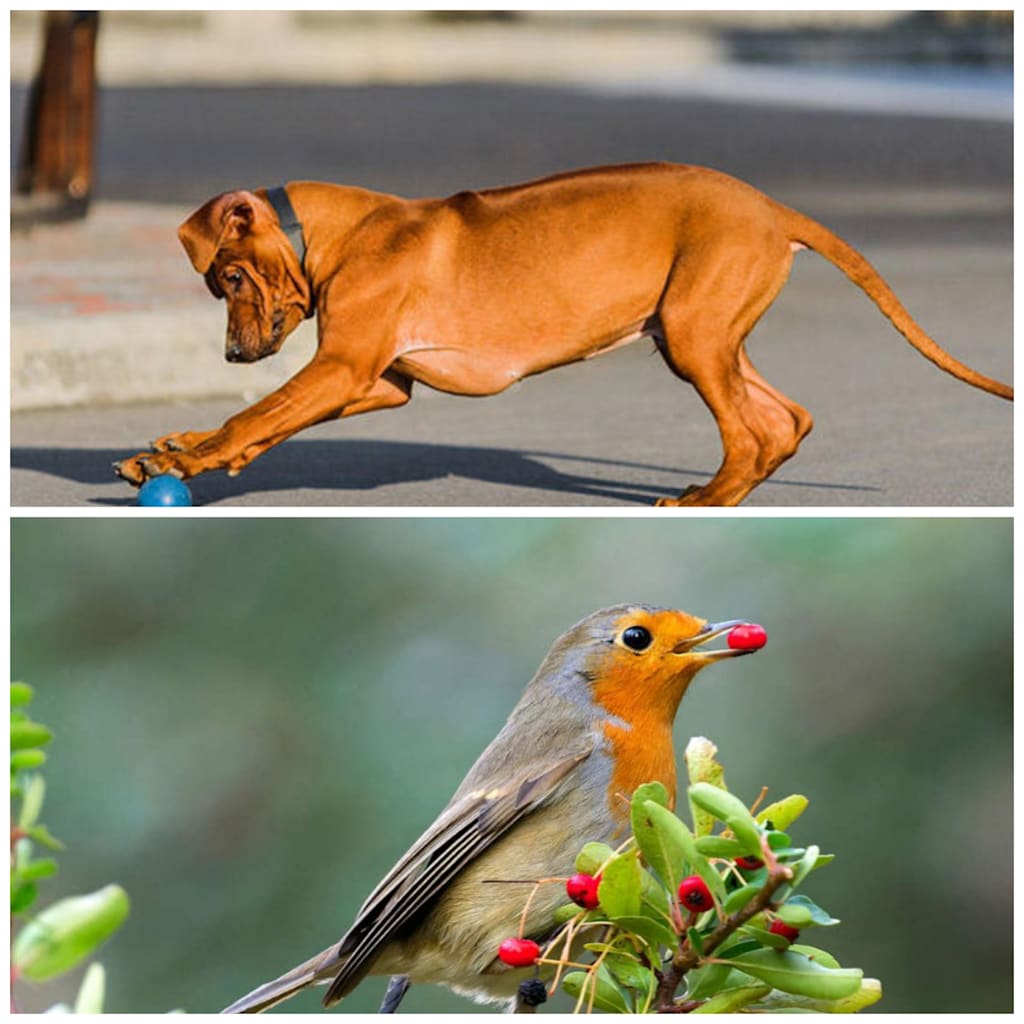
Have you ever watched your dog figure out a tricky puzzle toy and marveled at the moment of triumph in their eyes? That split second when a dog seems to think, plan, and act reveals a surprising depth of intelligence often overlooked.
Beyond wagging tails and playful antics, dogs display a remarkable ability to navigate their world, respond to humans, and even solve problems that require memory, attention, and creativity. Understanding this intelligence helps us appreciate their unique minds and strengthens the human-animal bond.
Problem-Solving Skills Dogs approach obstacles with surprising ingenuity, whether it's opening a gate, reaching a hidden treat, or learning to navigate an unfamiliar environment. Their problem-solving involves observation, trial and error, and memory. Puzzle Toys and Hidden Treats – Behavioral studies show that when faced with a food puzzle, dogs explore multiple strategies, remembering successful methods for future attempts. Border Collies and Poodles often excel at these tasks due to their high trainability. Environmental Navigation – Dogs can learn complex routes through repetition, observation, and cues from humans. Search-and-rescue dogs, for instance, remember large areas and paths, demonstrating spatial intelligence akin to humans' mental maps.
Adaptive Thinking – A dog left with an unfamiliar object may attempt several actions: nudging, pawing, or circling. Their ability to adapt strategies shows flexible thinking rather than simple instinct.
Learning Commands and Patterns Dogs' capacity to learn language-like cues and behavioral patterns highlights a different dimension of intelligence. Cue Recognition – Dogs respond to verbal instructions, hand signals, and even subtle gestures, understanding context and anticipating human expectations. For example, a dog may sit upon hearing “sit” even in a noisy environment or when a treat is not immediately visible.
Repetition and Reinforcement – Positive reinforcement allows dogs to link actions with outcomes. Consistent repetition helps them memorize sequences, such as retrieving objects in a specific order. Social Learning – Dogs often observe other dogs or humans and imitate behavior. Puppies, for instance, learn faster by watching older dogs solve problems or perform tasks, demonstrating observational learning.
Understanding Human Emotions Beyond problem-solving and obedience, dogs demonstrate emotional intelligence that strengthens human relationships.
Emotional Cues – Dogs can detect changes in human expressions, body posture, and tone of voice. They often mirror or respond appropriately, showing empathy and awareness. Comfort and Support – Therapy dogs exemplify emotional intelligence, sensing stress, sadness, or anxiety in humans and responding with calming behaviors such as nuzzling or sitting close. Anticipation and Cooperation – Dogs can anticipate routines or emotional needs, such as bringing a leash when sensing a walk is expected, reflecting an understanding of patterns in human behavior.
Conclusion Observing these abilities reminds us that intelligence in dogs is multifaceted: cognitive, social, and emotional. Each interaction, whether a puzzle solved or a comforting nuzzle, reflects an intricate web of learning, memory, and perception. By recognizing and nurturing this intelligence, we not only deepen our bond with dogs but also gain insight into the evolutionary forces that have shaped their minds alongside ours. The next time your dog surprises you with clever behavior, take a moment to marvel at their extraordinary capacity for thought and empathy.
-----Next Article -----
Discover how observing birds reveal hidden changes in the environment. On a quiet morning, watching a flock of sparrows flit between trees, it's easy to miss how much their behavior tells us about the environment. Birds are more than just beautiful companions—they act as living barometers for climate change. Their migration patterns, breeding cycles, and population shifts provide clues that scientists use to understand how our planet is warming and ecosystems are transforming. Migration Patterns Reveal Shifts:- Birds often migrate thousands of miles, and changes in these journeys can indicate broader environmental changes. Timing Adjustments :- Many species are arriving earlier in the spring and leaving later in the fall. These shifts reflect changes in temperature, food availability, and seasonal cycles. For example, some European warblers now migrate two weeks earlier than they did 50 years ago. Actionable Example :- Track local migratory birds in your area using apps or community science projects. Recording their arrival and departure times over months can help you notice shifts, mirroring how researchers detect climate trends through bird migration. Breeding and Nesting Patterns Reproductive cycles in birds are highly sensitive to climate conditions. Early or Delayed Breeding :- Warmer springs may cause birds to lay eggs sooner, while unpredictable weather can delay nesting. These changes affect the survival of chicks and, over time, can influence population stability. Actionable Example :- Observe local bird nests during the breeding season and note the timing of egg-laying and chick development. This hands-on tracking demonstrates how climate impacts life cycles, similar to professional monitoring programs. Population Changes as Indicators Fluctuations in bird populations can signal environmental stress. Declining or Expanding Populations :- Species may decline due to habitat loss, extreme weather, or shifts in food supply. Conversely, some species expand into new areas as conditions change. For instance, certain southern species are now found further north, reflecting warming temperatures. Actionable Example :- Participate in local bird counts or citizen science programs. Comparing yearly data allows you to see which species are thriving or declining, mirroring larger climate-driven trends. Birds as Habitat Monitors :- Bird behavior also indicates how ecosystems are responding to environmental stressors. Habitat Use and Food Sources :- Birds rely on specific habitats and food chains. Changes in where they forage or what they eat reveal alterations in ecosystems caused by climate shifts. For example, declining insect populations due to temperature changes impact insect-eating birds. Actionable Example :- Observe feeding behavior in your backyard or local park. Noticing which foods birds rely on and how their choices shift across seasons highlights the subtle effects of environmental change. Scientific Collaboration and Conservation Bird monitoring supports climate research and conservation strategies. Global Tracking Projects :- Scientists use satellite tracking, banding, and community observations to compile large datasets. These efforts allow predictions about species survival, habitat resilience, and climate impacts on ecosystems worldwide. Actionable Example:- Contribute to global initiatives like eBird or local conservation programs. Your observations help create a dataset that informs climate models and conservation decisions, showing how individual efforts connect to global understanding. Conclusion :- Birds offer a window into the impacts of climate change that is both immediate and measurable. From migration patterns to population shifts, they reflect the health of ecosystems and reveal subtle changes humans might otherwise miss. Paying attention to these feathered indicators reminds us that protecting birds and their habitats is not just about preserving wildlife—it's a way to understand and respond to the changing world around us. Watching the skies with awareness turns a simple birdwatching session into a glimpse at the future of our environment.
About the Creator
Enjoyed the story? Support the Creator.
Subscribe for free to receive all their stories in your feed.
Comments
There are no comments for this story
Be the first to respond and start the conversation.