
Animals' personality influence how they act with people and how long they live.
Visitors and animal personalities

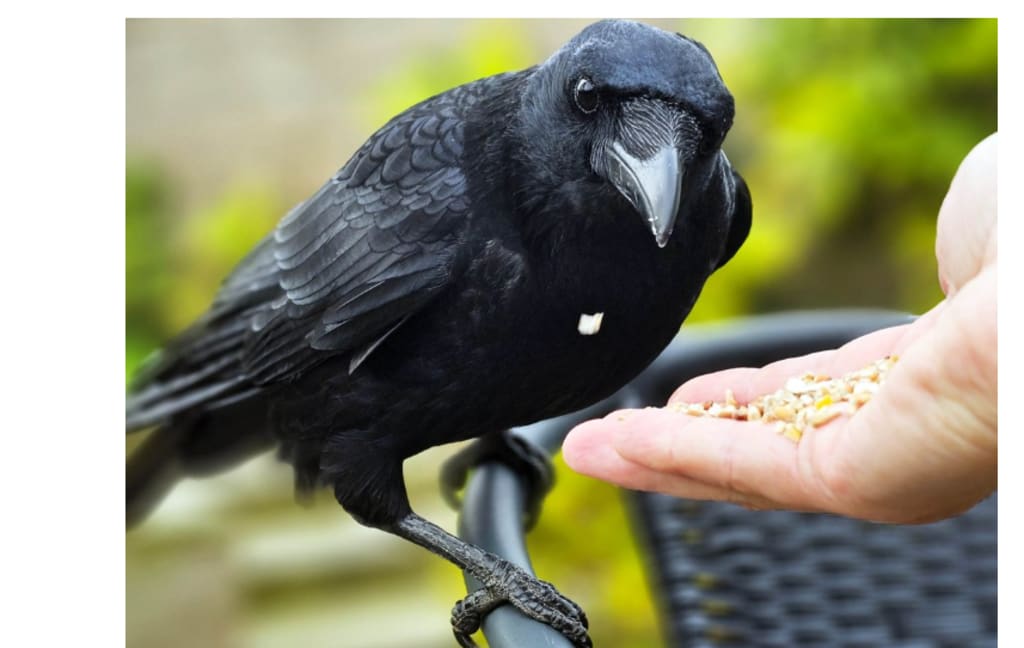
Animals' "animal personalities," or behaviours, and degree of human interaction ultimately influence how long they live and whether or not they procreate. For instance, scientists have discovered that fan-tailed ravens, which are medium-sized desert-dwelling corvids indigenous to the Middle East and North Africa, live longer along the Dead Sea when they avoid humans. The study demonstrates that human contact with animals can be directly linked to a particular species in addition to decreasing a population.
Visitors and animal personalities
Fan-tailed ravens divide their days between busy tourist destinations and more peaceful feeding spots remote from people along the Dead Sea shoreline. By monitoring their decisions, Dr. Miguel de Guinea of the Hebrew University of Jerusalem demonstrated that the birds most inclined to remain close to people were also the most likely to perish.
This pattern persisted long enough to distinguish between ravens that stayed away from people and those who stayed where food was available and human contact was unavoidable. The stark disparity raised concerns about the raven population's ability to survive. The population drop could be caused by the same behaviour that simultaneously offers a steady supply of food.
Stable characteristics with immediate repercussions
These long-lasting variations are referred to by scientists as animal personality—behavioral patterns that don't change over time within the same person. Fan-tailed ravens, Corvus rhipidurus, were put through four tests in this instance: strange food, odd objects, people in the vicinity, and changed spaces.
Birds with a wide taste for risk typically gravitated toward the other types of tests when they rushed toward one. Because the tests reflected the forces influencing the ravens' habitat rather than being arbitrary gimmicks, consistency across testing was important.
The price of being close to people
The project took place on a stretch of desert next to the Dead Sea, which is lined with hotels, campgrounds, highways, and overlooks. Average daily visits increased by 60.3% between 2015 and 2023, bringing more food and dangers into raven territory.
While tourist destinations provided convenient food scraps, they also put birds in danger from waste, contaminated food, and direct human contact. Thus, simple food could turn hazardous, rewarding daring birds while raising their chances of dying.
Information from tagged people
51 birds with solar tracking tags were released by the crew after the tests were completed, and several of them were tracked for months. In order to compare travel distance, time spent near tourist destinations, and visits to feeding places outside of areas with high levels of human activity, researchers employed 41 complete tracking records.
Many birds were drawn to tourist areas by the heat and longer visitor weeks, where they slowed down and stayed longer. However, individual patterns remained consistent enough to distinguish between confident birds that remained in populous regions and cautious birds who kept their distance.
Risk-taking and animal personality
After being released, 22 of the 51 tagged ravens were later found to be dead, which was the most startling figure. While quicker, farther-ranging birds lived longer, birds who spent more time at tourist destinations were significantly more likely to perish.
According to Dr. Guinea, "our findings show that consistent behavioural traits are not just quirks, they can determine life or death." This discovery is particularly critical for fan-tailed ravens in the Dead Sea, where the population is rapidly declining and may soon disappear from the area, Guinea stressed.
Connecting movement to an animal's personality
Observing whether ravens would feed close to a visible person was one experimental task that stood out since it most closely resembled real life. Later, birds grown in captivity spend less time near the range's edge and more time with tourists.
Edge locations were located away from densely populated areas and close to each bird's home range. Scientists were able to further validate the data from the two environments by comparing the behaviour of birds in cages with that of birds in the open desert.
Reactions to a world that is changing
The ravens also adapted to heat, crowds, and whatever food was available that week, so personality was not the only explanation. Over time, a large portion of the variation occurred within the same birds, demonstrating both flexibility and stable tendencies.
This combination of stability and adaptability contributes to the explanation of why it is still difficult to forecast the impact of human presence along a single shoreline. Keeping an eye on these variations is crucial when assessing the birds' risk levels.
The role of tourism in evolution
The birds who are most eager to take use of tourist destinations appear to be the least likely to survive, suggesting that human development may now be filtering the population itself. Despite having easy access to food, Dead Sea ravens do not have an advantage when they are close to people.
In the short term, eating food close to hotels and campers saved people effort, but it also brought contaminants and inadequate nourishment. Because the safest path to food requires more energy and travel, a population can shrink even when calories are plentiful.
Minimising risks in human areas
Plans for conservation sometimes assume that every member of a species reacts in the same way, although this is not the case. Cleaner tourist destinations, safer disposal of waste, and fewer food hazards should reduce danger for the daring birds that are most likely to approach humans.
Additionally, managers may need to safeguard the range edge's quieter feeding places. where ravens are already able to obtain safer food. Reducing the risks that endanger more daring ravens may be more important to saving the population than aiding the typical raven.
Beyond the connections between behaviour and survival
The study demonstrated how human activities may alter wildlife from a single individual and beyond by connecting personality, movement, and survival into a single chain. Future research must examine how these ravens' ability to recover is influenced by their food, breeding success, and particular reasons of mortality.
About the Creator
Enjoyed the story? Support the Creator.
Subscribe for free to receive all their stories in your feed.
Comments
There are no comments for this story
Be the first to respond and start the conversation.