Issues
From Homeless to Wall Street
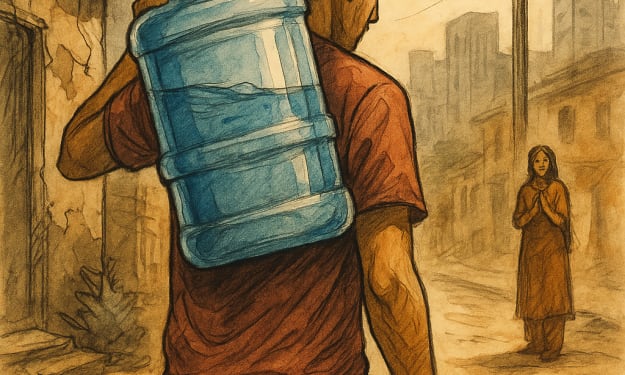
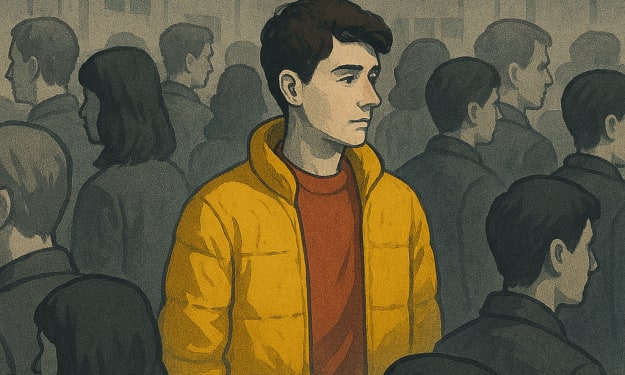
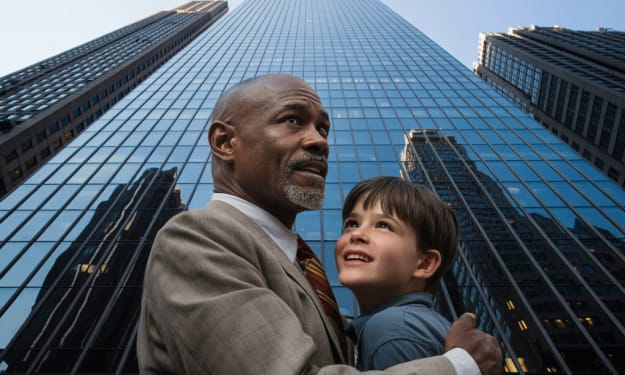
The city never sleeps, but for some, it never stops hurting either. For Darren Cole, the streets of New York weren’t just sidewalks and subway tunnels—they were home. Not by choice, but by consequence. At 15, Darren wasn’t worried about missing homework or prom invitations. He was worried about whether the shelter he stayed in would have a bed that night, or whether he’d eat anything other than a bruised banana for dinner. While other kids his age played video games or scrolled through their phones, Darren studied strangers’ habits, learned how to navigate between danger and dignity, and counted his change like it was gold. He wasn't a criminal. He wasn't addicted. He was just a kid—abandoned by a system, forgotten by a family, but not by hope. --- The First Fall Darren’s mother, Clarissa, had once worked as a cashier in Brooklyn. His father had long disappeared, leaving behind little more than shouting matches and bruises. Clarissa fought to stay clean, but after losing her job, addiction knocked louder. Darren remembered the day she left their apartment, eyes hollow, saying she’d be back. She never came home. By the end of that week, eviction notices covered their door. Darren bounced between couches, then shelters. Eventually, he landed in one of the roughest youth centers in the Bronx, where broken kids grew up fast or got swallowed whole. Still, something inside Darren refused to give in. --- Books and Backpacks He carried one possession everywhere: a black backpack. Inside were two changes of clothes, a small flashlight, a photo of his mom, and three books—two borrowed from a library he was technically banned from, and one he’d found on a bench titled The Intelligent Investor by Benjamin Graham. The words didn’t make much sense at first. Stock, equity, dividends—it was a foreign language. But it felt like power, and Darren wanted power—not to control others, but to control his life. He read by streetlamps. He asked questions in shelters. He listened in fast-food shops to men in suits talking about “leverage” and “hedge funds.” While sweeping floors or doing dishes at odd jobs, he played podcasts about financial markets on a broken MP3 player. He wasn’t surviving anymore. He was preparing. --- The Breakthrough Job At 17, after being kicked out of another shelter for defending a younger boy, Darren ended up sleeping on the floor of a 24-hour laundromat. A diner nearby noticed him showing up every morning to wash off in the restroom. The manager, Jorge, offered him a job washing dishes. “You can’t look like a raccoon forever,” Jorge joked, handing him an apron. Darren worked harder than anyone else. Double shifts, no complaints. On breaks, instead of texting or smoking, he read finance books. One night, a man in a navy-blue suit noticed him reading Common Stocks and Uncommon Profits. “You’re reading Phil Fisher?” the man asked. “I’m trying,” Darren replied. “Wall Street sounds like another planet, but I want to go there.” The man left a business card on the table and said, “Come see me. Maybe we’ll find a way.” --- GED and Grit Darren used the next year to pass his GED. He worked nights and studied during the day. With his mentor’s help—the same man from the diner, Michael Rothstein, an analyst at a mid-tier finance firm—Darren got an unpaid internship at a community investment office. It wasn’t glamorous. He fetched coffee and updated spreadsheets. But he listened. He learned how markets moved, what a good portfolio looked like, and how a single sentence in a financial report could shake entire industries. He never forgot where he came from. Every time someone talked about "risk tolerance," he’d quietly think, Try sleeping next to a cracked window in winter with rats chewing through your coat. Perspective made him fearless. --- Education and Identity Darren applied to dozens of colleges. He was rejected 17 times. Then came a letter from Baruch College. It was an acceptance with partial financial aid. He cried—not because he was in, but because someone finally saw him as more than a “shelter kid.” He studied finance during the day, worked nights, and slept only 4 hours a day. He interned for a financial literacy nonprofit and volunteered at shelters to teach budgeting skills. He remembered what it was like to be ignored, so he made sure no one felt invisible around him. At 23, he graduated with honors. --- Wall Street Arrival His first Wall Street job wasn’t in a glass office. It was a small firm that believed in his hunger and gave him a shot. He worked as a junior analyst, then a trader. Some colleagues made jokes behind his back about his “public school vocabulary” or lack of a Hamptons background. He ignored them. Within two years, Darren was one of the top performers at the firm. He didn’t gamble like others. He analyzed risk like a man who’d lived it. --- Building the Future At 29, Darren launched his own firm—Cole Capital—with a focus on ethical investing and community reinvestment. He hired other underprivileged youth, trained them in finance, and mentored them personally. He also founded “Floor to Future”, a nonprofit that helps homeless teens get financial education, job skills, and emotional support. He visited shelters in person. Not in a limo. On foot. Once, a young boy with the same tired eyes Darren once had asked, “How did you go from here to… there?” Darren knelt down, smiled, and said, “By never believing this was the end.” --- Legacy Beyond Money Darren’s story made headlines. He was invited to speak at universities, featured in Forbes, and praised by politicians. But he stayed humble. He bought his mother a small home in Florida after she recovered in rehab. He visited her every few weeks. “You made it,” she said once through tears. “No,” Darren replied. “We both survived. That’s what matters.” --- Conclusion: The Power of One Step Darren often says that success isn’t a single mountain you climb—it’s a series of steps taken in darkness, with no guarantee of light. But one step, and then another, took a boy from a shelter floor to a skyscraper’s top floor. He is proof that dreams aren’t fragile—they’re resilient, like the people who carry them through storms, loss, and silence.
By Doctor marwan Dorani about a year ago in Men
India's skincare revolution: Science-backed, skin-specific solutions
India’s Skincare Revolution: Science-Backed, Skin-Specific Solutions India is experiencing a transformative shift in skincare, moving beyond generic products to embrace science-backed, personalized solutions tailored to diverse skin types and environmental challenges. This evolution is driven by informed consumers, technological advancements, and a growing demand for efficacy and transparency in skincare.
By Abjol Hussain Laskarabout a year ago in Men
Energise Your Mornings: Innovative Chia Seed Recipes for Breakfast Nutrition
In the hustle of modern life, mornings often feel like a race against the clock. Yet, a nourishing breakfast can be the key to a productive day. Enter chia seeds—a tiny superfood packed with omega-3 fatty acids, fiber, antioxidants, and plant-based protein. Originally cultivated by the Aztecs and Mayans, chia seeds are now enjoying a renaissance in modern kitchens. Their versatility makes them perfect for innovative and nutrient-rich breakfast ideas that energise both body and mind.
By Abjol Hussain Laskarabout a year ago in Men
7 Masculine Traits That Are Slowly Going Into Extinction
There was a time, not too long ago, when the idea of a man in our African communities was carved with honour, calm, and a deep sense of responsibility. Masculinity wasn’t loud—it was steady. It wasn’t in the biceps, it was in the backbone. Our fathers and grandfathers weren’t perfect, but many of them held certain values that stood taller than any skyscraper.
By Adedapo Jimohabout a year ago in Men