
Something Old, Something New, Something Borrowed… and Something Chronic
Getting Married with MS
MS came to my wedding. It wasn’t invited, but it came anyway. Fortunately, it wasn’t the one I was marrying.
On 30th October 2026, I married my wonderful husband, Scott, in a beautiful autumnal handfasting ceremony. I wore the emerald-green dress of my dreams, surrounded by the people we love, and promised eternity to my best friend.
It was everything I had hoped for. But it was also physically one of the most challenging experiences of my life.
When I imagined my wedding as a little girl, I didn’t picture walking aids, medication, overwhelming fatigue or legs that felt as though they weighed a ton. But I didn’t imagine being diagnosed with Multiple Sclerosis at 31, either.
In the weeks leading up to our wedding, my symptoms had worsened significantly following COVID. I was signed off work, had undergone steroid treatment, and was struggling with mobility, pain and exhaustion. Even washing up could leave me needing hours of recovery.
Naturally, I worried about how I would manage our wedding.
Would I be able to walk into the ceremony? Stand through our vows? Enjoy our first dance? Would people notice how often I needed to sit down?
The answer was that I managed, but not without adjustments.
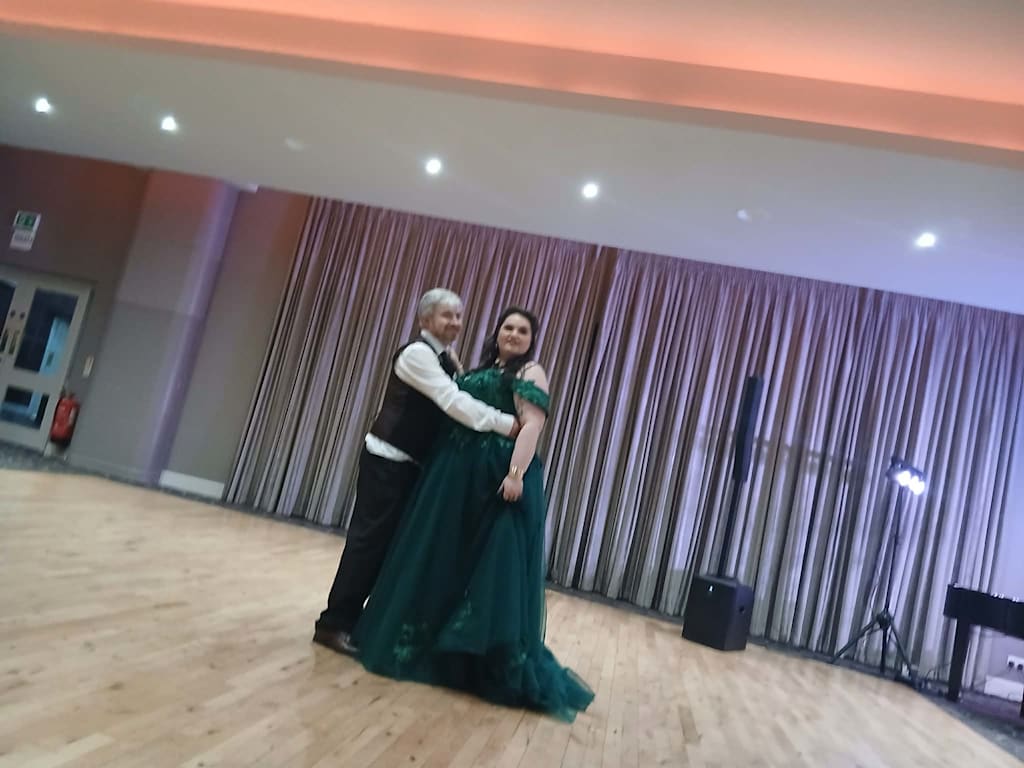
I spent much of our wedding sitting down, and whenever I stood, I frequently leaned against Scott for support. During our first dance, he quite literally helped hold me up.
And whilst part of me grieved the wedding I might have experienced before MS, I realised something important.
Sitting down wasn’t missing out. It was what allowed me to take part.
I still laughed, celebrated, spoke to our guests and made memories I’ll treasure forever. I just did much of it from a chair.
One of my biggest anxieties wasn’t actually the wedding itself. It was how other people might interpret seeing me enjoying it.
I’d been off work because of my MS, yet here I was, wearing a beautiful dress, smiling for photographs and celebrating my marriage.
Would someone assume that because I could attend my wedding, I must be well enough to work?
It’s a worry many people with invisible illnesses will understand.
But a photograph captures a moment, not the physical cost of that moment. Sitting through a wedding ceremony isn’t the same as managing an eight-hour working day. Leaning against your husband isn’t evidence that you can stand independently for prolonged periods.
Disabled people are allowed to have happy days. Being well enough to celebrate something important doesn’t mean we’re suddenly well enough to do everything else.
What people don’t always see is what happens afterwards.
The days following our wedding were incredibly difficult. My legs felt impossibly heavy, my shaking worsened, and I was in considerable pain.
When we needed to leave the hotel, Scott had to manage most of the packing because I physically couldn’t help much. He also took on most of the driving because I was struggling so badly.
Whilst I wouldn’t change our wedding for anything, the physical consequences were very real.
It’s why I would encourage anyone getting married with MS to plan for recovery as carefully as they plan the ceremony. Build in opportunities to sit, accept help, prioritise the moments that matter and, if possible, leave the days afterwards free of commitments.
Perhaps the most meaningful part of our wedding was knowing that the man I was marrying understood all of this.
Scott has seen the pain, the shaking, the tears and the frustration. He knows that when I need to sit down, I genuinely need to sit down.
He didn’t marry the woman I was before MS. He married the woman I am now.
And when we bound our hands together and promised ourselves to one another for eternity, those promises carried a significance I couldn’t have imagined before my diagnosis.
I won’t pretend I didn’t wish I could have stood longer, danced more freely or enjoyed the day without constantly considering my limitations. You can be overwhelmingly happy and still grieve the things chronic illness has taken from you.
But my wedding wasn’t any less beautiful because I was disabled.
Please remember that your wedding isn’t a test of your physical abilities.
You don’t have to stand for every photograph, dance to every song or hide your walking aid. You don’t have to exhaust yourself trying to meet everyone else’s expectations of what a bride or groom should be.
Rest when you need to. Accept the support you’re offered. Make your wedding accessible to you, not just your guests.
And never feel guilty for celebrating your life simply because you’re living with an illness.
On 30th October, I became Mrs Hardy-Ashton. I did it with aching legs, overwhelming fatigue, a husband who helped hold me upright and a body that needed days to recover.
But I also did it with enormous happiness, surrounded by love.
I was a bride, and I was a woman with MS. Neither identity cancelled out the other.
Because happily ever after doesn’t mean a life without difficulties.
Sometimes, it simply means finding someone who will hold your hand through them.
About the Creator
Millie Hardy-Ashton
I’m Millie Hardy-Ashton, writer, theatre practitioner and PhD researcher. Through personal reflection, humour and honest commentary, I explore disability, accessibility, creativity, popular culture and the beautifully messy business of life
Enjoyed the story? Support the Creator.
Subscribe for free to receive all their stories in your feed. You could also become a paid subscriber, letting them know you appreciate their work.
Comments
There are no comments for this story
Be the first to respond and start the conversation.