
Why the Right Agility and Jumping Equipment Improves Kids’ Movement Skills
Jumping Equipment Improves

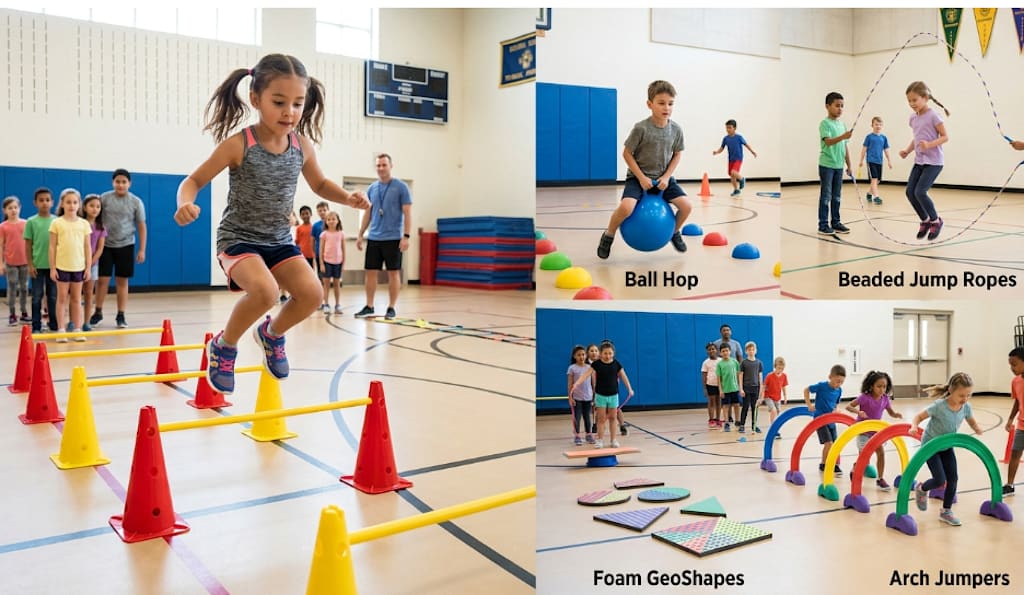
Children develop movement skills through repetition, coordination, and physical challenges that encourage body control. In schools, sports programs, and recreational environments, the quality of physical activity equipment can influence how effectively children build these skills. While some children naturally adapt to running, jumping, and changing direction, many struggle with coordination and balance during early development. Properly designed agility and jumping equipment helps bridge that gap by creating structured opportunities for movement learning.
In recent years, educators and youth coaches have placed greater focus on movement quality rather than simply increasing physical activity levels. The goal is not only to keep children active but also to help them move efficiently, confidently, and safely. Equipment designed for agility training supports that process by improving balance, reaction time, rhythm, and spatial awareness.
Understanding Agility in Childhood Development
Agility is often associated with competitive sports, but for young children it represents something more fundamental. It refers to the ability to control the body while moving, stopping, turning, and reacting to changes in direction. These abilities form the foundation of many physical activities and sports later in life.
Children who develop agility early often demonstrate stronger coordination and greater confidence during physical activities. They are typically better at adapting to new movement patterns and learning sports-related skills because their bodies have already developed movement awareness.
Agility development also contributes to injury prevention. Children who can balance properly, land safely, and control directional changes are generally less likely to experience falls or movement-related accidents during sports and recreational play.
The Role of Agility and Jumping Equipment
The purpose of agility and jumping equipment is to create structured movement experiences that encourage children to practice coordination repeatedly. These tools help children learn how to control foot placement, maintain balance, and react quickly while moving.
Unlike unstructured play, guided movement exercises provide consistent feedback. A child stepping through an agility ladder, jumping over hurdles, or moving between cones receives immediate physical feedback about timing and positioning. Over time, these repeated patterns strengthen motor skills and movement confidence.
The effectiveness of agility and jumping equipment comes from its ability to combine physical activity with problem-solving. Children must think about where to place their feet, when to jump, and how to move around obstacles without losing balance.
Why Jump Ropes Remain Effective
Jump ropes continue to be widely used in schools and sports programs because they improve coordination, rhythm, and cardiovascular fitness simultaneously. For beginners, beaded jump ropes are often preferred because the added weight creates a more stable swing pattern that is easier for children to follow visually.
Jump rope activities also teach timing. Children quickly learn to coordinate arm movement with foot movement, which develops rhythm and synchronization between different parts of the body.
Long ropes used for group jumping introduce an additional layer of cooperation and communication. These activities encourage teamwork while still supporting movement development. Group rope exercises also improve timing awareness because children must coordinate their movements with others.
Cone and Hurdle Systems in Movement Training
Cone systems combined with adjustable crossbars are among the most commonly used forms of agility and jumping equipment in educational settings. These setups are flexible and can be adapted for multiple activities within a short amount of time.
Simple cone drills help children practice directional changes, acceleration, and stopping control. Adding hurdles or crossbars increases the challenge by requiring children to judge height, distance, and timing before jumping.
Safety-focused hurdle systems are especially important for younger age groups. Crossbars designed to fall away upon contact reduce fear and encourage children to attempt movements more confidently. This type of design allows children to practice proper jumping mechanics without hesitation.
Versatile equipment systems also provide better long-term value for schools and recreational programs because the same equipment can be rearranged into different drills and obstacle patterns.
The Importance of Spatial Awareness
One area of movement development that is often overlooked is spatial awareness. This refers to understanding body position relative to surrounding objects while moving.
Arch-shaped jumping tools and obstacle-based movement stations help children develop this skill. Unlike flat hurdles, arch obstacles require children to judge both height and body positioning while moving through openings. This creates a more advanced coordination challenge that engages both physical and cognitive abilities.
Activities involving obstacle navigation encourage children to react quickly and adjust body positioning in real time. These experiences strengthen movement confidence and improve body awareness in multiple directions.
Foam Shapes and Dome-Based Agility Systems
Foam-based movement equipment introduces stepping, balancing, and controlled foot placement exercises. These tools are especially beneficial for younger children because they encourage careful movement rather than speed alone.
Children navigating foam shapes must lift their feet intentionally, maintain balance, and adjust movement patterns continuously. These activities improve proprioception, which is the body’s awareness of its own positioning and movement.
Dome-based agility systems provide another layer of versatility. Domes arranged in different patterns can create drills focused on quick footwork, balance, or explosive movement. Adjusting spacing between domes changes the difficulty level and allows instructors to modify activities for different age groups.
Structuring Effective Agility Sessions
The effectiveness of agility and jumping equipment depends not only on the equipment itself but also on how activities are organized. Structured stations with clear objectives tend to produce better results than unstructured free play.
Short activity intervals are often most effective for children because they maintain focus and energy levels. Rotating between jumping, balancing, and directional movement stations keeps sessions engaging while exposing children to multiple movement patterns.
Clear instructions also improve participation. Children respond better when tasks are specific and achievable, such as completing a jumping sequence without stopping or maintaining balance while moving through obstacles.
Combining physically demanding activities with lighter coordination exercises creates a balanced session structure that supports endurance and skill development simultaneously.
Home Agility Setups for Children
Many parents have started creating simple backyard agility areas to encourage active play outside organized sports. Successful home setups usually focus on variety rather than complexity.
Children tend to lose interest quickly if equipment cannot be rearranged or adapted into new challenges. Reconfigurable agility and jumping equipment allows parents to create different movement patterns and obstacle courses over time.
Safety is also an important consideration. Equipment designed with flexible or lightweight materials reduces injury risk and encourages children to move with greater confidence.
Outdoor surfaces should also be considered carefully. Some equipment performs better on grass, while other tools require stable surfaces to prevent slipping or movement during activities.
Long-Term Benefits of Movement Training
Consistent exposure to agility-focused activities can provide long-term physical and psychological benefits for children. Improved coordination often leads to increased confidence in sports and recreational environments. Children who feel comfortable moving are generally more willing to participate in physical activities regularly.
Movement training can also support concentration and cognitive function. Activities requiring balance, timing, and reaction encourage children to process information quickly while controlling physical responses.
Over time, these skills contribute to healthier movement habits and a stronger foundation for lifelong physical activity.
Conclusion
Developing movement skills in childhood requires more than unstructured play alone. Properly designed agility and jumping equipment provides children with opportunities to improve coordination, balance, timing, and spatial awareness through repeated physical challenges.
Whether used in schools, sports programs, or home environments, these tools support movement development in ways that extend beyond athletics. They help children become more confident, physically capable, and comfortable with active movement.
As educators and parents continue emphasizing healthy physical development, structured movement training remains an important part of helping children build the foundational skills they will use throughout life.
About the Creator
PostSphere
🌟 Helping businesses grow through SEO, guest posting, and expert link building.
Let your content speak on the right platforms.
Enjoyed the story? Support the Creator.
Subscribe for free to receive all their stories in your feed.
Comments
There are no comments for this story
Be the first to respond and start the conversation.