
Why More Hair Loss Patients Are Asking About Non-Shave FUE
Learn what Non-Shave FUE is, how it works, its benefits, and why more patients are choosing this discreet hair restoration option.
For many people considering a hair transplant, the procedure itself isn't the biggest concern. Instead, it's what happens afterward.
Traditional hair transplant techniques often require patients to shave part or all of their scalp before surgery. While this step helps surgeons access and transplant hair follicles efficiently, it can also make the procedure obvious to friends, coworkers, and family members.
As a result, a growing number of individuals are seeking an alternative known as Non-Shave FUE. This approach allows patients to undergo hair restoration while maintaining much of their existing hairstyle, offering a level of privacy that many find appealing.
Why Appearance During Recovery Matters
Hair loss affects people differently. Some openly discuss their treatment plans, while others prefer to keep their procedures private.
For professionals who interact with clients, executives who attend frequent meetings, or anyone who simply values discretion, walking around with a freshly shaved scalp may feel uncomfortable.
This concern has helped fuel interest in hair restoration methods that minimize visible signs of treatment.
What Is Non-Shave FUE?
Non-Shave FUE, or Follicular Unit Extraction, is a variation of the traditional FUE hair transplant technique.
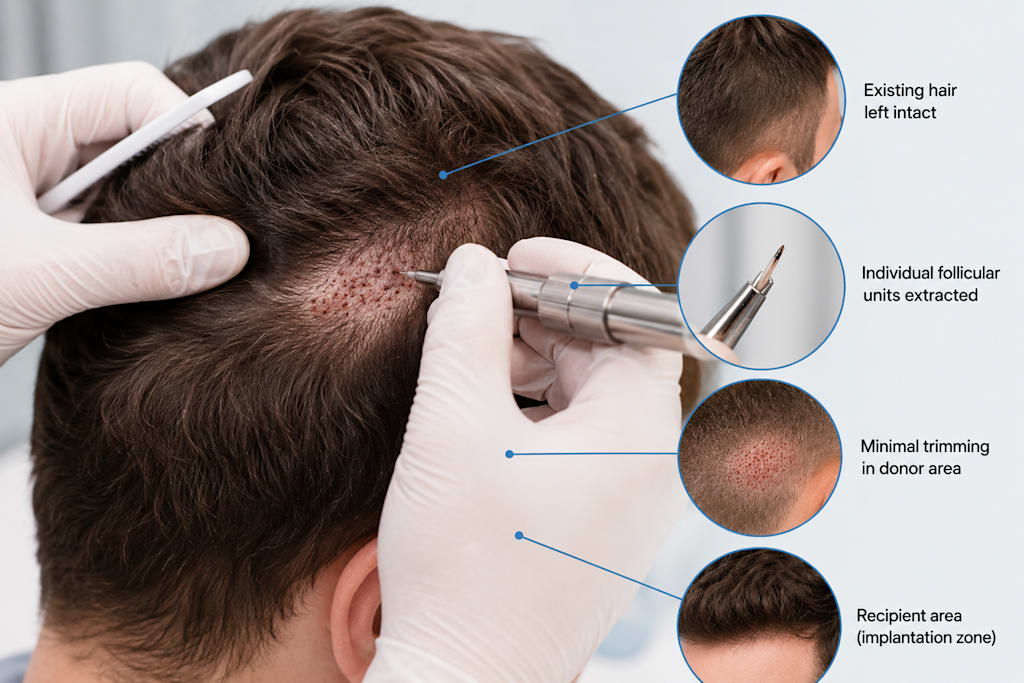
Rather than shaving the entire donor area, the surgeon carefully extracts individual hair follicles while leaving most of the surrounding hair intact. These follicles are then transplanted into areas affected by thinning or hair loss.
The goal is the same as traditional FUE: creating natural-looking hair growth. The primary difference is that patients can often maintain their existing hairstyle throughout the process.
Why Patients Are Drawn to Non-Shave FUE
The appeal of Non-Shave FUE extends beyond cosmetic preferences.
Greater Privacy
Many patients appreciate that the procedure is less noticeable during recovery. Existing hair can help conceal both the donor area and the newly transplanted grafts.
Less Disruption to Daily Life
Some individuals feel more comfortable returning to work, social gatherings, or public appearances when there are fewer visible signs of treatment.
Maintaining Personal Identity
Hair is often closely tied to self-image. Keeping a familiar hairstyle can make the experience feel less dramatic and help patients feel more confident during the recovery period.
Is Non-Shave FUE Right for Everyone?
Despite its growing popularity, Non-Shave FUE isn't necessarily the best choice for every patient.
The procedure can be more time-intensive because the surgeon must work around existing hair. In some cases, traditional FUE may be more efficient, particularly when a large number of grafts are needed.
Factors that may influence candidacy include:
- The extent of hair loss
- Donor hair density
- Hair length and styling preferences
- Long-term restoration goals
- The number of grafts required
A personalized evaluation is often necessary to determine which approach makes the most sense.
The Rise of Discreet Cosmetic Procedures
The popularity of Non-Shave FUE reflects a broader trend in cosmetic medicine.
Today's patients are increasingly interested in treatments that fit seamlessly into their lives. Whether it's minimally invasive procedures, shorter recovery times, or options that offer greater privacy, convenience has become an important factor in decision-making.
Hair restoration is no exception.
Many people want effective results without significantly altering their appearance during the healing process. Non-Shave FUE addresses that desire by offering a more discreet path to hair restoration.
Questions Patients Should Ask Before Choosing a Procedure
Anyone considering a hair transplant should take the time to understand their options.
Helpful questions include:
- Am I a candidate for Non-Shave FUE?
- How many grafts will I need?
- What will recovery look like?
- How long before new growth becomes visible?
- What results can realistically be expected?
Understanding these factors can help patients make informed decisions that align with both their goals and lifestyle.
Looking Ahead
Hair restoration continues to evolve as technology and surgical techniques advance. Procedures that prioritize both results and patient comfort are becoming increasingly common.
Non-Shave FUE is one example of how the field is adapting to changing patient expectations. For individuals who value privacy and want to maintain their appearance during recovery, it's easy to understand why interest in this approach continues to grow.
As awareness increases, Non-Shave FUE is likely to remain an important option for people exploring modern solutions to hair loss.
FAQs
Does Non-Shave FUE require any hair trimming?
Some limited trimming may be necessary, but most patients keep the majority of their existing hairstyle.
Is Non-Shave FUE more painful than traditional FUE?
The level of discomfort is generally similar to traditional FUE procedures.
Can women undergo Non-Shave FUE?
Yes. Many women prefer this approach because it allows them to keep their hair length and style.
Does Non-Shave FUE produce natural-looking results?
When performed appropriately, Non-Shave FUE can provide natural-looking hair growth similar to traditional FUE.
Why is Non-Shave FUE becoming more popular?
Many patients appreciate the added privacy, convenience, and ability to maintain their appearance during recovery.
About the Creator
Dr. Rejali Hair & Skin Institute
Dr. Rejali Hair & Skin Institute is a hair restoration and aesthetic practice in Scottsdale, led by Dr. Farhad Rejali, an American Board of Hair Restoration Diplomate with over 20 years of experience.
Enjoyed the story? Support the Creator.
Subscribe for free to receive all their stories in your feed.
Comments
There are no comments for this story
Be the first to respond and start the conversation.