
Why a Center for Addiction Treatment Changes Lives for Good
Center for Addiction Treatment
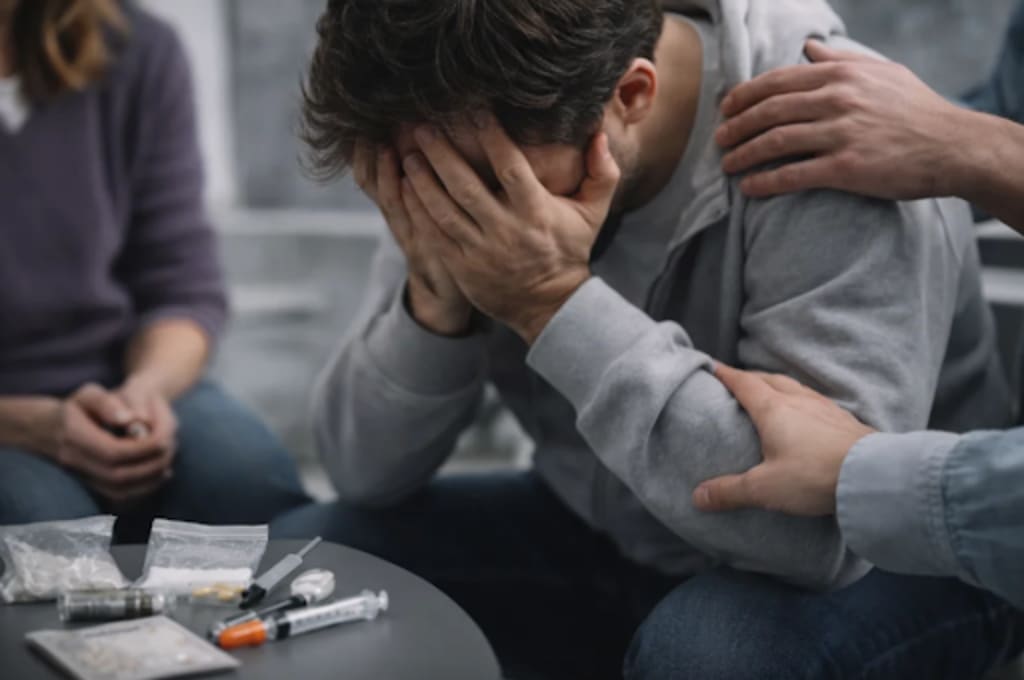
Addiction does not arrive with a warning. It builds quietly, often disguised as coping, until the substance stops being a choice and starts being a requirement. By the time most people recognise what has happened, they have already tried stopping on their own — sometimes repeatedly. That gap between recognising the problem and actually getting better is where a Center for Addiction Treatment becomes not just helpful, but necessary.
Cravings Are Not Weakness
The science here is worth understanding properly. Prolonged substance use does not just create habits. It physically restructures the brain's reward and survival systems. Cravings, at a neurological level, get processed alongside hunger and fear — not alongside preferences. This is why telling someone to simply choose differently rarely produces lasting results. The signal the brain is sending is not "This would be nice." It is something far closer to "This is required". Treatment works by targeting that signal directly, not by motivating someone to resist it indefinitely through sheer determination. Determination alone was never the right tool for a neurological problem.
What Detox Actually Involves
The popular image of detox — uncomfortable but survivable with enough grit — skips over some serious medical realities. Withdrawal from alcohol can trigger a severe neurological state involving hallucinations, dangerous agitation, and seizures. Withdrawal from certain sedatives follows a similar pattern. These are not extreme outliers. They are predictable outcomes that occur along a clinical spectrum, and a center for addiction treatment is specifically built to manage that spectrum. Supervised detox protocols adjusted in real time based on how each person's body responds. That level of medical attentiveness is not achievable at home, no matter how strong the support network around someone is.
When Therapy Gets to the Real Thing
Most people entering treatment arrive with a well-rehearsed explanation about why things got this bad. That tale is frequently somewhat accurate and skilfully manufactured to avoid anything more painful resting underneath it. Skilled addiction therapists identify this trend quickly. They are taught not to question it head-on but to establish enough safety in the environment that the individual finally challenges it themselves. Underneath most long-term reliance is an unfulfilled need – for emotional safety, for relief from something chronic, or for a sense of control that was lost somewhere previously. Addressing that need is what divides a quick recovery from a sustainable one.
Why Environment Shapes Recovery
Residential treatment is treated as a dramatic last resort. That framing undersells it considerably. The environment a person is in during early recovery does quite a bit of constant work on the outcome. Familiar surroundings carry embedded triggers — particular places, routines, relationships, even sensory details — that activate old patterns before conscious thought catches up. Stepping out of that environment is not avoidance. It is a strategy. The brain needs repetition under stable conditions to build genuinely new pathways. A structured treatment setting creates those conditions deliberately, which is why early recovery inside a proper programme tends to hold better than early recovery attempted in the same space where the addiction developed.
What Peer Groups Actually Do
Group therapy gets underestimated by almost everyone who has not been through it properly. The assumption is that it is awkward and peripheral to the real work. In practice, it often becomes the most significant part. Shame is one of the primary psychological forces that keeps addiction functioning. It thrives on secrecy and the belief that one's experience is uniquely bad, uniquely unfixable. When someone hears another person articulate their exact private experience in a group setting — the hiding, the self-deception, the exhaustion — that belief starts to collapse. The nervous system responds to that moment differently than it responds to any individual session. It is one of the more underrated mechanisms in the entire recovery process.
Conclusion
Recovery is not a single decision followed by a straightforward path. It is a gradual rebuilding of neural patterns, emotional regulation, relationships, and self-understanding. A center for addiction treatment creates the conditions in which rebuilding becomes genuinely possible rather than just theoretically available. The brain is changeable, trauma is treatable, and the circumstances that made dependency feel like the only option can be worked through with proper support. What stops most people from reaching that point is not the difficulty of recovery itself. It is the persistent, damaging myth that needing structured help means the situation is hopeless. It means exactly the opposite.
About the Creator
Enjoyed the story? Support the Creator.
Subscribe for free to receive all their stories in your feed.
Comments
There are no comments for this story
Be the first to respond and start the conversation.