
What I Eat in a Day to Manage PCOS
What I had to give up to get here.

My mornings typically began with a caramel latte and a pastry from the register, so I didn't view myself as unhealthy; in fact, I felt completely normal in terms of my diet.
My insulin-resistant PCOS body had difficulty dealing with "normal" foods. I ignored a number of issues that my body was having because I thought of them as personality traits - the afternoon fog, mood collapse, and sugar cravings seemed more like needing something than wanting something.
It took me way too long to make the connection between what I put in my mouth and how I felt.
This isn't a meal plan or a transformation story; rather, it's an honest look at what "a day of eating" looks like for me now.
What I had to Give Up
The first thing I had to give up was sugar and all processed carbohydrates. When I cut out sugar, the very first thing I really really wanted to do was stop feeling uncomfortable, and that feeling of being excluded socially.
The first two weeks were hard; headaches, irritability, and sadness due to lack of pastries. The one thing that changed everything for me was to stop anxiously worrying about my cravings as a lack of willpower.
The truth is that due to insulin-resistant PCOS, your cells do not respond properly to insulin, and your body is signalling for glucose even if you have already consumed food. The cravings are just a symptom of what is going on in your body, not a character flaw.
Once I understood this, it became so much easier to stop fighting myself and simply eat what my body needed, i.e., protein, fats, fibre, and stability.
What a proper day looks like
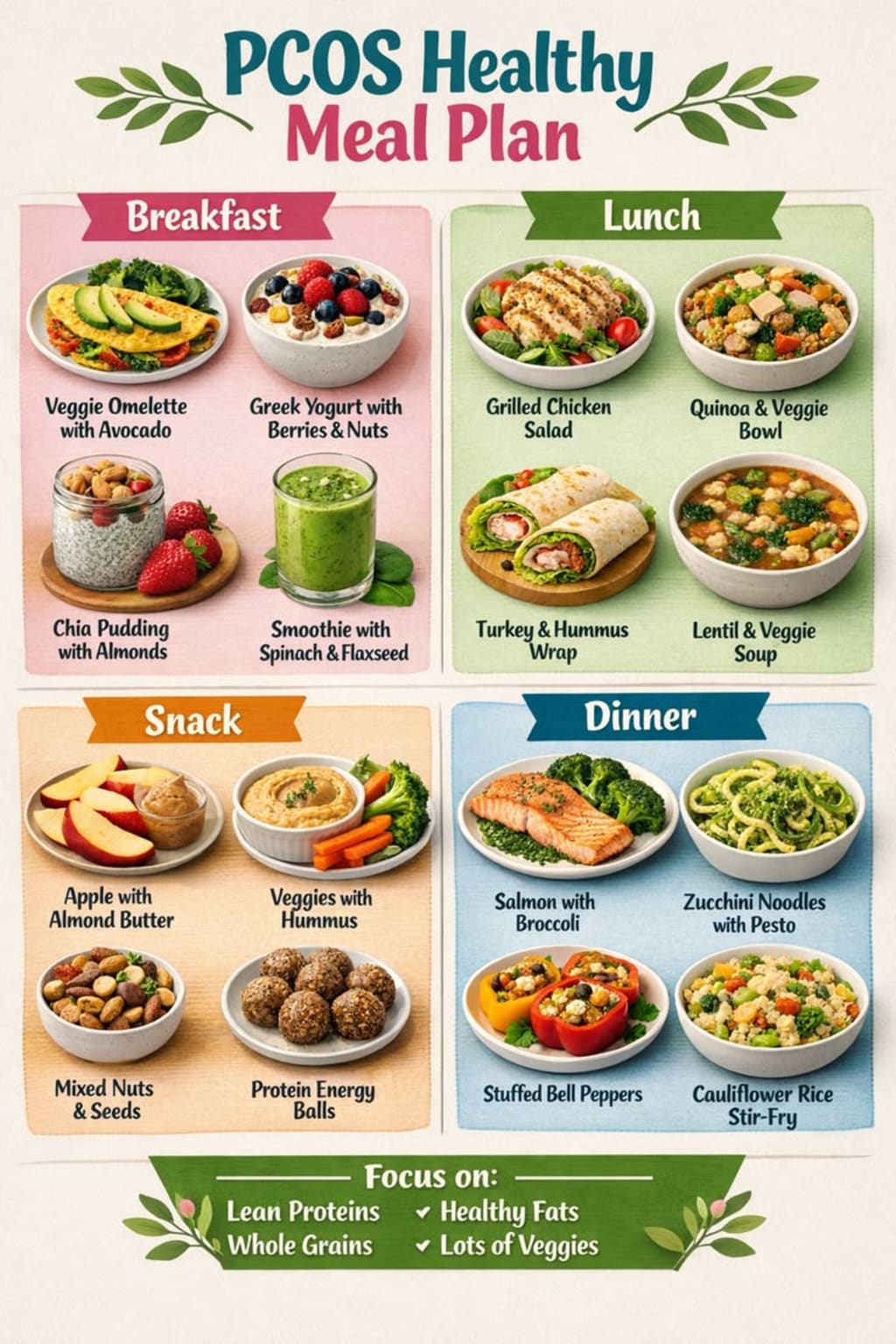
Mornings: I have eggs, avocado, and salmon for breakfast, or if I am running late, I will make a quick protein smoothie. I now drink my coffee after I eat breakfast, as caffeine on an empty stomach triggers cortisol production, which raises blood sugar levels.
Insulin-resistant people do not need increased blood sugar levels, so it took me a long time to stop drinking my lattes in the morning. I can't believe how much starting out my day with protein has changed how I feel for the first part of the day.
Mid-Morning Snack: I will have something small, such as nuts (almonds or walnuts) and dark chocolate, or Greek yogurt with a couple of berries. The purpose is to keep my blood sugar from crashing before I eat lunch and turning me into someone who is not fun to be around.
Lunch: I have a huge bowl of leafy greens or grains, topped with a healthy protein (e.g., chicken or canned salmon, or chickpeas), a large variety of vegetables, and then finished with an olive oil dressing. I cook all of my grains on Sundays, so preparing lunch is mostly just putting things in a bowl together.
Dinner is the meal at which I am the least strict and possibly the most flexible. I think there is a difference in how you handle dinner depending on your general approach to your health, nutrition, and diet.
For dinner, I include one protein item along with one vegetable item and one meal starch (sweet potatoes or brown rice) per dinner. However, when I go out to dine or attend a friend’s house for dinner, I eat what I am served without getting too uptight.
The way you eat for PCOS should not depend on the location where you are eating; you should be able to eat the same way that you eat in a controlled environment.
What has really changed?
I've had less irregular periods than I have had in ages. My complexion has maintained a more stable level of activity. The afternoon slumps, which would throw my entire day off-track, have mostly disappeared.
None of this happened quickly; it took months, many starts and stops, numerous weeks where I consumed more cookies than I was supposed to, and I continued on.
You do not need to change everything. Perfection is not required for you to eat in a manner that supports your insulin-resistant PCOS.
The purpose of making dietary changes is for you to establish consistent eating patterns that will help alleviate your symptoms, while also eating carbohydrates with protein.
About the Creator
Yomabasi Fortune
Writer by day and by night.
iRead
iWrite
iDesign
Enjoyed the story? Support the Creator.
Subscribe for free to receive all their stories in your feed.
Comments
There are no comments for this story
Be the first to respond and start the conversation.