
What a Skilled Plastic Injection Moulding Manufacturer Delivers That Cheap Alternatives Never Can
plastic injection moulding manufacturer
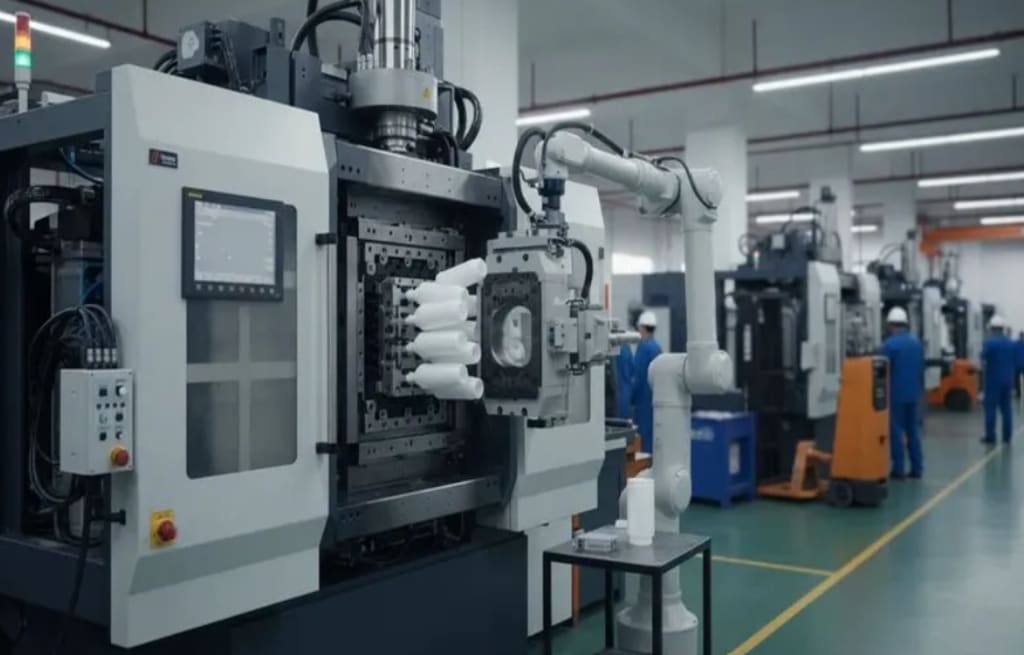
Something happens on production lines that product engineers rarely see coming. A part that passed every qualification check starts failing in the field after months of apparently normal production. Nobody changed the material. Nobody changed the process settings. The tool is the same tool. What changed is the ambient temperature in the workshop across seasons, the gradual wear on the press tie bars, the slight lot-to-lot variation in a polymer that sits within specification but behaves differently at the margins. The plastic injection moulding manufacturer that designed the process with enough window to absorb those variables keeps running. The one that qualifies tight keeps generating rejects and looking for explanations.
What Gate Position Actually Controls
Most clients think gate position is a toolmaker's decision. It is, but it is also a structural engineering decision, a cosmetic decision, and a decision about where the part will fail when it eventually does. Plastic entering a cavity from a gate flows outward and meets itself where flow fronts converge. That meeting point — the weld line — is where molecular orientation is lowest and where stress concentrates under load. On a part that will see repeated impact or sustained mechanical stress, the weld line position determines the failure location. A manufacturer who raises gate strategy as a design conversation before quoting is managing this deliberately. One who places gates for tool convenience and discusses weld lines only when a sample fails is discovering a known outcome through an avoidable route.
The Cooling Problem That Shows Up Late
Cooling circuits in mould tools are designed to remove heat from the part evenly and quickly. When they do not — because of compromised channel routing around complex geometry, inadequate flow rate, or poorly positioned bubblers — differential cooling creates differential shrinkage. The part warps. Not catastrophically. Just enough to fail a flatness specification, or to assemble poorly with a mating component, or to introduce residual stress that reduces fatigue life. These problems are detectable through mold flow simulation before a tool is ever cut. Manufacturers who run simulation as a standard pre-tooling step catch them then. Manufacturers who treat simulation as an optional extra discover them during T1, T2, and T3 sampling rounds.
Why Material Selection Cannot Be Separated From Tool Design
Polymer selection and tool design are typically handled by different people at different stages of development. That separation creates problems that belong to neither party clearly enough for either to own. Shrinkage varies not just between polymer families but between grades within the same family, between regrind ratios, between drying conditions. A tool dimensioned for one grade and run on a slightly different grade — same colour, same supplier, different lot — can produce parts at the edge of tolerance that are indistinguishable until they reach assembly. Plastic injection moulding manufacturers who participate in material selection, rather than simply receiving a specification, catch these interactions before they are designed into the tooling geometry.
What Happens to Tooling During High-Volume Production
Steel wears. Not quickly, but consistently. Shut-off faces that seal cleanly on a new tool develop flash as the steel fatigues under millions of closing cycles. Vents that cleared volatiles from the cavity on day one become blocked with degraded polymer and start causing burn marks and short shots as production continues. The difference between a tool that maintains part quality across its intended production volume and one that degrades progressively is almost entirely a function of steel grade selection, heat treatment, and the surface hardness applied to critical wear zones during construction. Injection moulding manufacturers who specify tool steel to production volume rather than to budget produce moulds whose performance does not drift — and whose maintenance intervals are predictable rather than reactive.
How First Article Submissions Reveal Process Thinking
A T1 submission that arrives with a written dimensional report, a process parameter sheet, a record of adjustments made during trial, and a list of known open points is produced by a manufacturer with a process. A T1 submission that arrives with parts and a request for feedback is produced by one without. That gap in approach does not close at T2. It follows the relationship into production, into engineering changes, and into every quality event that occurs over the product's lifetime.
Conclusion
A plastic injection moulding manufacturer earns its place in a supply chain through the quality of thinking applied before a tool is ever cut. Gate strategy, cooling design, tool steel specification, and material interaction are decisions with long consequences, and they are all made in the weeks before sampling begins. Clients who engage manufacturers who treat those decisions rigorously consistently experience shorter qualification cycles, fewer field failures, and production processes that remain stable long after launch.
About the Creator
Enjoyed the story? Support the Creator.
Subscribe for free to receive all their stories in your feed.
Comments
There are no comments for this story
Be the first to respond and start the conversation.