
The Weight of Afterward
The fundamental difference between leaving at sixty and ninety.
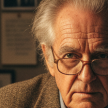

Fifty-Sixty and Eighty-Ninety: A Lifetime Lies Between Them
The day my grandmother passed away, it was a beautiful, sunny day.
I was at work when my father called. His voice was flat. He said, "Your grandmother is gone." I said, "Oh." I hung up and went back to editing a PPT. After two lines, tears suddenly splashed onto the keyboard.
It wasn’t just because of the sorrow. It was because I remembered something.
Three months prior, I had gone back to our hometown to see her. She didn't really recognize people anymore. I sat by her bed, and she suddenly seemed to snap into clarity. She grabbed my hand and said, "Nan-nan (my little girl), I don't want to die. I want to live a few more years." I coaxed her, saying, "Of course, of course, you'll definitely live to be a hundred." She shook her head and said, "I'm not afraid of dying. It's just that I haven't lived enough."
She passed at eighty-six. When she said those words, she was eighty-five.
At the time, I didn't quite understand what she meant by "haven't lived enough." Now, I think I do.
I have a friend named Old Zhou. He’s fifty-three. Last month, he was diagnosed with late-stage liver cancer. The doctor said if it moves fast, he has half a year; if slow, maybe a year.
Old Zhou was my senior in university. We were in the Student Union together. Later, we went our separate ways, but we still met up once or twice a year. He was a real go-getter. At thirty, he quit his job to start an advertising agency. Through over a decade of ups and downs, things had finally stabilized. His wife was his first love from college, and his daughter just started graduate school last year.
I went to the hospital to see him the day before yesterday. He had lost a lot of weight, but his spirits were okay. When his wife went out to get water, he suddenly whispered to me, "Brother, I’m so damn unwilling to let go."
I told him to cooperate with the treatment, that medicine is advanced now.
He waved his hand. "It’s not about the treatment. It’s that I’m only fifty-three. I haven't seen my daughter get married, haven't held a grandchild, and haven't taken my wife to Tibet—something she’s talked about for twenty years. My company just landed a huge contract, and I haven't finished it. And my mother is still here, in her eighties. If I go before her, what happens to her?"
He didn't cry when he said this, but his eyes were bloodshot.
Leaving the hospital, I sat in my car and stared into space for a long time.
I thought of my grandmother.
My grandmother died at eighty-six. In her final years, she rarely went out. Her hearing was poor, and her teeth were all gone. Her favorite thing to do was to pull up a small wooden stool and sit at the doorway in the sun, watching people walk by on the street. Sometimes she’d sit there all day.
The morning she passed, she still ate a bowl of congee, half a steamed bun, and a piece of fermented bean curd. Then she said she was tired, went back to bed to lie down, and never woke up again.
The people in the village said the old lady was "blessed"—she left peacefully, without suffering.
Yes, I admit, my grandmother’s passing was "good" in the sense that there was no pain. But she was eighty-six; her life had already entered a very slow rhythm. In her final years, the days were counted one by one. Today was much like yesterday, and tomorrow would be much like today. Her friends were long gone, and her world grew smaller and smaller, until it eventually shrank to a bed, a chair, and a bowl of congee.
But when she told me she "hadn't lived enough," I still remember the look in her eyes.
It wasn't fear. It was a genuine reluctance to part with it all.
So now, I feel more and more that the difference between dying at fifty or sixty versus eighty or ninety isn't just those thirty years. The difference is whether you have the chance to finish the things weighing on your heart, one by one.
Why is Old Zhou so "unwilling"?
Because his heart is full of unfinished business. His daughter’s wedding, his wife’s trip to Tibet, the company’s big contract, his elderly mother’s final years. These things are like nails driven into his heart; every time he thinks of them, it hurts. He isn't afraid of death; he’s afraid no one will finish these things for him. He’s afraid that once he’s gone, these thoughts will become eternal regrets.
And my grandmother? She was eighty-six. The people she needed to see, she had seen. The words she needed to say, she had said. The things she needed to let go of, she had released. Her final years were actually a process of subtraction—saying goodbye to things one by one. When she left, her heart was empty; there was nothing she was desperately clutching. That is why she could leave so peacefully.
I remember when my grandmother was eighty, one day I suddenly found her tidying her things. She folded the clothes in her wardrobe one by one, sorted them into several piles, and then called my father, my uncle, and my aunt over. She said which pile was for whom. My father thought it was "bad luck" (taboo) at the time and asked, "Mom, what are you doing?" My grandmother rolled her eyes at him and said, "It’s my stuff; I’ll give it away whenever I feel like it."
She was wrapping up her life.
Later, she slowly said all the things that needed to be said. She told my father to be kinder to his brother; she told my uncle to stop arguing with his wife; she told my aunt to just be patient with her mother-in-law because she was old, too. She even told me, her granddaughter, not to just look at a man’s appearance when choosing a partner, but to find someone with a good temperament.
She settled these matters one by one, like someone checking the water, electricity, and gas before leaving the house. Only after confirming nothing was missed did she feel at peace to lock the door.
Old Zhou doesn't have that chance.
He is only fifty-three. He never imagined he would have to "lock the door" so soon. His life was still in an "open" state—he was still putting things inside, still planning for tomorrow, the day after, next year, the year after. Suddenly, someone tells him: Stop packing; it's time to go. Who wouldn't be "unwilling"?
I sometimes wonder, if people knew exactly how long they would live, would it be better?
For instance, if you knew from birth that you would live to be seventy-three years and four months old, you could plan it out. The first twenty years for school, the middle thirty for hard work, and the last twenty-three to enjoy life. At seventy, you’d start wrapping things up—settling affairs, saying goodbyes. Then, on the day of seventy-three years and four months, you take a bath, eat a good meal, lie down, and leave.
How wonderful that would be.
But life isn't like that. Life is never knowing how much time is left. That’s why some people are still planning for next year at ninety, while some are suddenly gone at fifty.
I know a lady, sixty-two years old, who just retired last year. Before that, she was a middle school math teacher for her whole life. After retiring, she enrolled in a "Senior University" to learn painting. Every day she carries her easel around to paint from nature. her social media is full of her work—and while they aren't great, she is incredibly happy. Once I ran into her in a park; she was painting a ginkgo tree with intense focus. I said, "Auntie, you're so serious about your painting." She smiled and said, "I've only just started. I need twenty more years of painting to really get somewhere."
When she said "twenty more years," her tone made it sound like twenty years was a certainty. Looking at her graying hair and her sun-reddened face, I suddenly felt she was younger than I am.
Because her heart is full of "afterward."
Meanwhile, some people in their early fifties have no "afterward" left in their hearts.
I have a colleague who, at forty-eight, suddenly lost interest in everything. He used to love fishing and would drive to the suburbs early every weekend. He liked a drink and would call us for get-togethers every few days. He loved soccer and would crawl out of bed for Champions League matches no matter how late. But one day, he said it was all "meaningless." He stopped fishing, stopped drinking, stopped watching the games. Every day was just work, home to watch TV, and bed at exactly ten o'clock.
We thought something had happened to him, but it hadn't. He just felt it was "pointless." He said, "I'm almost fifty. What is there left to hustle for? Even if I do, it’ll be the same."
He isn't sick; his body is fine. But I always feel like he is already waiting to die.
That is the most terrifying thing. It’s not about what age you die; it’s that while you are clearly still alive, your heart has already died.
So I’ve slowly come to understand why my grandmother, at eighty-five, said she "hadn't lived enough." It’s because she always had an "afterward" in her heart. Even at eighty-five, she was planning: she wanted my dad to take her to the township for a bowl of wontons when the weather got warmer—she said the broth at that shop was particularly good. She was planning to give my boyfriend a Hongbao (red envelope) next time I brought him home. She was planning to pick the osmanthus flowers in the yard when they bloomed, dry them, and mail them to me.
Her heart was full of these tiny "afterwards," so she was reluctant to leave.
And Old Zhou? The "afterwards" in his heart are too big, too specific, too important. His daughter’s wedding, his wife’s Tibet, the company’s contract, his mother’s old age. These things are too large for him to let go of. So he is "unwilling."
But the difference is that my grandmother’s "afterwards" were gentle, light things—like feathers. If they didn't happen, it wasn't the end of the world. The wontons could be eaten next time, the red envelope didn't have to be given, the flowers didn't have to be mailed. So when it was truly time to go, those "afterwards" drifted away lightly, without tethering her down.
Old Zhou’s "afterwards" are heavy, like iron weights. Whether his daughter marries well, whether his wife’s wish is fulfilled, whether the company collapses, who will care for his mother—these things are like lead weights sinking into his heart. He cannot leave.
That’s why I say the difference between dying at fifty-sixty and eighty-ninety isn't thirty years. The difference is—whether you have enough time to slowly turn those heavy "afterwards" into light "memories."
Do you have enough time to hand your daughter’s hand to a reliable person, watch her put on a wedding dress, and then tell yourself, My task is complete?
Do you have enough time to take your wife to Tibet, see her smiling in front of the Potala Palace, and then tell yourself, I helped her fulfill her wish?
Do you have enough time to hand the company over to the younger generation, watch it keep going, and then tell yourself, I can let go of this now?
Do you have enough time to walk the final stretch of the road with your elderly mother, and then tell yourself, Mom, I’m going one step ahead of you, don't be too sad?
Do you have enough time to pull those nails out of your heart, one by one?
That is the fundamental difference.
Old Zhou might not have that time. Every time I think of this, I feel a pang in my heart, as if someone is clutching it.
I'm not writing this to preach some great philosophy. I just feel that those of us who are busy every day always think the days are long, that there's plenty of time "later." We tell our parents we'll visit when we're free, tell our kids we'll take them to play on the weekend, tell our friends we'll eat together "some other day," and tell ourselves we'll do that thing we've always wanted to do after we retire.
But who can say for sure?
None of us know how many "afterwards" we truly have.
After I left the hospital that day, I called my mother. She picked up and asked, "What is it?" I said, "Nothing, I just wanted to hear your voice." She was stunned for a moment and asked, "Have you been drinking?" I said no. She said, "Then why are you talking nonsense?" I said, "Mom, when I'm done with this busy stretch, I’m coming back to see you." She said, "Fine, fine, go do your work."
After hanging up, I thought: I really should go back. Not because I’m afraid it’ll be too late, but because I don’t want to suddenly find one day that "going back to see my mom" has turned from a heavy, unfinished task into an eternal impossibility.
I don’t want to leave with those nails still in me.
When my grandmother left, her heart was light. I hope that when I leave, mine will be light too. And I hope Old Zhou gets the chance to finish the things in his heart, one by one. Even if he can't finish them all, at least most of them.
But in such matters, I don't have the final say.
What I can do is start now, turning my own "afterwards" into "now," one by one.
Ending
This life, in the end, is one long goodbye. People who leave at fifty or sixty are often dragged away, leaving with a belly full of unspoken words and a heart full of unfinished business. People who leave at eighty or ninety walk over by themselves, having said what needed to be said and done what needed to be done. They leave with a clear conscience.
Don’t let yourself reach that day with a row of nails still driven into your heart. Pull them out, one by one, while you can.
About the Creator
Water&Well&Page
I think to write, I write to think
Enjoyed the story? Support the Creator.
Subscribe for free to receive all their stories in your feed.
Comments
There are no comments for this story
Be the first to respond and start the conversation.