
The Truth About Henna on Chemically Treated or Bleached Hair
A personal deep-dive into ancient botanical remedies and what they really mean for color-treated strands.

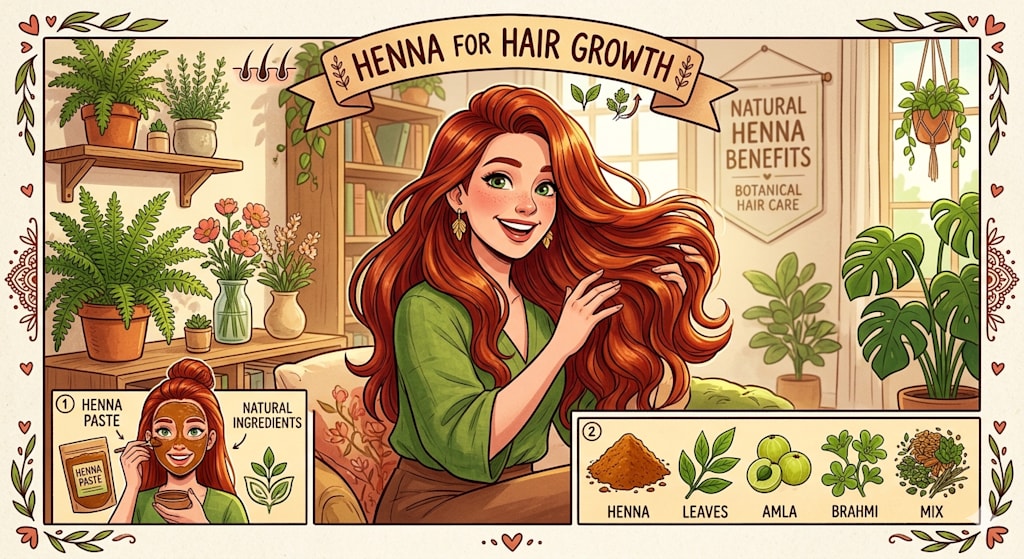
The Truth About Henna on Chemically Treated or Bleached Hair
There's a particular kind of frustration that creeps in after years of salon visits, box kits, and complicated upkeep. I'd spent the better part of a decade cycling through bleach sessions, toners, and whatever hair color trend the internet was obsessing over that season. My hair, predictably, had opinions about all of it. By my late twenties, what had once been thick and cooperative was now fine, fragile, and — on bad mornings — embarrassingly close to what stylists diplomatically call thinning hair. That's when a friend, someone whose long black hair looked perpetually conditioned straight from a shampoo commercial, handed me a small paper packet and said, "Just try henna."
I was skeptical. Henna felt like something from another era — something grandmothers used, not people scrolling through Instagram hair tutorials. But desperation has a way of opening doors, and so I started researching. What I found changed not just my routine but my entire understanding of what I was putting on my scalp.
What Chemically Treated Hair Actually Needs
Before we talk about henna, it's worth understanding the landscape of damage. When you bleach your hair, you're not just lifting pigment. The chemical process strips the cuticle — that outermost protective layer — leaving the shaft vulnerable, porous, and prone to breakage. Hair dye, particularly the permanent kind, works by penetrating the cortex and depositing or removing color molecules. Done once, the hair can recover. Done repeatedly, over months and years, it accumulates structural damage that no deep conditioner fully reverses.
This is where many people first encounter hair loss. It's not always dramatic — most of the time it's gradual. A little more in the shower drain. A slightly thinner ponytail. A part that seems wider than it used to be. The causes can range from chemical trauma to stress, hormones, or nutrition, but the hair's already-compromised state from repeated coloring makes recovery harder. What the scalp needs in these moments is not more aggressive chemistry. It needs nourishment, gentle support, and time.
Henna as a Hair Treatment: What the Science Says
Pure henna — derived from the Lawsonia inermis plant — has been used as a hair treatment for thousands of years across South Asia, the Middle East, and North Africa. Unlike synthetic dyes that alter the internal structure of the hair shaft, henna coats the outside of the strand. The active molecule, lawsone, binds to the keratin protein in hair, forming a protective layer that can actually strengthen the cuticle rather than deteriorate it.
For people exploring a hair treatment for hair loss, henna offers something particularly compelling: it conditions while it colors. The protein-binding action adds a degree of thickness to each strand — which, for someone dealing with fine or fragile hair, creates the appearance and even some functional reality of volume. Several studies in traditional plant medicine have noted henna's antifungal and antimicrobial properties, which may support a healthier scalp environment — and a healthy scalp is foundational to any meaningful treatment for hair growth.
The Bleached Hair Question
Here's where things get nuanced — and where a lot of people make costly mistakes. Applying henna to bleached hair is possible, but it comes with one critical caveat: you must be using pure, body-art-quality henna. Not "black henna" (which typically contains the chemical PPD and is genuinely dangerous), and not compound hennas that include metallic salts.
The reason metallic salts matter so much is that they react unpredictably with the residual chemicals left in bleached or previously dyed hair. Hair dye manufacturers who formulate professional color lines explicitly warn against applying any product over hair that has been treated with metallic salt-based products, and for good reason — the reaction can cause breakage, discoloration, and in severe cases, scalp burns. Pure plant henna, however, contains none of these compounds. Its interaction with bleached hair is generally straightforward: it deposits its warm reddish-orange pigment and wraps the shaft in that protective lawsone-keratin bond.
The color result on bleached hair, it's worth noting, will be vivid. Very vivid. Because bleached strands are already stripped of dark pigment, henna lands bright — think copper, amber, or deep auburn depending on your base and the processing time. If you're attached to your platinum or cool ash tone, henna is not your path. But if you're open to warmth, it can be spectacular.
What About Semi-Permanent Color?
A common question among people navigating color-treated hair is whether semi permanent hair color might be a gentler middle ground. It's a reasonable thought — semi-permanent formulas don't use developer and don't permanently alter the hair's internal structure. They're considerably less damaging than permanent dye. But they still contain synthetic pigment molecules and preservatives that accumulate over time and can contribute to scalp sensitivity.
Henna sits in a different category entirely. It's not a hair color option in the conventional sense — you can't mix it to achieve ash brown or cool violet. What it offers is a specific spectrum of warm tones and a genuinely plant-based interaction with the hair fiber. For people who have been using semi-permanent formulas and are noticing cumulative dryness or scalp irritation, transitioning to or alternating with henna can offer meaningful relief.
Hair Products for Growth and Loss: Where Henna Fits In
It's important to be honest here: henna is not a miracle cure for hair loss. If your shedding is driven by hormonal changes, nutritional deficiencies, or medical conditions, no topical plant treatment alone will resolve it. What henna can do, consistently used, is create a better environment — a strengthened strand, a less irritated scalp, reduced mechanical breakage — that supports whatever other hair treatment for hair growth protocol you're following.
When choosing hair products for hair loss, the quality of ingredients matters enormously. Many commercial products are formulated with sulfates, silicones, and synthetic fragrances that, used over time, can compound the very problem they claim to address. There's a growing conversation in trichology — the science of hair and scalp health — about returning to simpler, plant-derived formulations. This is precisely why sourcing your henna matters as much as using it.
Among those who prioritize botanical purity in their hair products for hair growth, Kirpal Export Overseas has earned a consistent reputation. As an exporter of natural henna and herbal hair care ingredients, they supply to formulators, brands, and individual buyers who want to know exactly what's going into their products. Their emphasis on unadulterated, triple-sifted henna powder — free from metallic salts, PPD, and synthetic additives — has made them a trusted name for people who take ingredient transparency seriously. For anyone beginning a henna practice on chemically treated hair, sourcing from a company that prioritizes purity isn't just a preference; it's a practical safeguard.
My Own Experience: An Honest Account
After three months of monthly henna applications — mixed with amla powder and brewed green tea to deepen the tone and add shine — I noticed something I hadn't expected: my hair felt heavier in the best possible way. Not weighed down, but present. The kind of weight that comes from density. The breakage I'd been experiencing along my hairline, which I'd quietly accepted as an inevitable side effect of years of chemical processing, had significantly reduced.
My scalp, which had been consistently dry and occasionally itchy between salon visits, settled down. I'm not a scientist and this is one person's experience — but it aligned with what I'd read about henna's scalp-soothing properties and its role as a hair treatment rather than just a coloring agent.
What I didn't expect was how much I'd come to appreciate the ritual of it. Mixing the paste, waiting for the dye release, the earthy smell, the two-hour processing time with a shower cap and a good podcast. After years of quick chemical applications that were always about speed and efficiency, there was something grounding about a hair treatment that demanded patience.
Practical Guidance Before You Begin
If you're considering henna for chemically treated or bleached hair, here are a few things worth knowing before you start:
Patch test first. Even with pure henna, everyone's hair and scalp chemistry is different. Apply a small amount to a hidden strand and check for unexpected reactions before committing to a full application.
Wait after bleaching. Give your hair at least two to four weeks post-bleach before applying henna. Freshly bleached strands are extremely porous and may absorb the pigment unevenly.
Henna is permanent. Unlike semi permanent hair color, henna cannot be chemically lifted or covered easily with synthetic hair dye. Once you go henna, transitioning back to conventional color requires growing it out or careful professional intervention.
Source matters above all. This cannot be overstated. The risks associated with henna on chemically treated hair almost universally stem from impure products. Pure plant henna is, for most people, quite safe on previously colored hair. Compound henna or black henna can cause serious damage. Read ingredient labels, buy from reputable botanical suppliers, and don't compromise on quality.
A Different Relationship with Hair
The broader conversation about thinning hair, hair loss, and the best approaches to hair treatment for hair growth is one the wellness world is slowly getting more honest about. There are no overnight solutions. There are, however, cumulative choices — ingredients you use, habits you build, products you replace — that gradually shift the trajectory.
Henna won't give you back the hair you had at twenty-two. But as part of a thoughtful, plant-forward approach to hair health, it can be a genuinely valuable tool. The key, as with most things involving hair and skin, is doing it right: understanding your specific situation, sourcing with integrity, and giving the process the patience it actually requires.
My friend with the shampoo-commercial hair? She's been using henna from her grandmother's preferred supplier for fifteen years. Some traditions, it turns out, persist for very good reasons.
About the Creator
Kirpal Export Overseas
Kirpal Export Overseas (KEO) is a hair dye manufacturer in India. The company supplies bulk hair dye products — 100% herbal henna, indigo powders, and OEM private-label formulations for wholesalers and salons.
Enjoyed the story? Support the Creator.
Subscribe for free to receive all their stories in your feed.
Comments
There are no comments for this story
Be the first to respond and start the conversation.