
The Quiet Preparedness Shift of 2026: Why a Simple Home Kit Is Reshaping Household Safety
A long-form, human-centered Vocal+ story about the rise of calm, practical home-preparedness — and the small kit quietly transforming how families think about safety.
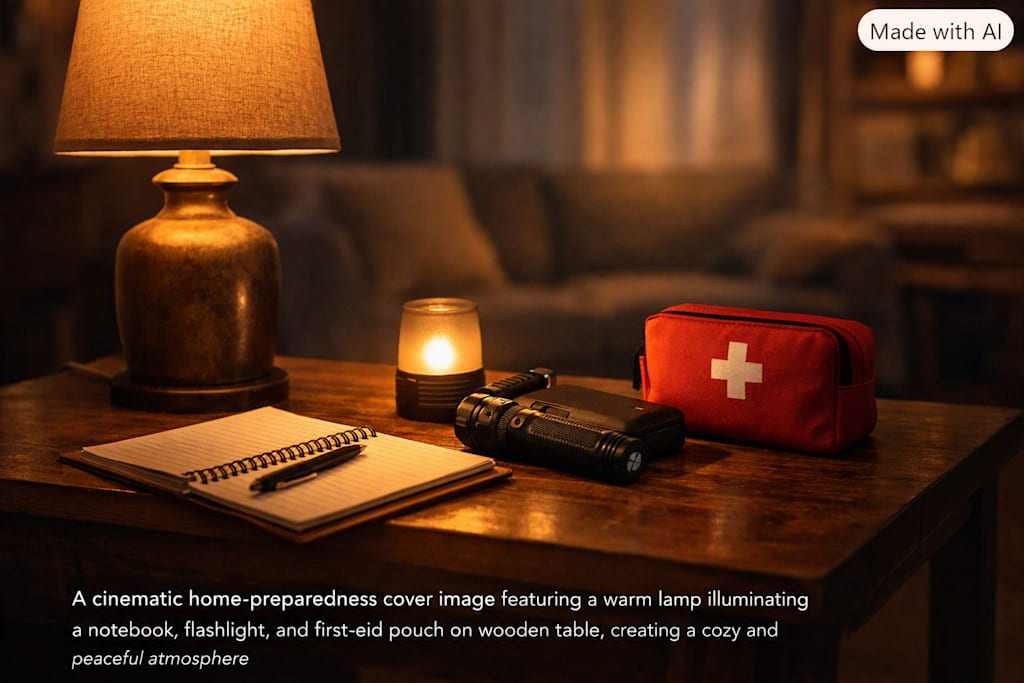
The Quiet Preparedness Shift of 2026
Part I: The Night That Changed Everything
A Scene That Begins Like Any Other
The night didn’t announce anything unusual.
It was one of those early autumn evenings where the air feels crisp enough to wake you up but soft enough to keep you comfortable. The windows were slightly open, letting in a breeze that carried the faint smell of pine from the nearby park. The kitchen still held the warmth of dinner — roasted vegetables, a hint of garlic, the kind of scent that makes a home feel lived in.
Outside, the neighborhood hummed with its usual soundtrack:
a scooter passing by,
someone laughing two houses down,
the rhythmic clinking of plates from a terrace,
a dog barking at a shadow only it could see.
Everything felt familiar. Predictable. Safe.
I had just sat on the couch, scrolling through messages, when the lights went out.
Not a flicker.
Not a warning.
Just darkness — sudden, absolute, swallowing the entire house.
The Silence That Follows
There’s a particular kind of silence that comes with a power outage.
Not the peaceful kind.
The empty kind.
The refrigerator stopped humming.
The street outside fell quiet.
Even the dog next door paused, as if confused by the sudden shift.
I reached for my phone.
12% battery.
The flashlight barely lit my own hand.
I stood up slowly, hands stretched out, trying to remember where everything was. It’s strange how familiar rooms become foreign when the lights disappear. The hallway felt longer. The kitchen felt colder. Every step felt like a guess.
I opened a drawer.
Nothing.
Another drawer.
Still nothing.
I knew — absolutely knew — that I owned a flashlight.
But in that moment, it was as if the house had swallowed it whole.
A small frustration rose in my chest.
Not fear.
Not panic.
Just the realization that I wasn’t prepared for something as simple as this.
Twenty minutes later, the lights returned.
But the feeling didn’t leave.
That night became the quiet catalyst for a change I didn’t expect.
Part II: The Birth of a New Preparedness Habit
A Concept Born From Everyday Moments
Across 2026, thousands of people have lived their own version of that moment — a sudden outage, a brief confusion, a small disruption that reveals how fragile our routines can be.
From these moments emerged a term that began circulating online:
the Anti‑Looter Kit.
The name sounds dramatic, almost cinematic.
But the reality behind it is gentle, almost humble.
It’s not a weapon.
Not a tactical system.
Not a brand.
Not a survivalist fantasy.
It’s simply a small, organized collection of everyday items that help a household stay calm, visible, and connected during unexpected situations.
It’s the opposite of panic.
It’s the opposite of chaos.
It’s the opposite of fear.
It’s a kit built for clarity.
Part III: Why 2026 Is the Turning Point
Power Outages Are More Frequent
Storms, heatwaves, infrastructure strain — outages happen more often. And when the lights go out, the first priority is visibility.
Emergency Services Are Overwhelmed
During large-scale events, response times stretch. A small kit bridges the gap.
People Want Simplicity
Not everyone wants a full emergency bag. A small, accessible set of essentials feels doable.
Social Media Normalizes Preparedness
Short videos showing “home kits” make the idea relatable. People see others organizing their tools and think: I could do that too.
Families Want Peace of Mind
Preparedness reduces stress — especially for households with children or elderly relatives.
Part IV: The Story Behind the Name
The term “Anti‑Looter Kit” didn’t come from experts.
It came from everyday people trying to describe a simple idea: a kit that helps you stay organized and avoid vulnerability during chaotic moments.
The name stuck because it sparked curiosity.
And curiosity often leads to preparedness.
Part V: What the Kit Actually Contains
Visibility Tools
Reliable flashlight
Emergency lamp
Headlamp
Noise & Alert Tools
Portable alarm
Whistle
Communication Tools
Backup battery pack
Emergency radio
Basic Safety Tools
Door-reinforcement tool
Window lock
First-Aid Essentials
Small first-aid kit
Bandages
Antiseptic wipes
Written Essentials
Notebook with important numbers
Local emergency contacts
Part VI: How People Build Their Own Kit
The First Question
Most people don’t build their kit in one go.
It usually starts with a question:
“If the lights went out right now, what would I need?”
The Gathering Phase
Then they gather a few items.
Put them in a box.
Place the box somewhere accessible.
Tell their children where it is.
Check the batteries occasionally.
Preparedness becomes a habit — not a project.
Part VII: A Neighbor’s Story — The Five-Minute Panic
She told me the story months later, over coffee.
It was during a storm.
Her dog panicked and knocked over a lamp.
The house went dark instantly.
Her son started crying.
Her phone had fallen behind the couch.
She couldn’t find the flashlight.
She couldn’t find the candles.
She couldn’t find anything.
She described the moment like this:
“It felt like the house wasn’t mine anymore.”
The entire episode lasted five minutes.
But she said it felt like an hour.
The next day, she built her kit.
Not out of fear — out of frustration.
She wanted to avoid that feeling ever again.
Part VIII: The Emotional Side of Preparedness
Preparedness isn’t just about tools.
It’s about emotions.
A small kit provides:
reassurance,
clarity,
confidence,
calm.
It also strengthens communication within households:
Parents explain the kit to children in a calm way.
Couples discuss simple plans without stress.
Neighbors share ideas and help each other stay ready.
Preparedness becomes a community mindset.
Part IX: Why This Concept Matters Today
The Anti‑Looter Kit is not about expecting danger.
It’s about reducing confusion during moments when things feel uncertain.
Even if the kit is never used, it provides peace of mind — a quiet form of security.
Part X: A Calm, Practical Approach to Home Safety
This concept is not a replacement for professional security systems.
It’s simply an accessible idea that helps households stay organized.
Most people adopt it for everyday reasons:
storms,
power cuts,
children at home,
elderly relatives,
or simply a desire to feel more prepared.
It’s a calm, thoughtful approach to safety — not a dramatic one.
Part XI: Conclusion — The Power of Small Preparedness
The Anti‑Looter Kit represents a shift in how people think about home safety in 2026.
It’s not about fear.
It’s not about confrontation.
It’s not about expecting the worst.
It’s about clarity.
It’s about calm.
It’s about being ready for the small moments that disrupt our routines.
Preparedness doesn’t need to be complicated.
Sometimes, the simplest ideas make the biggest difference.
Further Reading — Understanding the Anti‑Looter Kit: A Practical Home‑Preparedness Approach for 2026
About the Creator
abidi
I write about practical preparedness and everyday safety with a human, down‑to‑earth voice. More of my work here: https://linktr.ee/hnajet32
Enjoyed the story? Support the Creator.
Subscribe for free to receive all their stories in your feed.
Comments
There are no comments for this story
Be the first to respond and start the conversation.