
The Emotional Weight of a PCOS Diagnosis
Nobody really prepares you for the feeling that comes after the diagnosis.

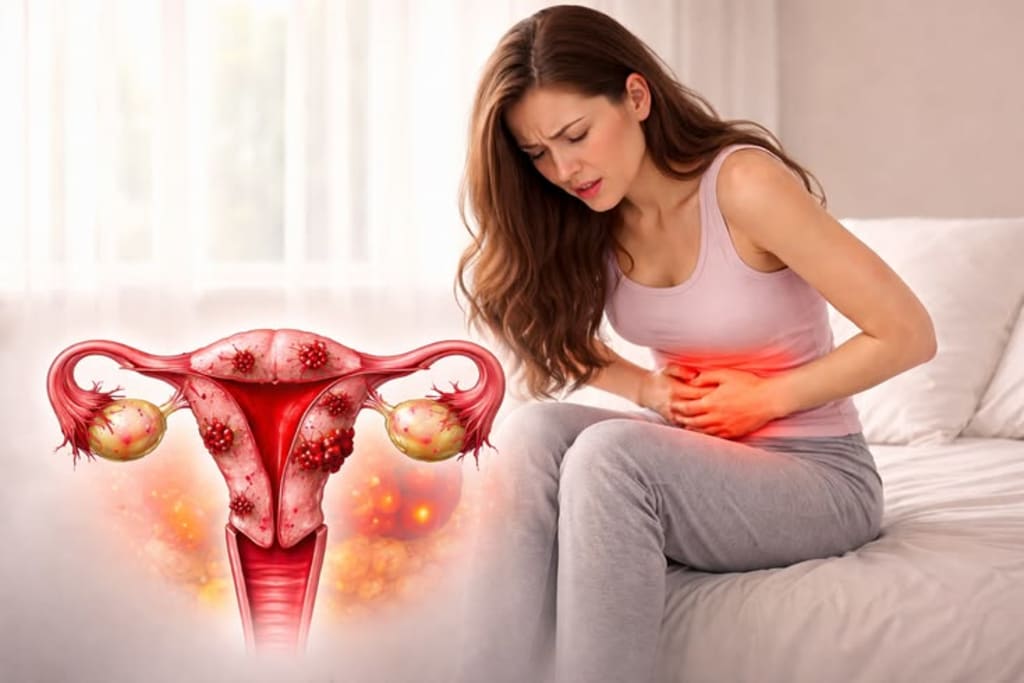
Many people share their relief at finally receiving a diagnosis; I, too, felt it. What no one mentions is what happens right after. This is the low-level grief that hangs around quietly without a defined name. The type of grief that makes you feel guilty because you know it has the potential to be worse; however, knowing this intensifies rather than diminishes the difficulty in dealing with it.
For quite some time, I convinced myself I did not have any right to feel this way, that I was being very dramatic, that other people have "real" problems.
The reality is that grief is not logical; therefore, pretending otherwise does not make grief go away. It simply appears in other locations at unexpected times, in grocery store aisles and on quiet Tuesday evenings when I do not expect it.
If you can relate even a little, this is written for you.
The diagnosis doesn't come with a map
One of the things I would have liked someone to have told me, before receiving my diagnosis, was that getting a name for this issue was not an answer to the questions I had.
Although the diagnosis explained why I have irregular periods, unexplained acne, peculiar weight fluctuations, and extreme fatigue, which I had all attributed to being tired or busy or not trying hard enough, receiving a diagnosis made me feel that I had finally been validated, and was not merely imagining these things.
At the same time, this diagnosis proffered me with many questions that no one who provided the diagnosis would assist me in finding answers to.
Questions like: "Will I be able to have children? Will this continue to get worse? Is this my fault?" Upon returning home, I, like so many of us today, reached for my computer to search on Google, and, as many of us know, searching for medical information at 11 p.m. is rarely a pleasant experience.
The part nobody talks about
The PCOS narrative is represented by the same general storyline on social media… roughly: eat better, read about cycle syncing, skin care products that help your skin clear up, have cycles become regular (as if you’re following a clock), and finally, learn enough to once again feel like you have PCOS under control.
We know the PCOS story from social media. Yes, some of these stories are accurate, and I don't want you to think otherwise. However, they are all presented in a very specific manner; there are many parts of the story that are edited out, and those edited pieces are the things that many people are dealing with.
What the emotional weight actually looks like
My experience was mostly small, unremarkable instances instead of one big event. Taking two weeks to wait for a blood test to get back was awful. When I take a yoga class, and the teacher says to pay attention to my body, it makes me feel angry because I listen to my body, but my body has not been nice to me or easy to be with. At night, I scroll through recovery stories and feel really inspired by the journey these people have gone on, but feel heartbroken about how far apart I am from where they are now.
It has impacted my relationships, too. On the days when I am going through a tough time with my hormones, I become irritable and short with others, but when asked why, I'm at a loss to explain it. I feel guilty that having a chronic illness requires me to manage it continuously, take the time and energy to self-advocate constantly, and sometimes do all of that just to be treated like any other person.
No one tells you that there can be just as much social weight to having chronic conditions as there can be physical weight, and sometimes the social weight is worse than the physical weight.
The thing that actually helped
For me, it wasn't a dietary change or supplement that provided the most change in my PCOS journey, but connecting with other women who also recognised and understood the baseline of having a week where you could say, "My hormones are off this week," and that was enough of a reason or explanation on its own. I think the ability to see and be seen in something that is beyond your control and not a choice is often overlooked as an avenue of healing.
Another thing that I thought was truly helpful was allowing myself the grace to struggle in that moment without immediately seeking out ways to fix the struggle, because there are times when PCOS just feels heavy, and there are heavy days that are not problems to be optimised out.
-
It is okay to struggle with a difficult diagnosis and grieve the loss of something the world tells you is not serious. You are a human being experiencing a life challenge and are allowed to use your own experience to provide comfort to others. Love and Light! ❤️
About the Creator
Yomabasi Fortune
Writer by day and by night.
iRead
iWrite
iDesign
Enjoyed the story? Support the Creator.
Subscribe for free to receive all their stories in your feed.
Comments
There are no comments for this story
Be the first to respond and start the conversation.