
The British Delivery Driver Who Beat Apple, Google, and Samsung to a World-First Invention
From a front room in Lee-on-the-Solent, Clifford Jewett created CTAG — a tap-to-connect safety tag that tech giants never saw coming.
Most people think big ideas only come from big companies.
The Apples. The Googles. The Samsungs. The people with labs, patents, campuses, and armies of developers.
But this idea didn’t come from Silicon Valley.
It came from a front room in Lee-on-the-Solent, and the brain of a FedEx driver named Clifford Jewett — who, without meaning to, may have created one of the most important safety tools of the next decade.
It’s called CTAG.
And once you see what it does, you’ll wonder why no one else — not the tech giants, not the gadget makers, not the so-called “disruptors” — thought of it first.
⸻
So what is CTAG?
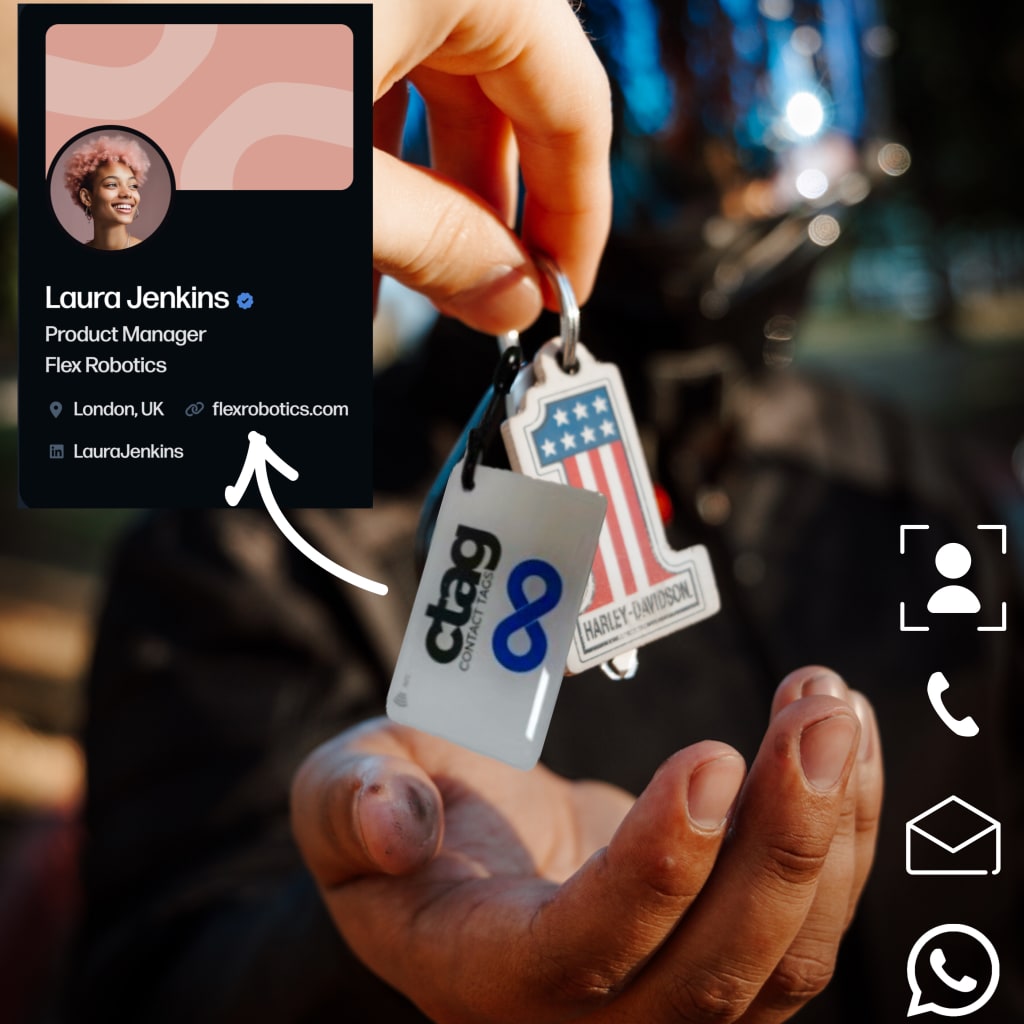
CTAG is a tap-to-contact smart tag that allows someone who finds a lost item — or even a vulnerable person — to instantly reach the right person.
No app.
No QR code.
No login.
No tracking.
No tech drama.
Just a simple tap from a smartphone, and up comes a secure profile: a photo, a name, and a phone number.
The finder clicks the number, and they’re making a call — to the person who owns it, or to their carer, parent, family member, or whoever set it up.
That’s it.
Tap. Click. Boom. Reconnected.
⸻
Why does it matter?
Because right now, there’s no easy way to contact someone when you find their lost item.
Or worse, when you find someone who’s vulnerable and can’t explain who they are.
CTAG fixes that.
And nobody else has done it.
Trackers like AirTags and Tile show you a rough location — but not a person to call.
QR codes break. Contact cards go out of date.
And most “smart” solutions still expect the person who lost something to come looking.
CTAG flips that.
It lets the finder start the reconnection, instantly and directly.
It’s the first tag in the world to do this. And that makes it kind of a big deal.
⸻
How it started
“I didn’t invent this by accident,” says Clifford. “But I might’ve accidentally built the most useful product on the planet.”
He’s not a tech bro. He doesn’t own a MacBook.
He’s a guy who delivers parcels and noticed something — that everyone loses things, and no one had a decent way to get them back.
Even worse, he’d seen families panic when someone they loved went missing — whether it was a child, a parent with dementia, or a vulnerable person in public.
One day, after losing something important himself, it clicked.
“I thought — we’ve got tags and trackers, but none of them can talk.
What if the tag could talk for you? What if it could say, ‘Here’s who I belong to — and here’s their number’?”
That idea became CTAG.
⸻
What it looks like
CTAG comes in two forms:
1. The Wristband – For children, elderly individuals with dementia, SEN pupils, or anyone vulnerable
2. The Keyring Tag – For luggage, school bags, keys, mobility aids, laptops, and valuables
Each CTAG links to a live online profile — fully customisable, easy to update, and controlled by the person (or family) who sets it up.
Anyone who finds the item or person simply taps the tag with their phone.
The profile opens instantly.
No downloads. No delays. Just instant reconnection.
⸻
The numbers don’t lie
Let’s talk about the scale of the problem:
• In 2023, 36.1 million bags were mishandled by airlines — 1.8 million were never recovered
• In the UK, tens of thousands of people with dementia go missing every year
• SEN children and vulnerable adults are regularly separated in public spaces — with no way for a finder to help
CTAG doesn’t just solve these problems.
It does it with one tap.
That’s not just clever.
That’s a category-defining shift in how we think about lost property, public safety, and personal connection.
⸻
The launch story
CTAG isn’t out yet — but already, it’s gaining attention.
Clifford has:
• Reached out to every major UK airport
• Contacted dozens of NHS Trusts and care providers
• Been in touch with national dementia organisations
• Even submitted CTAG to 10 Downing Street
Why? Because he believes this shouldn’t just be a cool gadget — it should be standard issue.
Every suitcase should have one.
Every care home should offer one.
Every school should send one home with SEN pupils.
Every hospital, every event venue, every travel hub — should be thinking CTAG.
⸻
Not just clever. Necessary.
The more you think about it, the more obvious it becomes.
Why doesn’t every lost item — or vulnerable person — have a tag that can reconnect them with their people?
Why should a finder have to guess, or hand something in to a lost and found, or wait for someone to track it?
“I built CTAG because no one else did,” Clifford says.
“I didn’t want it to be smart. I wanted it to be human.”
⸻
Coming soon
CTAG is expected to launch on Amazon within weeks, and Clifford says it’s just the beginning.
He’s already working on partnerships, licensing options, and ways to roll it out through schools, charities, airports, and the NHS.
But for now, he’s still the guy who built a world-first safety solution in his front room — and accidentally made something that could help millions of people stay connected when it matters most.
About the Creator
Enjoyed the story? Support the Creator.
Subscribe for free to receive all their stories in your feed.
Comments
There are no comments for this story
Be the first to respond and start the conversation.