health
Health hacks for optimal performance; discover simple suggestions and habits to improve your life, body, mind and spirit.
The Complete Guide to Telehealth EHR Integration for Healthcare Providers
The rapid growth of virtual healthcare has transformed how providers deliver medical services. Telehealth has become an essential component of modern healthcare systems, enabling patients to connect with clinicians remotely while maintaining continuity of care. However, the true value of telehealth can only be realized when it seamlessly connects with Electronic Health Record (EHR) systems.
By Kunal Chouhan4 months ago in Lifehack
Why Walking Is One of the Best Exercises You Can Do. AI-Generated.
In a world filled with intense workout programs, expensive gym memberships, and high-performance fitness trends, walking often gets overlooked. It seems too simple to be effective. Yet walking remains one of the most powerful, accessible, and sustainable forms of exercise available to almost everyone.
By Bethany Gray4 months ago in Lifehack
How Active Ingredients and Antioxidants Are Shaping the Future of Modern Skincare
The skincare industry continues to evolve as consumers seek products supported by scientific research rather than marketing claims. In recent years, industry experts have reported growing interest in formulations that combine active ingredients with antioxidant protection. This trend reflects a broader shift toward preventive skincare and long-term skin health.
By Emily Carter4 months ago in Lifehack
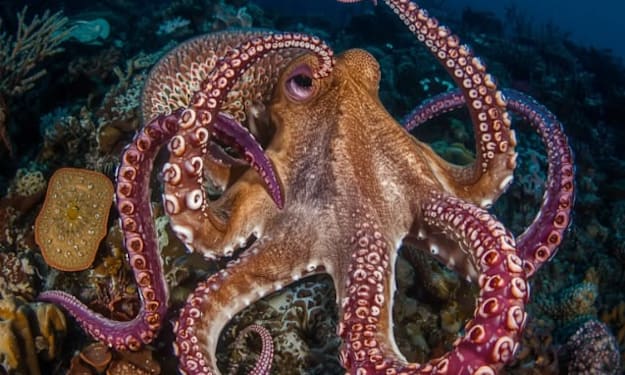
The Animal with Three Hearts: The Amazing Octopus. AI-Generated.
The Animal with Three Hearts: The Amazing Octopus Deep beneath the waves of the world's oceans lives one of the most extraordinary creatures on Earth—the octopus. At first glance, it may seem like just another sea animal, but the octopus has abilities that sound almost unbelievable. It can change color, squeeze through tiny spaces, solve puzzles, and even has three hearts. These amazing features make the octopus one of the most fascinating animals in the animal kingdom. The octopus belongs to a group of marine animals called cephalopods. Unlike fish, it has no bones or skeleton. Its soft body allows it to fit through openings much smaller than its size. If an octopus can fit its beak through a gap, it can usually squeeze the rest of its body through as well. This ability helps it escape predators and hide in places where other animals cannot reach. One of the most surprising facts about the octopus is that it has three hearts. Two of these hearts pump blood to the gills, where oxygen is collected from the water. The third heart pumps oxygen-rich blood to the rest of the body. This unique system helps the octopus survive in the challenging environment of the ocean. Interestingly, when an octopus swims, the main heart that pumps blood to the body temporarily stops beating. This is why octopuses often prefer crawling along the ocean floor rather than swimming long distances. Another unusual feature of the octopus is its blue blood. Human blood is red because it contains iron, but octopus blood contains copper-based proteins. These proteins are very effective at carrying oxygen in cold and low-oxygen waters. This adaptation allows the octopus to thrive in places where many other sea creatures would struggle to survive. The octopus is also known for its incredible intelligence. Scientists consider it one of the smartest invertebrates in the world. Experiments have shown that octopuses can solve complex puzzles, open jars, navigate mazes, and remember solutions to problems. Some have even escaped from aquarium tanks by finding small openings and squeezing through them. Their intelligence helps them find food and avoid danger in the wild. Perhaps the most famous ability of the octopus is camouflage. Special cells in its skin allow it to change color, pattern, and even texture in just a few seconds. An octopus can blend perfectly with rocks, coral reefs, or sandy ocean floors. This makes it extremely difficult for predators to spot. It also helps the octopus approach prey without being seen. When camouflage is not enough, the octopus has another clever defense. It can release a cloud of dark ink into the water. The ink creates confusion and blocks the predator's view, giving the octopus valuable time to escape. This defense mechanism has protected octopuses from danger for millions of years. Octopuses are skilled hunters. They mainly feed on crabs, shrimp, fish, and other small marine animals. Using their powerful arms and suction cups, they can grab and hold prey with great strength. Their sharp beak, hidden beneath their arms, allows them to break through shells and eat animals that many predators cannot. Most octopuses live alone and spend much of their lives hiding in underwater dens. They are usually active at night, searching for food while avoiding larger predators. Despite their intelligence and abilities, octopuses have relatively short lives. Depending on the species, many live for only one to five years. The giant Pacific octopus is the largest known species. It can grow to enormous sizes, with arm spans reaching several meters. Despite its size, it remains elusive and mysterious, spending much of its life hidden in the depths of the ocean. The octopus reminds us that nature is full of surprises. With three hearts, blue blood, remarkable intelligence, and incredible camouflage skills, it is truly one of the most extraordinary animals on Earth. Every discovery about the octopus reveals something new and amazing, proving that the oceans still hold many secrets waiting to be explored.
By Hafiz afridi4 months ago in Lifehack
I Finally Found the Best Side Sleeper Pillow for Neck and Shoulder Pain
Have you ever woken up with a stiff neck, sore shoulders, or the feeling that you barely slept at all? As someone who spends most nights sleeping on my side, I struggled with this for years. I tried countless pillows that promised comfort but ended up flattened, lumpy, or simply unsupportive.
By Eli and Elm4 months ago in Lifehack
7 Proven Ways to Improve Skin Elasticity (Backed by Science)
One morning, I pinched the skin on the back of my hand and watched it. It did not bounce back the way it used to. That small moment told me everything. My skin elasticity was changing, and I needed to do something about it.
By AMRYTT MEDIA4 months ago in Lifehack