book reviews
Reviews of must-read books for self-helpers, home improvers and life hackers alike.
12 LOVE LANGUAGES
To establish solid and deep connections in relationships, it is essential to understand each other's love languages. According to Dr. Gary Chapman's book "The Five Love Languages," these are the languages people use to express and receive love. Words of affirmation, acts of service, receiving gifts, quality time, and physical touch are the five main love languages, however individuals may use more than one of them. Ten indicators that someone is using their preferred love language to convey love are as follows: 1. SPEECH OF CONFIRMATION: - Regular verbal displays of affection and gratitude. - Expressing gratitude and appreciating the partner's virtues. - Kind comments that inspire and motivate. 2. ACTS OF SERVICE: - Taking considerate steps to ease your partner's burdens. - Completing jobs or responsibilities without request. - Showing love with kind and considerate actions. 3. RECEIVING GIFTS: - Valuable and considerate presents that demonstrate respect for the partner's choices. - The delight and anticipation of giving and getting gifts. - The focus on the gift's sentimental significance. 4. QUALITY TIME: - A wish to have uninterrupted, meaningful time with one another. - Partaking in pursuits that bring the two of them joy. - The value of paying close attention and participating in conversation. 5. PHYSICAL TOUCH: - Consistent physical affection, including handholding, kissing, and hugs. - The value of intimacy and physical proximity. - Sensing closeness and touch to create a strong connection. 6. COMBINATION OF LANGUAGES: - Some people use a mix of languages to convey their affection. - Acknowledging and respecting the diverse ways that love is expressed. - Adaptability and flexibility in recognizing the special combination of the partner. 7. REGULARITY IN EXPRESSIONS: - A regular manner of expressing affection in a specific language. - How consistently reliable these phrases are throughout time. - Determining the main love language of the partner by looking for patterns in their behavior. 8. COMMUNICATION STYLES: - Comprehending how communication styles are influenced by love languages. - Using particular words or expressions that correspond with the love language of the other person. - Skillful communication that meets the emotional needs of the partner. 9. ADAPTABILITY AND GROWTH: - A readiness to change and develop in one's ability to show love. Find out what your partner's love language is and use it in your relationship. Adapting to each other's shifting emotional requirements. 10. RESPECT FOR DIFFERENCES: - Acknowledging and honoring the possibility that people's primary love languages differ. - Recognizing and respecting these distinctions to prevent miscommunications. - Creating a setting where both partners experience love. 11. EMOTIONAL CUE AWARENESS: - Couples who are sensitive to one another's feelings often have a thorough comprehension of each other's preferred language. - Acknowledging when the other person needs support, confidence, or a vulnerable moment. - Responding to emotional needs in a way that is consistent with the predominant love language of the partner. 12. CREATIVE EXPRESSIONS OF LOVE: - People who express their love via creative endeavors might use their skills to show affection. - Crafting individualized presents, artwork, or words that capture the special nature of the partnership. - Coming up with creative ways to express love that align with the partner's feelings. In conclusion, this article is all about learning the different ways people communicate affection is a necessary step towards identifying the indications of love languages. Every person has a different love language, which enhances the depth of a relationship. These languages can be expressed through words, deeds, gifts, time, or physical touch. Good communication and an openness to change and grow are essential for developing a strong bond that meets each partner's emotional requirements. I strongly believe you enjoyed this article, stay blessed.
By Ugiagbe Aisosa John3 years ago in Lifehack
A few flights of stairs a day could be your secret weapon for heart health and a longer life. This is how. Content Warning.
It has long been believed that using the stairs rather than the elevator is a wise fitness recommendation, but a recent study that was published in the journal Atherosclerosis supports this notion by examining the precise number of stairs you must walk each day in order to improve your heart health. The quick response? Your risk of cardiovascular disease could be reduced by 20% by climbing just five flights of stairs each day.
By Hashan chamara3 years ago in Lifehack
love beyond sight
Once upon a time, in a small town nestled between rolling hills, there lived a young man named Inusa. He was a kind-hearted and compassionate soul who had a heart full of love to give. Inusa's life changed forever when he met Aisha, a remarkable young woman who happened to be blind.
By Inusa Sule3 years ago in Lifehack
How to overcome your mistakes
In a study conducted in 2019, more than 400 participants were involved in the process of learning an entirely new, mysterious language that had been created for the study. They were presented with questions about three pairs of unique characters, such as identifying which character represented an animal. After a short break, they were asked the same questions but with the pairs reversed, such as identifying which character represented a non-living object. What the participants didn't know was that their answers in the first round determined the meanings of the characters in the second round.
By Ebenezer Afful 3 years ago in Lifehack
How To Read Anyone Instantly
we are inundated with information. Determining what kind of person they are might be challenging. It's crucial to comprehend HOW we communicate because of this. Experts claim that only 7% of what we say is actually spoken; the other 55% is communicated through body language, 38% through voice tone, and so on. This means that, in addition to what someone's outward look might imply, we also need to consider these three things when we first meet them. Thus, if you want to learn more about a person's personality when you first meet them, start looking for these telltale signs!
By Kolawole Johnson 3 years ago in Lifehack
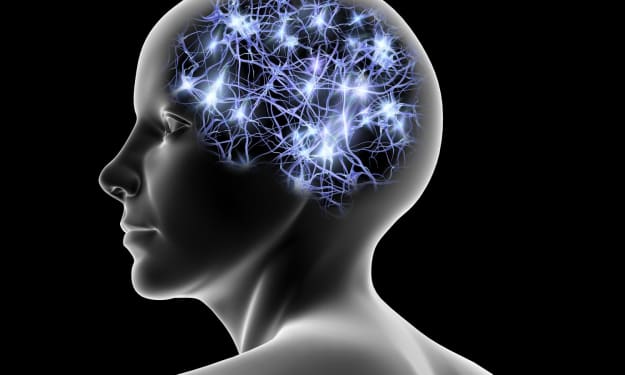
Debunking Common Myths about the Human Brain 🧠
The human brain is one of the most complex and fascinating organs in the body. However, there are still many widespread myths and misconceptions about how our brains work. In this article, we will explore 10 commonly believed brain myths and separate fact from fiction based on the latest neurological research. Myth #1: We only use 10% of our brains. This is simply not true. Functional imaging techniques like PET and fMRI scans have shown that the entire brain is very active and no part of it goes unused. While different regions may be more stimulated during particular tasks, we utilize most areas of the brain on a regular basis. The idea that only 10% is being used likely originated from early observations that certain brain areas were damaged without obvious effects, but we now know the brain has redundancy built in. Myth #2: Bigger brains mean greater intelligence. Brain size alone does not determine how smart an organism is. While humans have larger brains than many other species relative to our body size, some animals like whales and elephants have even bigger brains but likely aren’t more intelligent. Instead, factors like how developed and well-connected different brain regions are seem to correlate more closely with intelligence capabilities. Chimpanzees, for example, have been found to have similar levels of cognition as humans despite their smaller brains. Myth #3: IQ tests are an infallible measure of intelligence. In reality, IQ scores provide an imperfect snapshot of certain cognitive abilities but cannot encapsulate full human intelligence, which is quite complex and multifaceted. IQ tests are influenced by life experiences, education level, mood, and other external variables. They also tend to emphasize logic, reading, and math skills over other types of "smarts" like social or emotional intelligence. As such, high or low IQ scores should not be taken as immutable defining characteristics. Myth #4: Video games rot your brain. In moderation, video games may actually provide cognitive benefits like improving hand-eye coordination, multitasking, and problem-solving skills. Excessive gaming that replaces real-world social interaction could be problematic, but most research suggests video games themselves do not cause harm. Some studies even show video game simulators enhancing skills useful for activities like surgery. As with many things, balance is key - video games are unlikely to inherently damage the brain unless consumed to an unhealthy extreme. Myth #5: Memory inevitably deteriorates with age. While certain types of memory like episodic memory do tend to decline as we age, other forms like semantic memory and procedural skills can actually improve over time through continued use. Not all memory changes associated with aging represent illness - some loss of recall for recent events is normal. Lifestyle factors like cardiovascular health, diet, exercise and brain stimulation can help maintain memory abilities as long as possible by supporting brain cell connections. Dementia is not an inevitable consequence of growing old. Myth #6: It's impossible to prevent strokes. We now know that addressing modifiable stroke risk factors can significantly lower chances of having one. Maintaining a healthy diet, limiting alcohol, not smoking, controlling blood pressure/cholesterol/blood sugar levels, exercising regularly, and avoiding head injuries can all help avoid stroke. Learning signs of stroke like facial drooping or arm weakness and seeking immediate medical care if they occur improves outcomes as well. While heredity plays a role, lifestyle choices influence stroke risk greatly. Prevention is possible through sustained self-care of mind and body. Myth #7: Different brain hemispheres determine creativity vs logic. While language skills tend to lateralize more to the left side for most right-handed individuals, creative talents do not reside predominantly in one hemisphere or the other. Environmental and educational influences rather than inherent brain organization are what impact one's predisposition for logic versus creativity. No structural brain differences exist between so-called "left-brained" logical and "right-brained" artistic types. Talents develop based on nurture, not pre-determined nature. Myth #8: Eating fish makes you smarter. Fish consumption provides important omega-3 fatty acids that support brain and heart health when consumed in moderation as part of an overall balanced diet. However, it does not directly confer improvements to intelligence. Fish was likely recommended for cognitive benefits more due to its nutritional properties than a unique ability to make one smarter. A well-rounded Mediterranean-style diet that includes fish among other brain-healthy foods may aid cognition rather than fish alone imparting extra brilliance. Myth #9: One seizure means you have epilepsy. Not necessarily - seizures can happen for various reasons outside of having epilepsy, a chronic neurological condition. True epilepsy is diagnosed when someone has recurrent unprovoked seizures over time despite medication adherence. A single seizure may result from factors like medication withdrawal, illness, trauma or genetic conditions rather than signifying lifelong epilepsy. Someone experiencing even multiple isolated spells should be examined to determine the cause before labeling it epilepsy. Myth #10: Men and women's brains are inherently different. No, the brains of all humans are fundamentally alike regardless of sex or gender. While studies had hinted at tendencies for enhanced emotional processing in some females versus executive function in some males, societal influences on brain development are now understood to far outweigh any innate dimorphism. All people are born with equivalent brain structures that then shape according to life experiences rather than pre-determined gender attributes. Nurture, not nature, sculpt brains over the lifespan. In summary, many common ideas about how the brain works have either been proven false or require more nuanced understanding. Continued neurological research helps dispel myths and replace fiction with fact-based knowledge about this complex organ. Taking good care of brain health through lifestyle is the best approach rather than relying on unfounded notions. An educated, skeptical perspective serves us well in sorting truth from myth when it comes to understanding our brains.
By Rakindu Perera3 years ago in Lifehack
How Bitcoin Works: A Decentralized Digital Currency Revolution
Bitcoin is a decentralized cryptocurrency that has completely changed the way that people do business and make payments. It is also known as "digital gold." In 2008, a person or group going by the name Satoshi Nakamoto released a whitepaper that would later become the basis for Bitcoin, which is now widely acknowledged as a blockchain technology pioneer.
By Khalid Lam3 years ago in Lifehack
Unlocking the Power of Ho'oponopono: Healing and Transformation
In the realm of holistic healing and self-improvement, there are countless methods and practices that promise to uplift and rejuvenate our lives. One such practice that has been gaining popularity in recent years is Ho'oponopono, a unique and profound Hawaiian healing technique that promotes forgiveness, reconciliation, and overall well-being. This ancient tradition, rooted in Polynesian culture, has been modernized and simplified for contemporary use, and its impact on personal growth and healing is nothing short of remarkable.
By David Snam3 years ago in Lifehack
The Jester's Secret
In the grandeur of a medieval kingdom, where regal processions, chivalry, and solemnity reigned supreme, a secret existed, a secret known only to a select few. "The Jester's Secret" is a captivating compilation of stories that uncover the concealed humor within the opulent walls of the royal court.
By Rajesh kumar 3 years ago in Lifehack
Jim Jordan: A Conservative Force in American Politics. Content Warning.
A political force has emerged in Ohio's central region, where agriculture and rolling hills are visible for miles. Jim Jordan is a steadfast supporter of conservative principles in American politics. Jordan has established himself as a powerful force on the national arena with a staunch devotion to small government and individual liberty.
By Destiny Diamond3 years ago in Lifehack