
Strain Gauges Explained: The Small Sensor Powering Big Precision
How a simple change in resistance unlocks accurate measurement across industries

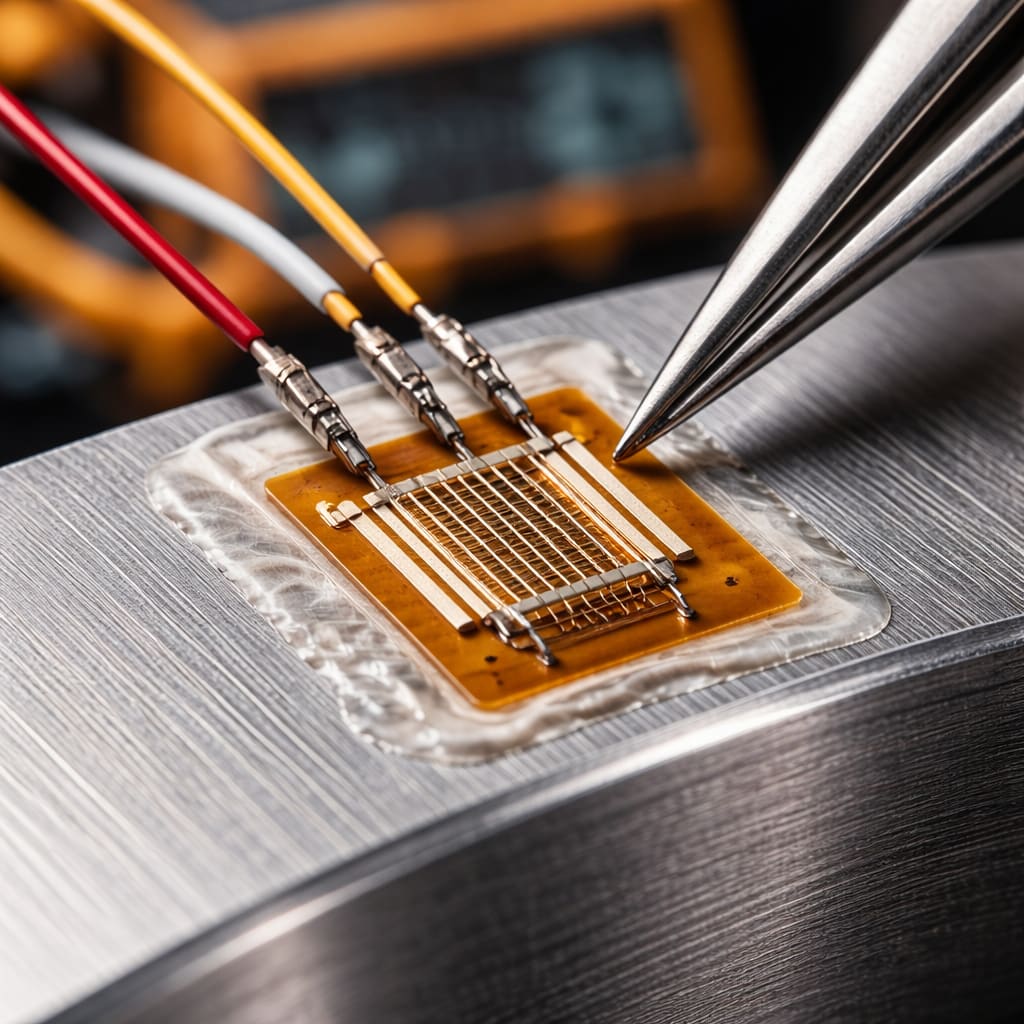
In modern engineering and technology, precision is everything. Whether it’s ensuring the structural safety of a bridge, monitoring stress in an aircraft wing, or measuring force in industrial machinery, even the smallest deformation can carry critical information. This is where strain gauges come into play.
A strain gauge is a sensor that measures mechanical deformation, also known as strain, by detecting changes in electrical resistance when a material is stretched or compressed. It typically consists of a thin metallic foil pattern mounted on a flexible backing. When bonded to a surface, the gauge deforms along with the material, allowing it to translate physical changes into measurable electrical signals.
Despite their relatively simple design, strain gauges are among the most widely used and reliable tools in engineering measurement.
How Strain Gauges Work
At the core of a strain gauge’s function is the relationship between mechanical deformation and electrical resistance. When a conductor is stretched, it becomes longer and thinner, increasing its electrical resistance. When compressed, it becomes shorter and thicker, reducing resistance.
A strain gauge is designed to take advantage of this principle. The metallic foil pattern is arranged in a grid-like structure to maximize sensitivity. When the surface it is attached to experiences strain, the foil deforms accordingly. This deformation causes a small but measurable change in resistance.
Because these changes are often very subtle, strain gauges are typically used in conjunction with a Wheatstone bridge circuit. This setup enhances sensitivity and allows for precise measurement of even the smallest variations in resistance.
Key Components of a Strain Gauge
While the concept is straightforward, a strain gauge is made up of several carefully designed components that ensure accuracy and durability.
The sensing element is the metallic foil, usually made from materials like constantan or nickel-chromium alloys. These materials are chosen for their stable electrical properties and predictable response to strain.
The backing or substrate is a flexible material that supports the foil and allows it to bond securely to the test surface. This ensures that any deformation in the structure is accurately transferred to the gauge.
Adhesives also play a critical role. The bond between the strain gauge and the surface must be strong and consistent, as any slippage or inconsistency can lead to inaccurate readings.
Protective coatings are often applied to shield the gauge from environmental factors such as moisture, temperature changes, and chemical exposure.
Types of Strain Gauges
Strain gauges come in various types, each suited to different applications and environments.
Foil strain gauges are the most common. They offer a good balance of sensitivity, durability, and cost, making them suitable for a wide range of uses.
Wire strain gauges use fine wires instead of foil. While they were more common in earlier designs, they are now less widely used due to advancements in foil technology.
Semiconductor strain gauges provide higher sensitivity but can be more affected by temperature changes. They are often used in applications where extreme precision is required.
Rosette strain gauges consist of multiple gauges arranged in different orientations. These are used to measure strain in multiple directions, providing a more complete understanding of stress patterns in a material.
Applications Across Industries
Strain gauges are used in a wide variety of fields, making them one of the most versatile sensors available.
In aerospace, they are used to monitor stress on aircraft components during testing and operation. This helps engineers ensure safety and optimize performance.
In civil engineering, strain gauges are embedded in structures such as bridges, buildings, and dams. They provide real-time data on stress and load, allowing for early detection of potential issues.
In manufacturing and industrial settings, strain gauges are used in load cells to measure weight and force. These systems are essential for quality control, automation, and safety.
Automotive applications include crash testing, suspension analysis, and engine performance monitoring. By understanding how components behave under stress, engineers can design safer and more efficient vehicles.
Even in medical devices, strain gauges play a role. They are used in equipment that measures force and pressure, such as prosthetics and rehabilitation tools.
Factors That Affect Accuracy
While strain gauges are highly precise, their accuracy depends on several factors.
Temperature is one of the most significant influences. Changes in temperature can affect both the material being measured and the gauge itself, leading to variations in resistance that are not related to strain.
Proper installation is also critical. The surface must be clean and prepared correctly, and the gauge must be aligned accurately with the direction of strain.
Electrical noise can interfere with measurements, especially in environments with heavy machinery or electromagnetic interference. Shielded wiring and proper grounding can help reduce these effects.
Calibration ensures that the readings from the strain gauge correspond accurately to the actual strain. Regular calibration is essential for maintaining reliability over time.
Advantages of Using Strain Gauges
One of the main advantages of strain gauges is their ability to provide highly accurate and repeatable measurements. They are relatively small and lightweight, making them easy to integrate into a wide range of systems.
They also offer real-time monitoring, which is crucial in applications where conditions can change rapidly. This allows engineers to respond quickly to potential issues.
Another benefit is their versatility. With different types and configurations available, strain gauges can be adapted to measure a variety of forces, including tension, compression, bending, and torque.
Final Thoughts
Strain gauges may be small, but their impact is significant. By converting mechanical deformation into measurable electrical signals, they provide essential data that supports safety, efficiency, and innovation across multiple industries.
From large-scale infrastructure to precision engineering, these sensors play a critical role in understanding how materials and structures behave under stress. As technology continues to advance, the importance of accurate measurement will only grow, and strain gauges will remain a key tool in achieving that precision.
About the Creator
Paul Sera
Owner of Next Gen Digital Agency in Melbourne, Australia.
Entrepreneurship Courses - paulsera.com
Restaurant Near Me - restaurantnearme.com.au
Generative Engine Optimisation - GEOPT.com.au
Car Events & merchandise - radiallife.com.au
Enjoyed the story? Support the Creator.
Subscribe for free to receive all their stories in your feed.
Comments
There are no comments for this story
Be the first to respond and start the conversation.