
Nvidia AI and AI Hardware: Why the Company Behind the GPU Boom Now Controls the Future of Artificial Intelligence
build AI products, run cloud infrastructure, invest in tech, manage enterprise systems...

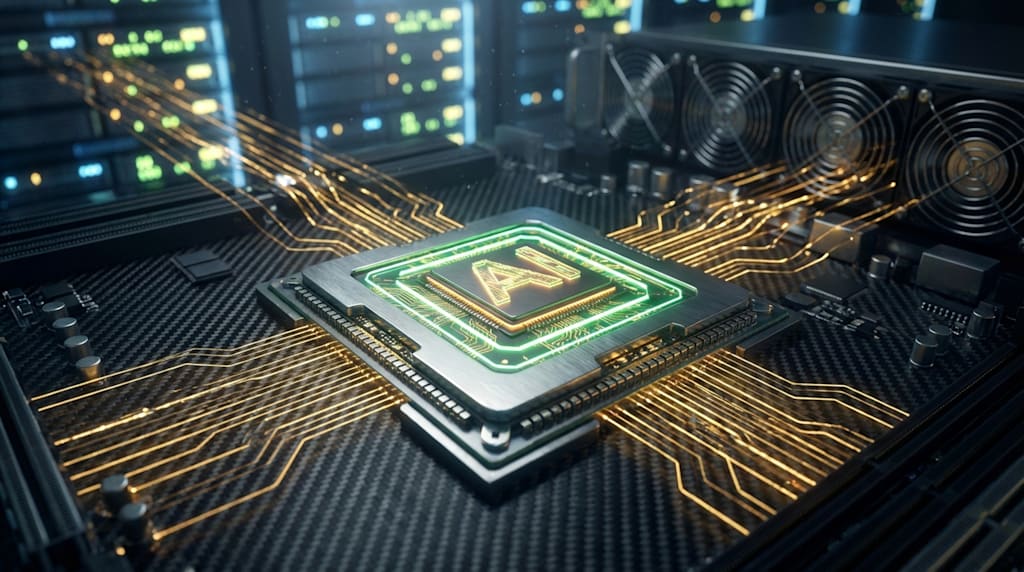
A few years ago, most people saw Nvidia as the company gamers talked about when they wanted smoother frame rates and prettier shadows. That version of the story is dead. Nvidia now sits at the center of the AI economy because the same kind of hardware that once rendered video game worlds turned out to be perfect for training and running modern artificial intelligence.
That shift changed everything. If you build AI products, run cloud infrastructure, invest in tech, manage enterprise systems, or even just follow where computing is headed, you cannot afford to treat Nvidia like “just another chip company.” It became the shovel seller in the biggest digital gold rush of this decade.
Why Nvidia Matters in AI
The simplest answer is this: AI needs enormous amounts of parallel computation, and Nvidia built the tools that handle parallel computation exceptionally well. Large language models, image generators, recommendation engines, robotics systems, and autonomous systems all rely on the ability to process huge volumes of matrix math at extreme speed. Nvidia’s hardware happens to be built for exactly that kind of work.
But hardware alone does not explain the size of Nvidia’s lead. Software made the difference. While many companies had capable chips, Nvidia spent years building a full developer ecosystem around those chips, which made it easier for researchers, startups, and large enterprises to build on Nvidia instead of constantly reinventing their stack.
That is why Nvidia became more than a supplier. It became infrastructure. When a company says it is building an AI product, there is a good chance Nvidia hardware, Nvidia networking, or Nvidia software is sitting somewhere underneath the hood, quietly doing the heavy lifting.
What Nvidia AI Hardware Actually Includes
A lot of people hear “Nvidia AI hardware” and think only of one thing: GPUs. That is the headline, yes, but the real picture is much bigger. AI hardware in Nvidia’s world includes accelerators, interconnects, networking systems, software layers, developer kits, edge devices, and full rack-scale systems built for giant AI workloads.
At the core are Nvidia GPUs used for training and inference. These chips are designed to run massive parallel workloads, which makes them ideal for deep learning tasks. Training a model involves crunching through absurd amounts of data and mathematical operations, and GPUs do that far better than a traditional CPU alone.
Then there are complete systems such as enterprise-grade AI servers and integrated platforms. These systems matter because most companies do not want a pile of chips. They want a working engine. Nvidia helps fill that gap by offering packaged AI infrastructure that reduces the pain of deployment.
The hardware stack also includes:
- Data center GPUs for large-scale AI training and inference.
- Workstation GPUs for developers, researchers, and creators.
- Embedded and edge AI modules for robotics, drones, and smart devices.
- High-speed interconnect technologies for linking GPUs together.
- Networking hardware for moving huge datasets across AI clusters.
- Full-stack systems built for enterprise AI deployments.
That is why Nvidia’s position is so hard to challenge. It is not selling one part. It is selling an entire machine room philosophy.
Why GPUs Beat CPUs for AI Workloads
To understand Nvidia’s rise, you need to understand one blunt truth: CPUs are excellent generalists, but AI rewards specialists. GPUs shine because they can handle thousands of smaller operations at once, while CPUs are better suited for fewer, more complex sequential tasks.
Think of a CPU as a brilliant chef working carefully through a complicated recipe. Think of a GPU as a massive team of cooks all chopping vegetables at the same time. If your job requires one highly nuanced decision after another, the chef wins. If your job requires huge amounts of repetitive, parallel math, the team wins easily.
Modern AI training is packed with that second kind of work. Neural networks perform giant matrix operations over and over again. The same patterns repeat at scale. That makes GPUs the natural fit.
This is why developers training models for computer vision, speech recognition, recommendation systems, and large language models often reach for Nvidia GPUs first. The speed advantage is not a luxury. It changes what is commercially possible. Without efficient AI hardware, many modern models would simply take too long or cost too much to train.
How CUDA Became Nvidia’s Real Superpower
If you only study Nvidia from the hardware angle, you miss the real moat. The deeper advantage is CUDA, Nvidia’s software platform for parallel computing and GPU acceleration.
CUDA gave researchers and developers a practical way to use Nvidia GPUs for more than graphics. That sounds simple, but it was a huge turning point. Once developers could write software that tapped into GPU power for scientific computing and machine learning, Nvidia’s chips became useful far beyond gaming.
Over time, CUDA turned into a giant ecosystem. Libraries, frameworks, optimized routines, developer habits, tutorials, enterprise workflows, and AI tooling all grew around it. That matters because businesses hate friction. If your engineers already know how to train, optimize, and deploy models in a mature environment, you are much less likely to switch to a different vendor unless the payoff is dramatic.
This is the part many casual readers miss. Hardware can be copied in spirit. Ecosystems are harder to copy. A rival can launch a fast chip. It is far harder to convince the world’s developers, researchers, cloud providers, and enterprises to rebuild habits, code paths, and infrastructure around a new foundation.
That is why Nvidia often behaves less like a component brand and more like a computing platform company.
Training vs Inference: Where Nvidia Fits in Both
When people talk about AI hardware, they often collapse everything into “running AI,” but training and inference are different beasts. Training is the expensive, brutal stage where you teach the model. Inference is what happens later, when the trained model actually answers a question, recognizes an object, or generates a response.
Training usually demands the most powerful hardware. You are feeding giant datasets into the model, adjusting parameters, and repeating that process over and over. This is where high-end Nvidia data center GPUs earn their reputation. They are built to handle huge model sizes, high memory demands, and clustered workloads.
Inference has different priorities. It still needs speed, but cost, efficiency, and latency matter more. If you run an AI chatbot for millions of users or deploy computer vision on factory floors, inference becomes the day-to-day operational burden. A chip that performs beautifully in a lab is not always the best fit for real-world deployment at scale.
This is why Nvidia plays in both spaces:
- High-performance chips for large model training.
- Optimized hardware for inference in production environments.
- Edge platforms for on-device or near-device AI.
- Software tools that help reduce latency and improve deployment efficiency.
If you are building an AI business, this distinction matters. Inference is often where the money leaks quietly. Training gets the headlines because it is flashy and expensive. Inference gets the monthly bills because it runs constantly.
Nvidia in Data Centers, Cloud, and Enterprise AI
You can think of modern AI as an industrial process. The glamorous part is the model. The expensive part is the factory. Data centers are those factories, and Nvidia became one of the most important suppliers inside them.
Cloud providers rely heavily on AI accelerators because customers want access to serious compute without buying physical infrastructure upfront. If you are a startup building a machine learning product, renting GPU power in the cloud is much easier than buying and managing an entire AI cluster. Nvidia benefits because the cloud layer becomes a giant distribution channel for its hardware.
Enterprises also turned to Nvidia because internal AI projects are getting heavier. Customer service automation, predictive analytics, recommendation systems, fraud detection, code generation, design tools, and industrial monitoring all require compute power. Once companies move from small experiments to serious deployment, the conversation quickly shifts from “Can we build this?” to “What hardware can run this efficiently?”
Nvidia’s enterprise value comes from helping organizations move across several layers:
Prototyping AI models.
Training at scale.
Fine-tuning domain-specific models.
Deploying inference workloads.
Managing AI infrastructure over time.
That last part matters more than it sounds. Enterprise AI is rarely about one model in one lab. It is about many teams, many workloads, compliance needs, uptime demands, and budget pressure all hitting the same infrastructure at once.
How Nvidia Powers Edge AI, Robotics, and Autonomous Systems
Not all AI lives in giant cloud clusters. Some of the most interesting applications need to run closer to the physical world. Edge AI handles that job.
If a robot in a warehouse needs to avoid obstacles, or a smart camera needs to detect defects on a production line, sending every frame to a distant cloud server is too slow. You need local or near-local inference. The same goes for drones, industrial automation systems, autonomous vehicles, medical devices, and many smart city applications.
This is where Nvidia’s smaller AI platforms and embedded systems become important. They allow developers to run sophisticated models on machines that exist in physical environments, not just in server racks. That changes what AI can do in real time.
A good metaphor helps here. Cloud AI is like a giant central brain sitting in a fortified headquarters. Edge AI is like giving smaller brains to the hands, eyes, and moving parts of the system. Robotics especially depends on this because real-world decisions often need to happen instantly, not after a round trip to a remote server.
That is why Nvidia matters in fields far beyond chatbots:
- Robotics and automation.
- Autonomous navigation.
- Smart retail and surveillance.
- Industrial quality control.
- Healthcare devices.
- Drones and intelligent machines.
The Real Bottlenecks: Cost, Power, Heat, Memory, and Supply
It is easy to romanticize AI hardware as a simple horsepower race. In reality, the hardest part is often not raw performance. It is operating the machine economically. Power is one of the biggest constraints in modern AI infrastructure.
High-end AI chips consume serious electricity. Put enough of them in one cluster, and now you are thinking about cooling systems, data center design, energy costs, and facility limits. That is one reason AI infrastructure feels less like normal IT and more like industrial engineering.
Then there is memory. Large models eat memory aggressively, and memory bandwidth can become just as important as raw compute. A chip can be powerful on paper and still struggle if the memory subsystem creates bottlenecks.
Cost is the next obvious issue. Nvidia hardware is powerful, but it is rarely the cheap path. For startups, that can mean careful trade-offs between renting cloud GPUs, buying workstations, or delaying ambitious model plans. For enterprises, it can mean hard decisions around capital spending versus cloud dependency.
Supply pressure adds another layer. Demand for AI hardware exploded so quickly that getting the exact components you want is not always easy. When the most desirable hardware becomes scarce, everyone downstream feels it: cloud providers, startups, research labs, and enterprise buyers alike.
These are the bottlenecks you cannot ignore:
- Electricity and cooling demands.
- High upfront or rental costs.
- Memory and bandwidth limitations.
- Physical data center capacity.
- Supply chain pressure.
- Long deployment cycles for large clusters.
- Nvidia vs AMD, Intel, and Custom AI Chips
No market stays uncontested forever. Nvidia leads, but rivals are pushing hard. Competition comes from several directions, and each one attacks a different weakness.
AMD competes aggressively in data center GPUs and AI accelerators. Intel pushes through its own hardware, enterprise relationships, and broader platform strategy. Then you have cloud giants and specialized startups building custom silicon for their own workloads, especially where efficiency and cost control matter more than absolute flexibility.
This matters because not every buyer wants the same thing. Some companies want the richest software ecosystem. Some want cheaper alternatives. Some want chips tailored for inference. Some want to reduce dependence on a single vendor.
Still, Nvidia retains a serious advantage because it combines several strengths in one stack:
- Mature software ecosystem.
- Strong developer mindshare.
- Broad product range.
- Deep data center presence.
- Established AI branding.
Tight integration across compute, networking, and deployment tools.
That does not mean Nvidia wins every use case forever. It means switching away is harder than many people assume. Buyers do not just compare chip speed. They compare training pipelines, tooling compatibility, hiring difficulty, deployment risk, and long-term support.
How to Choose the Right Nvidia AI Hardware
This is where many readers need practical guidance. You do not buy AI hardware based on hype. You buy it based on workload. Choice should start with one question: what exactly are you trying to do?
If you are a solo developer or small team experimenting with local models, you may not need giant enterprise hardware. A strong workstation GPU might be enough for prototyping, fine-tuning smaller models, testing inference flows, and development work.
If you are a startup training larger models or serving heavy AI workloads, cloud access to Nvidia accelerators may make more sense. You get flexibility without the burden of buying and managing infrastructure too early.
If you are an enterprise or research organization with persistent, large-scale demand, then dedicated Nvidia-based infrastructure may justify itself over time. That is especially true when you need predictable performance, data control, and long-term AI capacity.
Use this filter:
- Local development: Workstation GPUs.
- Scalable experiments: Cloud GPU rentals.
- Enterprise AI operations: Dedicated or hybrid AI infrastructure.
- Real-time physical systems: Edge AI platforms.
- Massive training clusters: Data center GPUs plus networking and orchestration.
Do not forget software compatibility, model size, inference volume, electricity costs, and deployment timeline. Buying the most powerful hardware in the catalog is often the wrong move if your workload does not justify it.
What the Future of Nvidia AI Hardware Looks Like
The future is not just “more powerful chips.” That is part of the story, but not the whole thing. Future AI hardware will be shaped by efficiency, memory architecture, interconnect speed, deployment flexibility, and full-stack integration.
AI models are getting larger, yes, but businesses are also demanding lower latency, lower cost, and broader deployment options. That means Nvidia must keep improving not only peak performance, but also how efficiently models move from training labs into real products used by real people.
You will likely see several trends deepen:
- More integrated AI systems rather than isolated chips.
- Stronger emphasis on inference efficiency.
- Better networking between clustered accelerators.
- More edge AI deployments in robotics and automation.
- Tighter coupling between software frameworks and hardware optimization.
- Growing demand for sovereign and enterprise-controlled AI infrastructure.
There is also a broader strategic shift happening. AI hardware is becoming geopolitically important. Countries, cloud providers, defense systems, industrial giants, and major software platforms all care about who controls the compute layer. Nvidia sits in the middle of that power struggle because it supplies much of the hardware the modern AI economy depends on.
That is why this topic matters beyond one company’s stock chart. It is really a story about who controls the engines of the next computing era.
Frequently Asked Questions
What is Nvidia’s role in AI?
Nvidia provides the GPUs, AI accelerators, software ecosystem, and supporting infrastructure that power much of modern AI training and inference. Its importance comes not only from chip performance but also from the broader platform built around those chips.
Why are Nvidia GPUs used for AI?
They are widely used because AI workloads rely heavily on parallel computation, and GPUs handle that type of work far better than traditional CPUs. They can process many operations simultaneously, which makes deep learning much faster and more practical.
What is the difference between AI training and inference?
Training is the process of teaching a model using large datasets and repeated optimization. Inference is the stage where the trained model actually performs tasks such as answering questions, recognizing images, or generating output for users.
Is Nvidia only important for large language models?
No. Nvidia hardware is used across many AI domains, including computer vision, robotics, industrial automation, recommendation systems, healthcare AI, autonomous systems, and edge computing.
What makes CUDA so important?
CUDA matters because it gives developers a mature environment for using Nvidia GPUs in parallel computing and AI workloads. Over time, it became a major ecosystem advantage that keeps developers and enterprises anchored to Nvidia’s platform.
Is Nvidia hardware only for large enterprises?
No. Developers, creators, startups, research labs, and enterprise teams all use Nvidia hardware at different levels. The right choice depends on the scale of the workload, not just the size of the company.
Are Nvidia GPUs better for training or inference?
They are important in both, but the specific hardware choice depends on the workload. Some setups prioritize raw performance for training, while others focus on lower cost and faster response times for inference.
Can you build AI without Nvidia hardware?
Yes, but Nvidia remains one of the most common and mature options. Alternatives exist from AMD, Intel, cloud-specific silicon, and specialized AI chip companies, but switching depends on software support, performance needs, and operational trade-offs.
Why is Nvidia AI hardware so expensive?
The hardware is expensive because it delivers high performance, advanced memory systems, specialized AI acceleration, and enterprise-grade deployment capabilities. Demand has also pushed prices upward across the market.
What should beginners buy if they want to start with AI hardware?
Most beginners should avoid overspending. Start with a capable development setup that matches your model size and budget, then scale through cloud resources or stronger hardware only when your workload truly demands it.
About the Creator
John Arthor
seasoned researcher and AI specialist with a proven track record of success in natural language processing & machine learning. With a deep understanding of cutting-edge AI technologies.
Enjoyed the story? Support the Creator.
Subscribe for free to receive all their stories in your feed.
Comments
There are no comments for this story
Be the first to respond and start the conversation.