
Loneliness Is Now Officially More Deadly Than Smoking. Why Is Nobody Treating It Like the Emergency It Is?
We Built a World That Connects Everyone and Belongs to No One — And People Are Dying From It

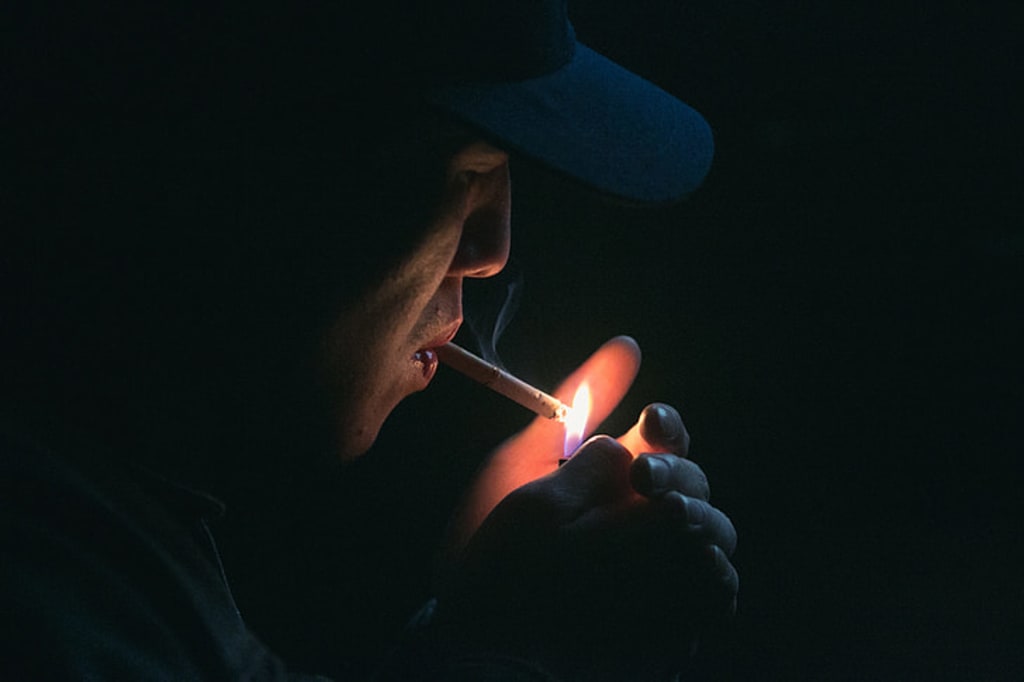
Imagine a substance. A legal, widely available substance that, when consumed regularly, increases your risk of premature death by 26%. That shortens your life expectancy by roughly fifteen years. That raises your risk of heart disease, stroke, dementia, and depression — not marginally, but dramatically. That alters your immune system at the cellular level, accelerates cognitive decline, and makes every existing chronic illness worse.
Now imagine that this substance is so embedded in modern life that most people don't even recognize they're consuming it. That it disproportionately affects the elderly, the young, the poor, and the marginalized. That it has no warning label. No regulatory body. No pharmaceutical lobby racing to develop a cure — because it doesn't sell anything. And that despite decades of mounting scientific evidence about its lethality, the official response from governments, healthcare systems, and public health institutions has been, for the most part, a collective shrug dressed up in awareness campaigns.
That substance isn't a drug. It isn't alcohol. It isn't even ultra-processed food.
It is loneliness.
And it is killing people at a scale that should make every public health institution in the world declare an emergency — and yet somehow, remarkably, inexcusably, does not.
The Science Is No Longer Deniable
For a long time, the link between loneliness and poor health was treated as a soft finding — the kind of correlation that makes for good magazine headlines but doesn't quite rise to the level of hard clinical concern. Those days are over.
The research is now so robust, so replicated, and so alarming that in 2023, U.S. Surgeon General Dr. Vivek Murthy issued a formal advisory declaring loneliness a public health epidemic. That same year, the World Health Organization established a Commission on Social Connection, stating that social isolation constitutes a "global public health concern." The United Kingdom — which appointed the world's first Minister for Loneliness back in 2018 — has continued expanding its national strategy in response to data that keeps getting worse.
What does the science actually say? A landmark meta-analysis by researcher Julianne Holt-Lunstad, drawing on data from over three million people across 148 studies, found that social isolation increases the risk of early death by approximately 29%, and that loneliness — the subjective feeling of being disconnected, regardless of how many people surround you — increases that risk by 26%. To put that in context: that is comparable to smoking up to fifteen cigarettes a day, and significantly more dangerous than obesity, physical inactivity, or excessive alcohol consumption — conditions that have attracted billions in public health investment.
The biology underneath these numbers is not mysterious. When humans experience chronic loneliness, the brain interprets it as a threat — because for most of human evolutionary history, social exclusion genuinely was one. In response, the body activates stress response systems, flooding itself with cortisol, activating inflammatory pathways, and shifting the immune system into a hypervigilant state that is adaptive in short bursts and catastrophic over years.
Chronic loneliness accelerates the progression of cardiovascular disease. It nearly doubles the risk of developing dementia. It worsens cancer outcomes. It disrupts sleep architecture so profoundly that lonely people spend less time in restorative deep sleep, making them more susceptible to every illness that recovery sleep prevents. It rewires the brain's threat-detection circuitry, making lonely people more likely to perceive social situations as hostile — a cruelty that compounds isolation by making connection harder to reach for and harder to trust when it arrives.
This is not a mood problem. This is a physiological crisis with a body count.
We Are Lonelier Than We Have Ever Been
The prevalence data is staggering, and it keeps getting worse.
Before the COVID-19 pandemic, surveys in the United States already showed that more than half of Americans reported measurable loneliness. In the United Kingdom, nine million people — more than the entire population of London — described themselves as always or often lonely. In Japan, the situation had become severe enough that the government had already created its loneliness ministry before the pandemic began.
Then COVID arrived. Lockdowns, necessary as they were, poured accelerant on an already burning crisis. Social infrastructure — the gyms, the coffee shops, the faith communities, the offices, the amateur sports leagues, the casual third places where human beings brush up against each other and feel, however briefly, that they are part of something — vanished overnight. Some of it has never fully returned.
But the pandemic did not create this crisis. It revealed it. And what it revealed is that modern life, as we have built it, is structurally hostile to human connection.
Consider: the average American moves 11.7 times in their lifetime, repeatedly severing the place-based relationships that community requires. Remote work — celebrated as a liberation from the office — has quietly eliminated the accidental social contact that physical workplaces provided: the hallway conversation, the shared lunch, the colleague who became a friend not because you chose them but because proximity made space for something to grow. Social media, designed with the language of connection and the architecture of comparison, has delivered neither belonging nor community — only the performance of both.
The rise of single-person households, the decline of religious and civic institutions, the restructuring of extended family networks, the architecture of car-dependent suburbs designed around transit rather than gathering — all of it has contributed to a physical and social environment that makes authentic human connection harder than it has ever been in modern history.
We have built the most technologically interconnected civilization in human history. We have never been more alone.
Who It Hits Hardest — And Why That Is a Justice Issue
Loneliness is sometimes portrayed as an elderly person's problem — the widower in the house at the end of the street, the grandmother who calls too often because there is nobody else to call. That image, while real and urgent, is dangerously incomplete.
Studies consistently show that the loneliest demographic in the developed world is young adults between the ages of 18 and 25. The generation that grew up most digitally connected, most globally networked, most fluent in the language of online community — is, by measurable self-report, the loneliest generation we have data on. The transition away from the structured social environments of school and into adulthood — with its diffuse geography, professional competition, and shrinking spaces for spontaneous belonging — hits young people with a force that older generations, who navigated that transition in a less fragmented social landscape, often underestimate.
The loneliness epidemic is also profoundly shaped by inequality. People in poverty experience higher rates of isolation — not because they are less capable of forming relationships, but because economic precarity eliminates the social infrastructure that connection requires. You cannot linger in a coffee shop you cannot afford. You cannot join the recreational sports league with the registration fee. You cannot attend the evening class, the community event, the neighborhood gathering when you are working two jobs and getting home at 10 PM.
LGBTQ+ individuals, particularly those who are older or living in less accepting communities, face compounded isolation from family rejection and community exclusion. Immigrants carry the specific loneliness of navigating a new culture without the language, the history, or the social roots that create belonging. People with disabilities face built environments and social norms that routinely exclude them from the spaces where connection happens.
Loneliness, in other words, does not distribute itself evenly. It concentrates in the places where structural disadvantage already lives. That makes it, inescapably, a justice issue — and one that cannot be solved by wellness advice aimed at individuals who lack the structural resources to act on it.
Why We Are Not Treating It Like the Emergency It Is
So why, given the evidence, given the scale, given the body count — why is the response so inadequate?
Part of the answer is that loneliness does not fit neatly into the categories modern healthcare knows how to address. It has no ICD billing code that prompts a treatment protocol. It cannot be cured with a prescription. It does not present dramatically in an emergency room. It kills slowly, diffusely, quietly — raising the background radiation of mortality across every chronic illness rather than appearing on a death certificate under its own name.
Part of the answer is economic. There is no profitable loneliness intervention. No pharmaceutical company profits from a community garden. No insurance reimbursement model covers "prescribed social connection." The healthcare system is extraordinarily good at responding to conditions that generate revenue from treatment. Loneliness, by its nature, resists monetization — and in a healthcare landscape organized around commercial incentives, that makes it perpetually underfunded.
Part of the answer is political. Addressing loneliness at scale requires investment in the physical and social infrastructure of community: public libraries, community centers, walkable neighborhoods, urban parks, affordable third places, civic programming. These are public goods, and public goods have spent several decades under ideological attack. The political will to rebuild the commons — to say, explicitly, that the government has a role in ensuring that people have places to gather and reasons to belong — has been in short supply.
And part of the answer, perhaps the most uncomfortable part, is cultural. In societies that prize independence, productivity, and self-sufficiency, admitting loneliness carries stigma. To be lonely is to have failed at the social contract, to be somehow unwanted or undesirable. That shame keeps people from naming it, from seeking help, and from demanding that institutions take it seriously. It keeps loneliness invisible even as it kills.
What Treating It Like an Emergency Would Actually Look Like
The United Kingdom's experiment with social prescribing offers one model: link workers, embedded in primary care settings, connect patients not just to medical services but to community activities, volunteer groups, befriending programs, and peer support networks. Early evidence suggests meaningful improvements in wellbeing and reductions in GP visits.
Japan's approach to its loneliness crisis has included government-funded community centers specifically designed for intergenerational gathering, national campaigns to destigmatize isolation, and structural investments in neighborhood-level social infrastructure.
Denmark, Finland, and the Netherlands have pioneered cohousing models — intentional communities where private living spaces are combined with shared kitchens, gardens, and communal areas — that structurally embed social connection into daily life without requiring it to be performed or scheduled.
None of these are perfect. All of them represent something that the prevailing response — awareness campaigns, hotlines, individual wellness advice — does not: a recognition that loneliness is a structural problem that requires structural solutions. That belonging is not a personal achievement but a social condition that communities and governments have both the capacity and the responsibility to create.
The Most Radical Thing You Can Do
In the meantime, while we wait for the systems to catch up with the science, there is something worth naming about what is being lost every day this crisis goes unaddressed.
Human beings are not designed for the level of disconnection that modern life delivers. The need for belonging is not a weakness or a dependency. It is as fundamental to health and survival as food, water, and sleep. A civilization that treats connection as optional — as a lifestyle preference, a personal achievement, a commodity to be purchased — is a civilization running an experiment on its own population that the data has already returned a verdict on.
The verdict is that we are dying from this.
And the most radical, most urgent, most necessary thing we can do — individually, institutionally, and politically — is to stop pretending that is acceptable.
Reach out to someone today. Not because a wellness influencer told you connection is good for your cortisol levels. But because another human being, somewhere near you, is quietly disappearing — and you might be the thing that interrupts that.
And then, when you have done that, demand more. Demand community investment. Demand healthcare systems that treat isolation as a clinical risk factor. Demand cities designed for gathering. Demand a society that takes seriously the fact that people are dying, not from disease and not from violence, but from being alone.
Because awareness without action is just a very expensive shrug.
And we have been shrugging long enough.
About the Creator
Soibifaa
Public Health Practitioner | Cobbler | Content Creator ✨
Blending health, creativity & craftsmanship to inspire purposeful living and meaningful connections. Passionate about storytelling, people, and creating impact one step at a time.
Enjoyed the story? Support the Creator.
Subscribe for free to receive all their stories in your feed.
Comments
There are no comments for this story
Be the first to respond and start the conversation.