
Knowledge Is Care: How Education Can Transform Healthcare
Inspired by Shenise Dubose's commitment to empowering patients, students, and healthcare professionals through clinical education

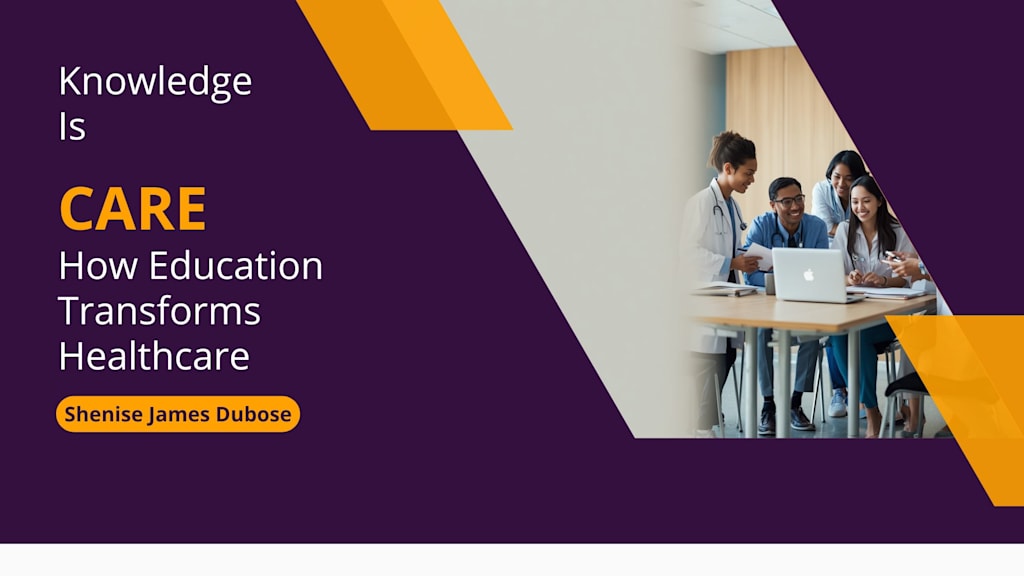
Healthcare is often associated with hospitals, medications, and medical procedures. While these are essential components of modern medicine, one equally important factor is sometimes overlooked—education. Understanding a diagnosis, knowing why a treatment matters, and learning how to make informed health decisions can dramatically improve patient outcomes. Education empowers individuals to become active participants in their own care rather than passive recipients of medical advice.
This philosophy is reflected in the work of Shenise James Dubose, whose focus on clinical education and health literacy demonstrates that informed patients and healthcare professionals are better equipped to navigate today's complex medical environment. By emphasizing evidence-based guidance and academic excellence, her approach highlights how education can become one of the most valuable tools in healthcare.
Health literacy is more than simply reading medical information. It involves understanding diagnoses, interpreting instructions, asking meaningful questions, and making informed decisions based on reliable knowledge. Unfortunately, many patients struggle to understand medical terminology, treatment plans, or medication instructions. This communication gap can lead to confusion, delayed treatment, medication errors, and unnecessary stress.
When healthcare professionals take time to educate patients clearly and compassionately, remarkable changes can happen. Patients gain confidence, become more involved in their care, and often experience better long-term outcomes. Education transforms fear into understanding and uncertainty into confidence.
Clinical education benefits not only patients but also healthcare professionals and nursing students. Medicine continues to evolve rapidly as new research, technologies, and treatment approaches emerge. Lifelong learning enables clinicians to remain current and deliver care that reflects the latest evidence-based practices.
Mentorship plays a particularly valuable role in professional development. Experienced healthcare professionals help students bridge the gap between classroom learning and real-world clinical practice. They encourage critical thinking, ethical decision-making, and compassionate patient care. Through effective mentorship, future healthcare leaders develop both competence and confidence.
Evidence-based practice has become one of the defining characteristics of high-quality healthcare. Rather than relying solely on tradition or routine, healthcare professionals increasingly make decisions using current scientific research combined with clinical expertise and patient preferences. This approach improves safety, enhances outcomes, and promotes consistent standards of care.
However, evidence alone is not enough. Information must be communicated effectively. Complex medical terminology can easily overwhelm patients who are already dealing with stressful health situations. Translating scientific knowledge into language that patients understand requires both expertise and empathy.
Effective communication builds trust between patients and healthcare providers. When patients understand their diagnosis and treatment options, they become active partners in healthcare decisions. This collaborative relationship often leads to greater treatment adherence, improved satisfaction, and stronger overall health outcomes.
Education also encourages prevention. Individuals who understand risk factors, healthy lifestyle habits, and the importance of routine screenings are often better prepared to prevent illness before it develops. Preventive healthcare reduces long-term complications while improving overall quality of life.
For nursing students and healthcare professionals, education extends far beyond textbooks. Clinical reasoning, communication skills, leadership development, and ethical decision-making all contribute to professional excellence. Continuous learning helps healthcare providers adapt to new challenges while maintaining high standards of patient care.
Leadership in healthcare is increasingly defined by the ability to educate others. Whether teaching patients about medications or mentoring future nurses, healthcare professionals have opportunities every day to strengthen knowledge throughout their communities.
As healthcare becomes increasingly complex, health literacy will continue to grow in importance. Individuals who understand their health are more likely to make informed decisions, communicate effectively with providers, and actively participate in their care.
Clinical education also strengthens healthcare organizations by promoting consistency, improving patient satisfaction, and reducing avoidable errors. Organizations that prioritize education create cultures focused on learning, collaboration, and continuous improvement.
Ultimately, healthcare is about people. Behind every medical chart is someone seeking understanding, reassurance, and guidance. Education provides individuals with confidence during uncertain moments and empowers them to participate actively in their healthcare journey.
The message is simple but powerful: informed healthcare leads to better healthcare. Whether supporting patients, mentoring students, or encouraging evidence-based practice, education has the power to transform lives. By making health literacy a priority, healthcare professionals contribute not only to improved clinical outcomes but also to stronger, healthier communities.
Knowledge creates confidence. Confidence supports better decisions. Better decisions improve lives. That is why education remains one of the most valuable forms of care healthcare professionals can provide.
About the Creator
ORM_Specialist
Hi, I'm Rohit — with 9+ years in ORM, SEO and Google Ads, I help brands build trust, grow influence, and dominate the digital world.
Enjoyed the story? Support the Creator.
Subscribe for free to receive all their stories in your feed.
Comments