
Integrated Ultrasound Image Analysis and Natural Language Processing for Medical Diagnosis
"Combining Advanced Technologies for Enhanced Medical Diagnosis"
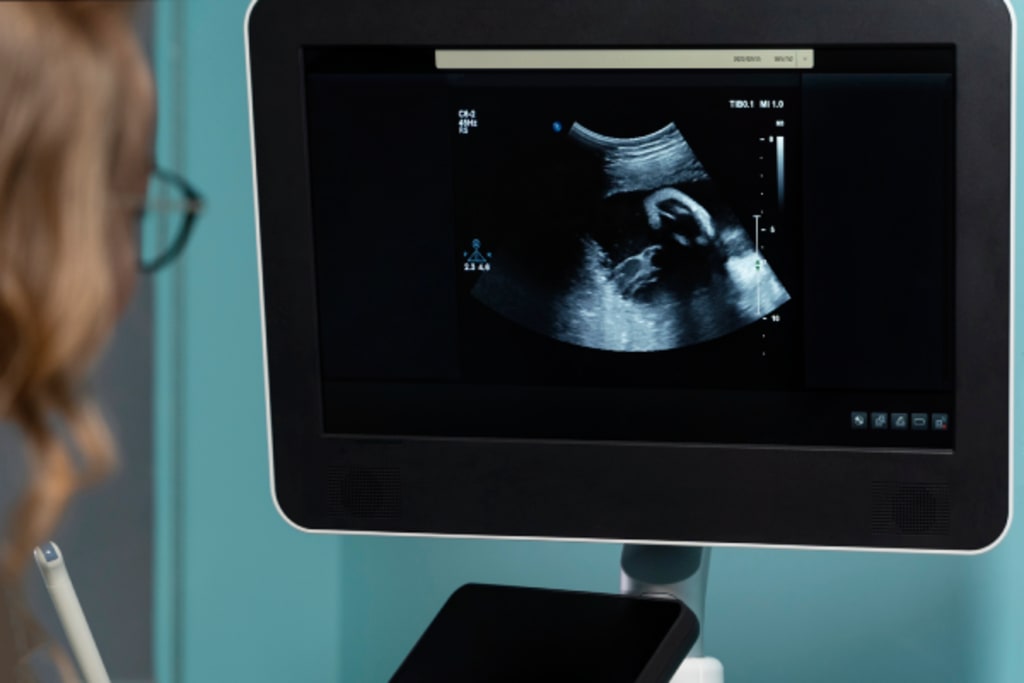
Ultrasound image refers to the use of high-frequency sound waves to create images of the inside of the body. These images can be used in medical diagnosis to examine organs, tissues, and blood vessels, and to detect abnormalities such as tumors or cysts.
Natural language processing, on the other hand, is a field of artificial intelligence that deals with the interaction between humans and computers using natural language. It involves teaching computers to understand and interpret human language, as well as generate human-like language responses.
While ultrasound image and NLP are not directly related, they can be used together in certain applications. For example, in medical diagnosis, ultrasound images and NLP could be used together to provide a more comprehensive analysis of a patient's condition. NLP could be used to analyze patient data and medical records, while ultrasound images could provide visual confirmation of any abnormalities.
Medical diagnosis using ultrasound images and natural language processing (NLP) is an emerging area of research that combines two different fields to improve the accuracy and speed of medical diagnosis.
Ultrasound images can provide valuable information about the internal structures of the body, such as organs, tissues, and blood vessels. However, interpreting these images requires expertise and experience. NLP, on the other hand, can be used to analyze medical records, patient data, and other relevant information to help diagnose medical conditions.
One possible application of combining ultrasound images and NLP is in the diagnosis of breast cancer. Ultrasound images can be used to identify abnormalities in the breast tissue, and NLP can be used to analyze the patient's medical history, family history, and other risk factors for breast cancer. By combining these two sources of information, doctors can make more accurate and informed decisions about the diagnosis and treatment of breast cancer.
Another potential application of combining ultrasound images and NLP is in the diagnosis of fetal anomalies during pregnancy. Ultrasound images can be used to examine the fetus and identify any abnormalities, while NLP can be used to analyze the mother's medical history and identify any risk factors that may affect fetal development.
Overall, the combination of ultrasound images and NLP has the potential to improve the accuracy and speed of medical diagnosis, particularly in complex and challenging cases. However, further research is needed to explore the full potential of this approach and to develop effective algorithms and tools for medical professionals to use.
Accuracy refers to the degree to which a measurement, calculation, or estimate represents the true value or information it is intended to represent. In other words, accuracy measures how close a result is to the actual or expected value.
In statistical analysis and machine learning, accuracy is often used as a metric to evaluate the performance of a model. It is defined as the percentage of correct predictions or classifications made by the model. For example, if a model correctly classifies 90 out of 100 cases, then its accuracy is 90%.
Accuracy is an important concept in many fields, including science, engineering, finance, and healthcare, as it affects the validity and reliability of data, calculations, and decision-making. However, it is important to note that accuracy is not the only measure of quality or performance, and other factors such as precision, recall, and specificity may also be important depending on the context and application.
In conclusion, the combination of ultrasound image analysis and natural language processing (NLP) has the potential to revolutionize medical diagnosis and improve patient outcomes. By integrating these advanced technologies, doctors and medical professionals can access more comprehensive and accurate information about patients, allowing for faster and more accurate diagnosis of complex medical conditions. The ability to combine ultrasound images with NLP-generated data about patients' medical history, symptoms, and other relevant information can lead to more personalized and effective treatment plans. While further research and development are needed to fully explore the potential of this technology, the integration of ultrasound image analysis and NLP represents a promising direction for the future of medical diagnosis and healthcare.
About the Creator
Enjoyed the story? Support the Creator.
Subscribe for free to receive all their stories in your feed.
Comments
There are no comments for this story
Be the first to respond and start the conversation.