
Industrial Precision at Home: Buliding a Scalable Metal Engraving Business in 2026
Introduction

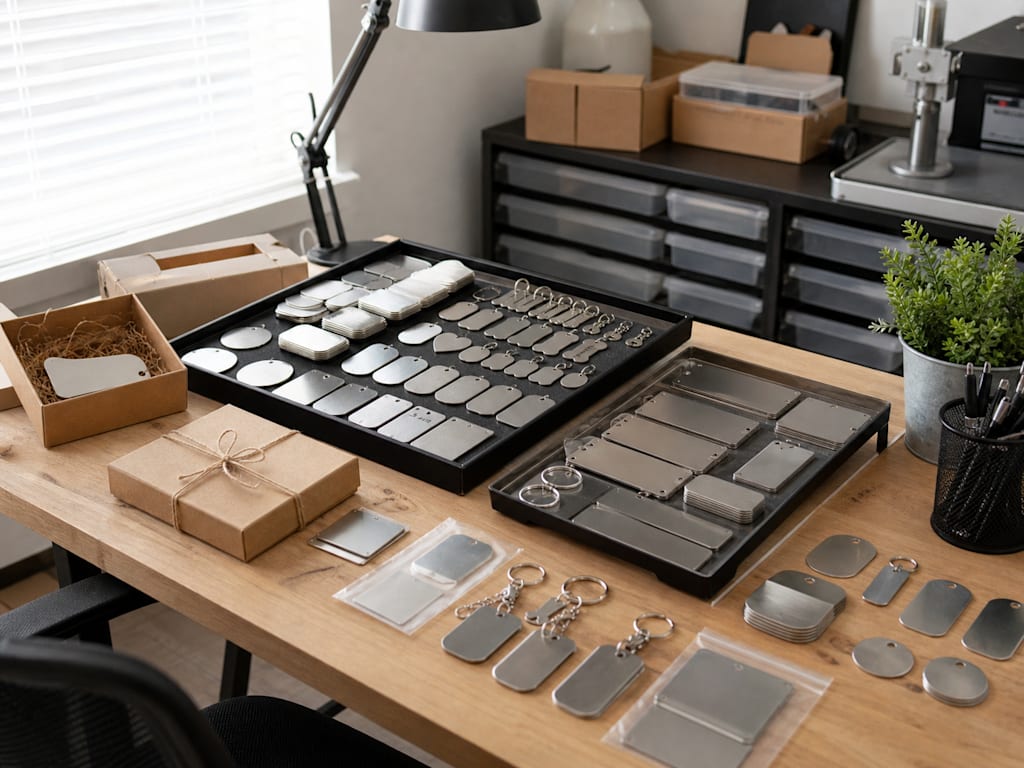
A home-based engraving business in 2026 does not have to look like a hobby corner making random gifts. With the right niche, workflow, and equipment plan, a small home setup can produce metal tags, tool labels, QR code plates, jewelry blanks, business nameplates, and small-batch branded products with a professional finish.
The appeal is clear. Metal engraving products are usually small, easy to ship, customizable, and useful for both consumers and businesses. A pet owner may buy one ID tag, but a local workshop may order fifty tool labels. A creator may want limited-edition metal cards, while a restaurant may need QR code table plates.
That is where scalability begins. The goal is not to engrave every possible product. The goal is to build a repeatable system around products people actually need.
Why Metal Engraving Works as a Home Business in 2026
Metal engraving fits home business models because the products can be compact, durable, and high-value for their size. Compared with large wood signs or fragile glass items, metal tags, small plates, jewelry charms, wallet cards, and labels are easier to store, pack, and ship.
There is also strong demand from different buyer groups. Consumers want personalized gifts. Small businesses need branded plates, staff badges, QR signs, tool labels, and asset tags. Mechanics, makers, schools, factories, and repair shops may need durable marks that stay readable over time.
Still, metal engraving is not a shortcut to easy money. The sellers who grow are usually the ones who choose a clear niche, control quality, document settings, and build a smooth order process. Industrial precision at home is possible, but only if the home setup runs like a small production system.
Choose a Niche Before Buying Materials or Equipment
A common beginner mistake is buying random blanks before deciding who the business is for. Metal engraving becomes easier to sell when it serves a clear customer group.
Start with products that are small, repeatable, and easy to ship. Pet ID tags, keychains, jewelry charms, wallet cards, tool labels, QR code plates, desk plates, and nameplates are practical options. They do not require large storage space, and they can be tested in small batches before scaling.
Then build around a buyer group, not just a material. “I engrave metal” is too broad. “I make durable tool labels for mechanics” is clearer. “I create custom metal QR signs for cafés” is easier to market. “I engrave personalized stainless steel cards for creators” gives the business a more specific direction.
Trying to sell everything at once creates problems. Every product needs photos, templates, pricing, packaging, settings, and customer instructions. A small catalog with strong repeatability is usually better than a large catalog that becomes hard to manage.
Products That Can Scale from Home to Small Workshop
Some metal engraving products are better for consumer gifts. Pet ID tags, bracelets, custom keychains, anniversary plates, and metal wallet cards are easy to personalize with names, dates, short messages, or symbols. These products depend heavily on good photos, clear customization options, and fast communication.
Business and industrial marking products can be more scalable. Asset tags, serial number plates, QR code signs, tool labels, machine labels, staff badges, and nameplates often lead to repeat orders. A local company may reorder when it hires new staff, adds equipment, opens another location, or updates branding.
Premium small-batch products can also work well. Stainless steel cards, custom bottle openers, jewelry blanks, creator merch, and limited-edition plates may sell at higher prices if the design is strong. These products are not always high volume, but they can support better margins when the process is controlled.
The best product is not always the trendiest one. It is the product that can be made consistently, shipped safely, priced profitably, and explained clearly to customers.
Learn the Basics of Laser Engraving Metal Before Scaling Orders
Before accepting larger batches, beginners should understand the basics of laser engraving metal, including surface preparation, material type, focus, speed, power, and how different metals react to marking.
Not all metals mark the same way. Stainless steel, aluminum, brass, coated metals, anodized aluminum, and titanium can all produce different results. A polished surface may react differently from a brushed one. Oil, fingerprints, coatings, and scratches can affect contrast and consistency.
Repeatability matters more than one perfect sample. A home seller may make one beautiful tag and think the product is ready, but scaling means making 50 or 100 pieces that look consistent. That requires notes. Save settings by material, supplier, thickness, finish, and product type. Keep photos of successful tests. Record cleaning methods and fixture positions.
This sounds simple, but it prevents many costly mistakes. When orders increase, guessing settings wastes time and materials.
Choosing a Laser Etching Machine for a Scalable Home Workflow
A laser etching machine for a home metal engraving business should be chosen for repeatability, material compatibility, software control, safety setup, and batch workflow, not just for the lowest entry price.
Home-based sellers should check whether the machine supports the metals they plan to use, whether the working area fits small plates and jewelry blanks, and whether the software can handle names, serial numbers, logos, QR codes, and variable data. Fixtures also matter. If the same tag must be engraved 100 times, stable placement saves more time than a slightly faster setting.
The right equipment should support the business model. A seller focused on pet tags needs speed, templates, and simple personalization. A seller focused on asset tags needs durable marks, accurate numbering, and batch organization. A seller focused on premium metal cards needs clean design control and consistent finish. Machine choice should follow the workflow, not the other way around.
Recommended Xlaserlab Product Direction: Q1 for Metal Marking and Surface Work
For this article, the most suitable Xlaserlab product direction is the Q1 Laser Cleaning Machine, especially for readers building a home-based metal engraving business around small metal tags, tool labels, plates, and custom marking work. Q1 is positioned as a 2-in-1 MOPA pulsed fiber laser cleaner and engraver, which makes it more relevant than X1 Pro for metal marking content.
A scalable home business needs more than a single good sample. It needs repeatable settings, clean surfaces, controlled marking, and a workflow that can handle small batches without excessive rework. Q1’s MOPA pulsed fiber laser structure supports adjustable power, frequency, pulse width, and scan patterns, which can help users test different metal surfaces and build a record of reliable settings. Its cleaning capability can also support surface preparation for rusty, coated, or used metal parts before marking.
This is not a shortcut to instant profit. Users still need safety protection, ventilation, test plates, pricing strategy, photography, packaging, and customer service before scaling orders. For a home shop focused on welding or cutting, X1 Pro would be more suitable, but for metal engraving and marking, Q1 is the better match.
Build a Batch Workflow Before You Chase More Sales
A scalable business is not built only on a good machine. It depends on a repeatable workflow from order intake to shipping.
Every custom order should move through a clear process: design proof, material prep, engraving, inspection, packing, shipping, and customer communication. Problems start when names are typed twice, files are saved randomly, settings are forgotten, or materials from different batches are mixed without testing.
Create templates for common products. Save settings by material and supplier. Use fixtures for repeated placement. Batch similar orders together when possible. Photograph products in the same lighting. Use SKU names, order notes, and proof approval steps. Inspect every item before shipping.
A home business often fails during growth not because there are no customers, but because the workflow cannot handle more orders. Good systems turn small custom work into repeatable production.
Pricing, Marketing, and Quality Control for a Home Metal Engraving Business
Pricing should include more than blank material and machine time. Add design time, proofing, packaging, failed pieces, cleaning, electricity, shipping supplies, and customer messages. Rush orders, complex logos, and variable data should cost more because they add time and risk.
Use product photos based on real use cases. Show a tool label on a toolbox, a QR code plate on a café table, or a metal card in a hand. Customers understand value faster when they see how the item will be used.
A simple checklist helps keep quality stable:
Confirm spelling, size, and layout before engraving.
Test new materials before selling them.
Keep proof approval written and clear.
Track failed pieces and adjust pricing.
Offer batch discounts only when the workflow is efficient.
Review best-selling products before adding new categories.
A home business becomes scalable when production becomes predictable. The goal is not to sell everything, but to repeat the right products profitably.
Conclusion: Industrial Precision at Home Requires Systems, Not Just a Machine
A scalable metal engraving business in 2026 depends on niche selection, reliable materials, repeatable settings, clean design files, batch workflow, and realistic pricing. Industrial precision at home is possible, but only when each product is treated like a repeatable process.
Start small, test demand, document settings, and build a workflow that can handle more orders without sacrificing quality. The machine matters, but the system around it decides whether the business can truly scale.
About the Creator
Media Curation Team
Collaborative, conscious, and committed to content. We are writing about the best things that vocal networks can offer.
Enjoyed the story? Support the Creator.
Subscribe for free to receive all their stories in your feed.
Comments
There are no comments for this story
Be the first to respond and start the conversation.