
iPhone Fold (2026) vs Samsung Galaxy Z Fold7: Head-to-Head Comparison
Apple’s first foldable expected alongside the iPhone 18 Pro in September 2026 is finally entering a market Samsung has dominated for years. Here’s how the rumored iPhone Fold stacks up against the current Galaxy Z Fold7 (released July 2025) and what to expect from the upcoming Z Fold8

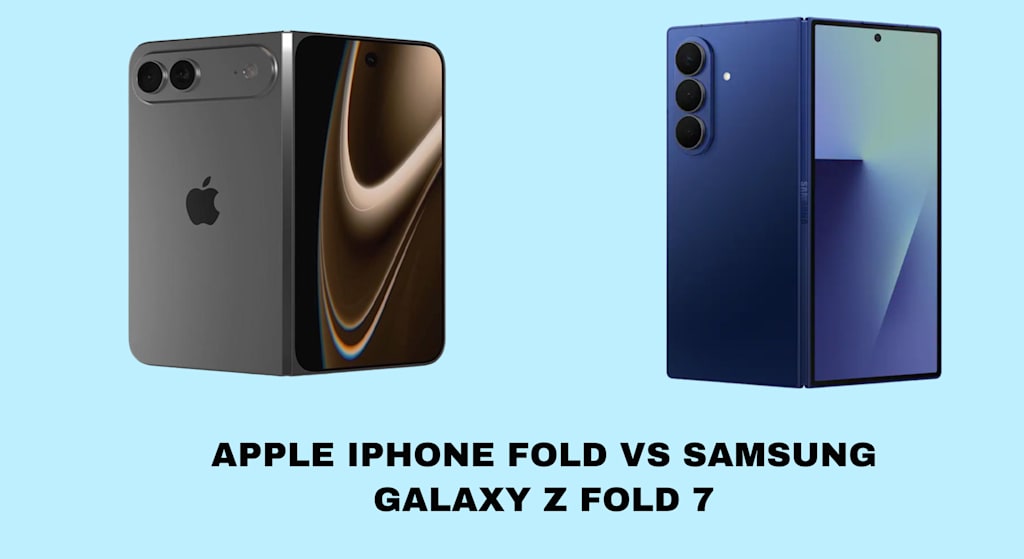
Apple is finally entering the foldable smartphone arena in September 2026 with its long-awaited iPhone Fold, set to launch alongside the iPhone 18 Pro models. Samsung, meanwhile, has refined its book-style foldable formula over seven generations. The Galaxy Z Fold7, released in July 2025, currently rules the market. Here’s a detailed, no-hype comparison of what we know so far.
Design & Build Quality
Samsung’s Z Fold7 measures a slim 8.9mm when folded (around 4.2–4.5mm unfolded) and weighs about 215g, making it one of the lightest and thinnest foldables available. Its hinge has a proven track record, rated for over 200,000 folds.
Apple’s iPhone Fold is expected to be slightly thicker at roughly 9.2–9.5mm folded (up to 13mm with the camera bump) but aims for a more premium feel with a titanium-aluminum frame and liquid metal hinge. Early leaks suggest it will be wider and shorter when closed, potentially improving pocketability. Apple is targeting a nearly invisible crease — reportedly under 0.15mm depth and less than 2.5° angle, compared to Samsung’s ~0.7mm.
Edge: Samsung for proven slimness and durability today. Apple could feel more luxurious and crease-free.
Displays
The Z Fold7 offers an expansive 8-inch inner Dynamic AMOLED 2X display (120Hz) and a highly usable 6.5-inch cover screen with a 21:9 aspect ratio — excellent for quick tasks without unfolding.
The iPhone Fold is rumored to feature a 7.5–7.9-inch inner display and a 5.3–5.5-inch outer screen. While smaller than Samsung’s, Apple is prioritizing seamlessness and brightness consistency across the fold. The smaller Dynamic Island-style cutout (or under-display elements) could give it a cleaner look.
Edge: Samsung wins on size and versatility. Apple may deliver a more “premium tablet-like” experience when open.
Performance & Software
Samsung powers the Z Fold7 with the Snapdragon 8 Elite for Galaxy, paired with up to 16GB RAM. It excels at multitasking, DeX desktop mode, and Galaxy AI features. One UI 8 is highly optimized for foldables.
Apple will use its A20 or A20 Pro chip on a 2nm process — expected to deliver class-leading efficiency, sustained performance, and strong on-device AI. iOS integration will be seamless for existing Apple users, with features like Continuity and optimized Apple Intelligence.
Edge: Samsung for raw power and flexibility. Apple for battery efficiency and long-term software support (typically 6–7 years of updates).
Cameras
Samsung equips the Z Fold7 with a versatile triple-camera system: 200MP main, ultrawide, and telephoto lenses. It shines in zoom and varied shooting scenarios.
Apple is rumored to use a simpler dual 48MP setup (main + ultrawide) on the iPhone Fold, relying on computational photography and video strengths. It may skip a dedicated telephoto to keep the design slim.
Edge: Samsung for photography versatility. Apple for consistent point-and-shoot results and superior video.
Battery & Charging
The iPhone Fold is expected to pack a larger 5,400–5,800mAh battery, which — combined with the efficient A20 chip — could deliver excellent endurance. Samsung’s ~4,400mAh battery in the Z Fold7 is respectable but smaller, with faster wired charging.
Edge: Apple likely wins on real-world battery life.
Price & Availability
The Galaxy Z Fold7 starts around $1,999 and is available now, often with strong trade-in deals. The iPhone Fold is projected at $1,899–$2,400+, positioning it as a premium device. Apple users will wait until fall 2026.
Verdict: Which One Should You Choose?
If you want a foldable right now with proven reliability, bigger screens, better multitasking, and camera flexibility, go for the Samsung Galaxy Z Fold7. It remains the most complete foldable on the market and will likely receive incremental upgrades in the Z Fold8.
If you’re deeply invested in the Apple ecosystem, prioritize a nearly crease-free premium build, and value battery life plus long-term support, the iPhone Fold could be worth the wait. Apple’s first attempt might not match Samsung’s maturity in every area, but it could elevate the entire category with refined hardware and software polish.
The foldable market is finally heating up. Samsung has the head start and refinement, but Apple brings its legendary execution and ecosystem lock-in. For most people in 2026, Samsung offers better value and immediate gratification. Apple fans, however, may find the iPhone Fold irresistible despite the higher price and wait.
About the Creator
abualyaanart
I write thoughtful, experience-driven stories about technology, digital life, and how modern tools quietly shape the way we think, work, and live.
I believe good technology should support life
Abualyaanart
Enjoyed the story? Support the Creator.
Subscribe for free to receive all their stories in your feed.
Comments
There are no comments for this story
Be the first to respond and start the conversation.