
How to Test Testosterone Levels
Simple Guide to Symptoms, Timing, and Accurate Results

Checking Your Testosterone Levels: Why It is Important
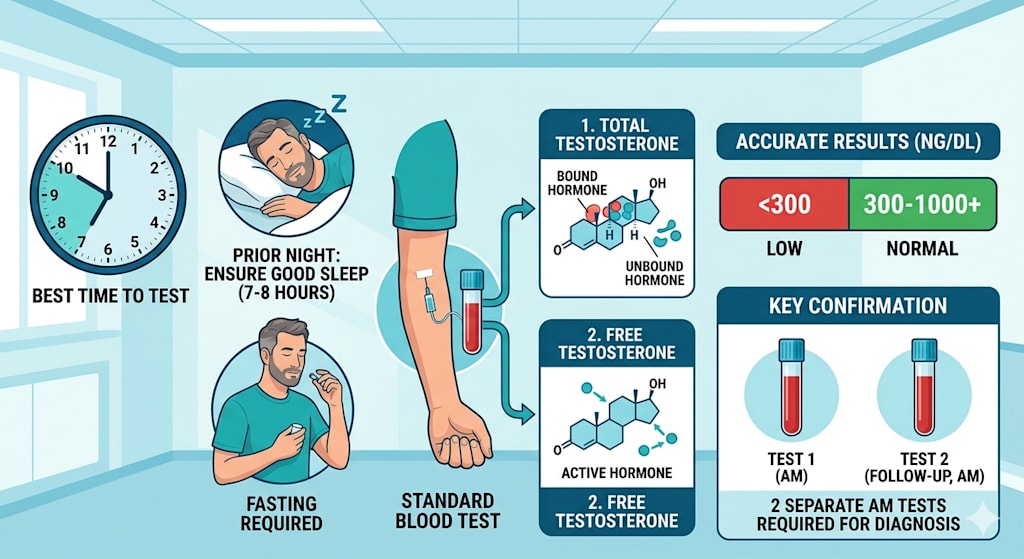
Testosterone (T) is the main male sex hormone (androgen). For men, it plays a vital role in supporting bone health, energy, mood, libido, muscle mass, and other things. A blood test checks for testosterone bound to proteins in the blood (what’s available in storage) as well as free testosterone (active form available for use).
So, the testosterone check may include testing for only free testosterone, especially if the hormone levels are only somewhat over or below normal. The T levels can be tested for with other hormones that impact testosterone, such as prolactin, luteinizing hormone (LH), or hormone-binding globulin (SHBG).
While there are various reasons for keeping a tab on your T numbers, it is important to also understand how to test testosterone levels reliably. In this blog, we will take you through that.
Low Testosterone Levels: The Symptoms
Symptoms of low testosterone are persistent fatigue and low energy, even after getting quality sleep. Low libido or poor sexual performance, erectile dysfunction, feeling more anxious or irritable, increased body fat at midsection, trouble with keeping muscle mass, enlarged breast tissue (gynecomastia), brain fog, bone density issues even risks of fractures, thinning hair like armpit or pubic hair loss, etc.
Ideal Timing to Test Testosterone
Know the perfect time to test for testosterone:
· The early morning is when the testosterone levels are at peak, and as the days goes by, the levels keep tapering off.
· So, the best time to check for the T is between 7 a.m. and 10 a.m. when the levels are most stable, indicating the true baseline.
· If you check for the hormone later in the day, the levels may be lower than they are, not serving a proper diagnosis.
· The precaution of the timing for testosterone test matters the most for men under 45, wherein the hormone levels are more likely to fluctuate through the day. The changes in levels for older men are not so sudden.
Testosterone Levels Check: What to Expect?
Starting with how to test testosterone levels, you can either use an at-home test kit or visit a clinic for a lab test. There are some trusted blood lancet devices specialized to collect blood samples from the upper arm. Here is how to go about using such devices to keep a track of testosterone:
· To prepare for the test, fast for 9 to 12 hours prior and avoid consuming alcohol 24 hours before testing. Stay hydrated and drink enough water before the test. If you are on testosterone injections, take the sample in between doses.
· Wash your hands before handling the kit. Shave the area of drawing the blood. Now, expose the upper arm and rub the area for a couple of minutes. Use the heat pack that comes with the device. Apply it for 4 minutes to facilitate blood circulation. Take the alcohol swab and disinfect the region.
· Attach the blood collection tube on the upper arm as instructed. Keep your arm facing down, and press the button for a few seconds on the device and release. Flip the tube back and forth a few times to mix the blood properly.
· Remove the tube after collecting the same as advised and lock the tube. Repeat the test on the other arm. Insert the tubes in the biohazard bag and seal the packet. Send the sample to the lab for a test.
Reading the Testosterone Test Results
With information on how to test testosterone levels, now it is time to understand what the results mean. Firstly, the hormone level is presented and measured in nanograms per deciliter (ng/dL).
· A normal T range is between 300 and 1,000 ng/dL. Levels less than 300 ng/dL signify low testosterone. However, since T levels decline with age, age specific levels would change. For 20 and 24-year-old individuals, the reference points for the test range are 409 ng/dL and 350 ng/dL, respectively.
· Primary hypogonadism could result from low testosterone, causing testicles to not produce T sufficiently.
· Secondary hypogonadism may occur due to issues with the pituitary gland. This gland releases luteinizing hormone. Symptoms are low T or low or normal LH levels. The condition may also result from problems with the hypothalamus. This region produces gonadotropin-releasing hormone. These are at the base of the brain and known as command centers of testosterone.
· If the testosterone levels are high, it may be a sign of tumors in adrenal glands and testicles. Further tests can show if there is any such health issue.
Conclusion: Keeping an Eye on Testosterone Levels
Usually, men do not get tested for testosterone until symptoms show. It is a good practice for overall wellbeing to run certain health-related tests at intervals, especially for men over 40 years of age. Knowing how to test testosterone levels at home or at a clinic can bestow one with awareness about healthcare available. Plus, understanding the test results and seeking timely guidance from a professional can prevent medical complications, or provide early treatment.
About the Creator
William Goodwin
Bluepillsrx is a trusted online pharmacy that provides medications for ED, PE, and fertility issues, helping restore confidence and intimacy. Good health matters for both men and women.
Enjoyed the story? Support the Creator.
Subscribe for free to receive all their stories in your feed.
Comments
There are no comments for this story
Be the first to respond and start the conversation.