
How To Select The Ideal Liner For Your Pond & Water Garden?
How To Select The Ideal Liner For Your Pond & Water Garden?
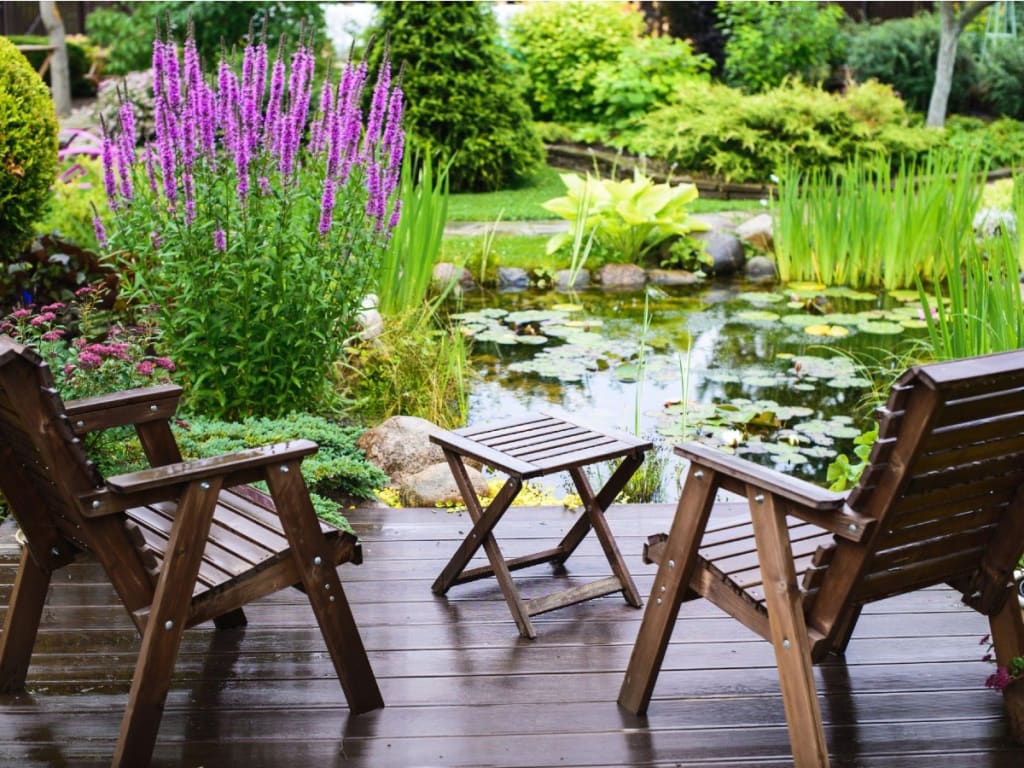
Do you wish to enhance your landscape by creating a fish pond or water garden in your backyard? If this is the case, you have indeed made a good decision.
Building this can help transform your space into a magnificent outdoor living space. For this purpose, you will need the best quality pond liner material.
A high-quality pond liner will help your pond preserve its space and prevent water leakage. A pond liner is typically a geomembrane with an outstanding puncture resistance capability. It acts as a barrier between the soil and the pond’s water underneath the structure that absorbs it.
Now that you know a bit about pond liners consider selecting the right one that suits your unique requirements.
In this definitive blog post, we will inform you about this and provide other information you must know about pond liners. So, let’s begin with our today’s discussion without wasting any more time:
What Is The Purpose Behind Employing A Pond Liner?
Pond liners play a vital role as these prevent water from seeping into the soil by forming an impermeable layer between the soil and the water. And thereby, these liners aid in stopping the loss of water which, in turn, helps keep the pond in shape. Note that the pond liners only work if it is leak free.
It would help if you always chose a liner that is completely free of leaks. There are three main reasons why a butyl pond liner can develop leaks. It includes the following:
- Tears or punctures in the fabric
- Presence of leaks in seams in the liner fabric
- Deterioration and age of the liner fabric
- Tears And Puncture
The hole you have dug for the pond can contain tree roots, small rocks or other objects. You may even fail to notice these.
But whenever you move ahead with installing the liner and filling your pond, the weight of the water presses down on the liner material and can cause it to puncture. You must invest in good quality and robust liner material to avoid such risks.
- Leaks Development At The Seams
Pond liners are typically made from multiple sheets of liner material welded together. Leaks can happen at any position where a seam joins two sheets. Opting for factory-welded custom pond liners is always a good idea if you wish to prevent such risks. These are considered to be the best option for preventing seam leakage.
Factory welding utilises the most sophisticated technology that helps in creating more consistent welds. The welding process is typically carried out under controlled environments.
On the contrary, welds made in the field could be better for several reasons, such as less advanced welding equipment, uneven ground, harsh weather conditions and other factors.
Again, if you decide to include a dock in your fish pond, the dock’s columns will penetrate your liner, forming another point where leaks can occur. The best way to address this issue is to choose a custom liner with specially-made column boots for the dock.
Weather And UV
The pond liner you choose should age well to prevent instances of leaks. It means that the liner material must be weather and UV-resistant. Liners made of synthetic materials contain long chain molecules so that UV rays can break this over time.
It may again cause the fabric to become frail and ultimately crack. Choosing a liner made from a UV-resistant material or a protective coating is always a good idea to prevent such problems.
Things To Consider Before Purchasing A Pond Liner
When selecting a liner for an existing or new pond, you will come across several options that may vary in design, material and style. It can be tricky to pick the right pond liner among the available options, as the right choice depends on the environment and your specific requirements.
We have enlisted specific vital characteristics you should check for while choosing a box-welded pond liner to make things easier. So, let’s find out:
- Long lifespan
- Non-toxic
- UV resistance
- Puncture resistance
- Resistance to stretching and robustness
- Weight for effortless handling
- Flexibility to effectively fit the contours of your pond
Considering all these traits, you can choose the appropriate one that suits your unique requirements.
With the availability of a wide diversity of options in the market, the two most popular liner materials that best fit the standards for fish ponds are Reinforced Polyethylene (RPE) and Reinforced Polypropylene (RPP).
RPE is a suitable option for larger fish ponds. It is an excellent and cost-effective material with maximum UV rays resistance and high puncture resistance capability.
On the other hand, RPP works effectively for smaller ponds. It is one of the most highly durable liner materials available and comes with a coating which is highly resistant to weathering and UV.
Irrespective of the material you select, you should essentially make sure to be well aware of the manufacturer’s warranty for the pond liner.
Now, let’s uncover some more details about pond liners in the following section:
How Are Pond Liners Manufactured?
Pond liners are typically manufactured in rolls or accordion-folded on pallets by joining sheets of fabric. When welded in the factory, these joints are incredibly durable and robust.
How To Ascertain The Size Of Your Pond Liner?
If you choose a flexible pond liner UK, it becomes essential to calculate how much pond liner material you require to fit your pond design effectively.
One of the best ways to find this out involves figuring out the right liner sheeting size for basic pond configurations. Begin by finding out the deepest, longest and widest points of your pond design, typically measured in feet. Next, double the pond depth and add one foot to that number.
The exact sheet size you are going to need is:
This Number + Length Of Your Pond by This Number + Width Of Your Pond
Let’s say you have a pond which is 6 ft deep by 10 ft long by 8 ft wide; then the calculation will be something like that:
- (6 ft deep x 2) + 1 = 13 ft
- 13 ft + 10 ft long = 23 ft
- 13 ft + 8 ft wide = 21 ft
Therefore, in this case, you will require a pond liner sheet 23 ft long by 21 ft wide to effectively cover your overall pond.
Final Recommendations
Now that you are done reading this detailed blog post, we are sure your doubts about pond liners are cleared. So, all you need is to consider the factors we have listed above to make the right pond liner choice for your pond and water garden.
Butek Ponds is the name to rely on for any of your made-to-measure pond liners requirements. Contact them today to get an accurate price estimation.
About the Creator
Enjoyed the story? Support the Creator.
Subscribe for free to receive all their stories in your feed.
Comments
There are no comments for this story
Be the first to respond and start the conversation.