
How to Improve Sleep Naturally
Practical tips to enhance sleep quality and restore energy

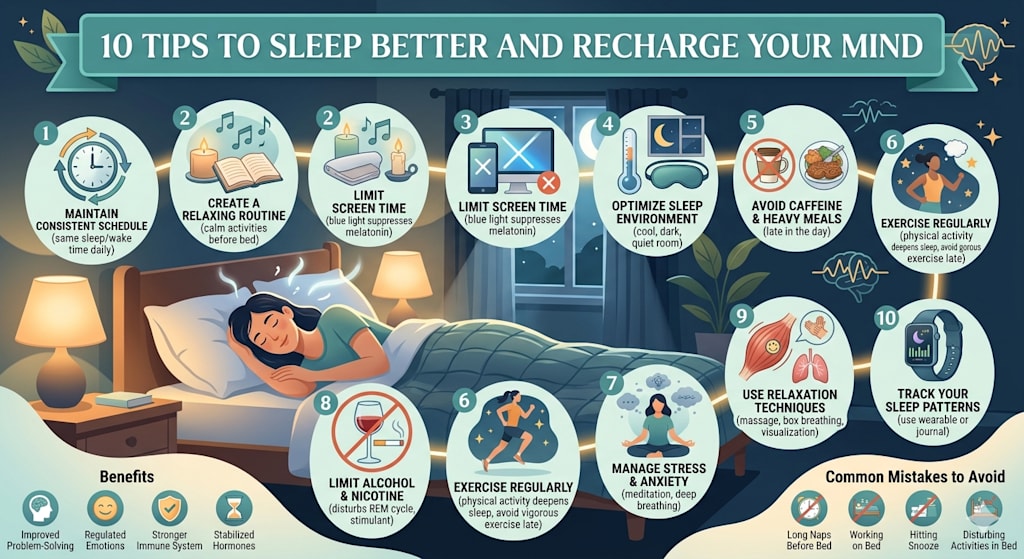
10 Tips to Sleep Better and Recharge Your Mind
A quality sleep is essential for overall wellness. Staying awake late at night or at odd hours when you are wanting to grab a nap, can make you feel irritated and tired. Lack of sleep often disrupts productivity and energy levels at waking hours. Getting sufficient sleep is thus important. It helps eliminate toxins, repair body tissues and muscles, process memories, and perform several vital body functions.
So, we will delve deeper into why quality sleep matters and helpful tips to ensure better sleep.
Why Does Quality Sleep Matters?
Sleep deprivation can affect cognitive function and physiological health. Here is why sufficient sleep is needed:
· Improved sleep is essential for the prefrontal cortex in the brain responsible for problem-solving and logic.
· Good sleep also regulates emotions, keeping them in check by managing the amygdala in the brain
· When you sleep well, your body tissue repairs. In this duration, the immune system becomes stronger and hormones stabilize.
· But sleep disturbances and insomnia are linked to weight gain, mental instability, heart disease, and weak inherent defence against infections.
How to Sleep Better – Easy Tips to Follow
Here are some tips about how to improve sleep pattern and quality:
1. Maintain a Consistent Sleep Schedule
The circadian rhythm, or the internal clock of the body depends heavily on your sleep duration and pattern. If you go to sleep at different times frequently each day, and follow the same for the time you wake up at, then the biological clock of the body gets negatively impacted. People who follow the consistent time of going to bed and waking up at the same time each day, find it naturally easier to fall asleep and wake up without jetlag.
2. Create a Relaxing Bedtime Routine
An hour or two before bedtime and activities you do in this timeframe has a direct relationship with the quality of sleep. For instance, if you are in a stressful situation 30-60 minutes before going to sleep compared to listening to calm music during this time, the sleep quality will deteriorate. But if you are listening to music that calms your senses, you will experience better sleep.
3. Limit Screen Time Before Sleep
Devices that emit blue light may suppress melatonin production, if you stare at the screen for an exposed number of hours. Right levels of melatonin aid with sleep. So, avoid long screen times before going to sleep. If you are scrolling through your email inbox or watching social media news or reels, the dopamine levels peak, responsible for racing thoughts through the mind, increasing wakefulness.
4. Optimize Your Sleep Environment
To facilitate sleep, make sure the lights are dim in your bedroom during sleep time. You can wear an eye mask to block out light or use blackout curtains if intending to grab some sleep when there is sunlight around. Aim for a stable room temperature that helps you sleep well. The surroundings should be quiet and non-distracting so that no noise can disrupt your sleep.
5. Avoid Caffeine and Heavy Meals Late in the Day
Heavy meals make your digestive system work more aggressively, leading to risk of acid reflux and indigestion after food. Also, increased intake of caffeine can keep you awake at night if done soon before bedtime. So, avoid caffeinated beverages an hour or so before sleep, and avoid heavy meals at least a couple of hours before bed.
6. Exercise Regularly
To deepen sleep, physical activity is the best medicine. However, vigorous exercise before bed can make you feel tired and burned out. But mild exercise before sleep can improve sleep. Or, exercise a few hours before hitting the sack, even that helps in utilizing your day’s energy properly and prepares you for a sound sleep.
7. Manage Stress and Anxiety
Spike on cortisol, stress hormone can cause your brain to dry out. It makes you feel tired and drained. Thus, managing anxiety and stress is important to improve the quality of sleep. Stress can increase physical and mental wear and tear. Try meditation and deep breathing exercises before bedtime to relax your mind and help sleep better.
8. Limit Alcohol and Nicotine
Alcohol drinking, especially heavy consumption can disturb the Rapid Eye Movement (REM) and sleep cycles. It also causes non-restorative sleep and frequent wake-ups between sleep hours. Nicotine on the other hand, works as a stimulant and causes you to stay awake for longer. So, limit smoking cigarettes and drinking alcohol before sleep time.
9. Use Relaxation Techniques
Relaxing your body and mind can help you sleep well and better. You may experiment with muscle relaxation via gentle body massage or gentle stretching before sleeping. Or, imagine a peaceful scene in vivid detail, using this visualization to calm your senses and distract your brain from the racing mind.
Box breathing with certain seconds of breathing in, holding the breath for another few seconds, and then exhaling on counts can relax your cardiovascular system, nervous system, and the brain to assist with sleep.
10. Track Your Sleep Patterns
If you are aware about your sleeping pattern, it may be easier to manage the sleep cycles. To keep a tab on sleep patterns, you may consider a wearable tracker or maintain a journal keeping note of the time you are going to sleep and waking up. You can work on the sleep quality by managing your schedules before bedtime and improve sleep accordingly.
Common Sleep Mistakes to Avoid
Here are some mistakes to avoid during or before sleep:
· Sleeping for a long time a few hours before your nighttime sleep can reduce the sleep drive. So, if you want to grab a short nap in a day, make sure, there is at least 10 to 12 hours of interval between the ‘short nap’ and ‘nighttime sleep’.
· Do not work on your bed. Maintain a separate workstation and avoid working on your bed. Doing so will reduce office stationery and clutter on your bed. Also, your bed stays less cramped and clumsy. Sleeping on a well-made bed helps sleep better.
· If you depend on alarms to wake you up, make sure to wake up when you intend to when the alarm rings. Hitting snooze will contribute to low sleep quality, as you must wake up in between to shut the alarm, causing sleep inertia.
· Once you are in bed, avoid doing anything that would disturb sleep. This includes going through your phone, or just thinking about things, etc. Rather, when you are in bed, focus on sleeping and activities that support it.
Conclusion
Getting more rest by staying awake when you should sleep, be it scrolling social media, watching television, or engaging in long work hours is not going to help you physically or mentally. However, restful sleep is. Following the above-mentioned tips to get quality sleep will ensure overall well-being by stabilizing mood, cognitive performance, and necessary body repairs that are crucial to everyday life.
About the Creator
William Goodwin
Bluepillsrx is a trusted online pharmacy that provides medications for ED, PE, and fertility issues, helping restore confidence and intimacy. Good health matters for both men and women.
Enjoyed the story? Support the Creator.
Subscribe for free to receive all their stories in your feed.
Comments
There are no comments for this story
Be the first to respond and start the conversation.