
How to Get a Fixed Quote for Paving That Actually Matches the Job
A practical scope-and-questions checklist for Sydney projects

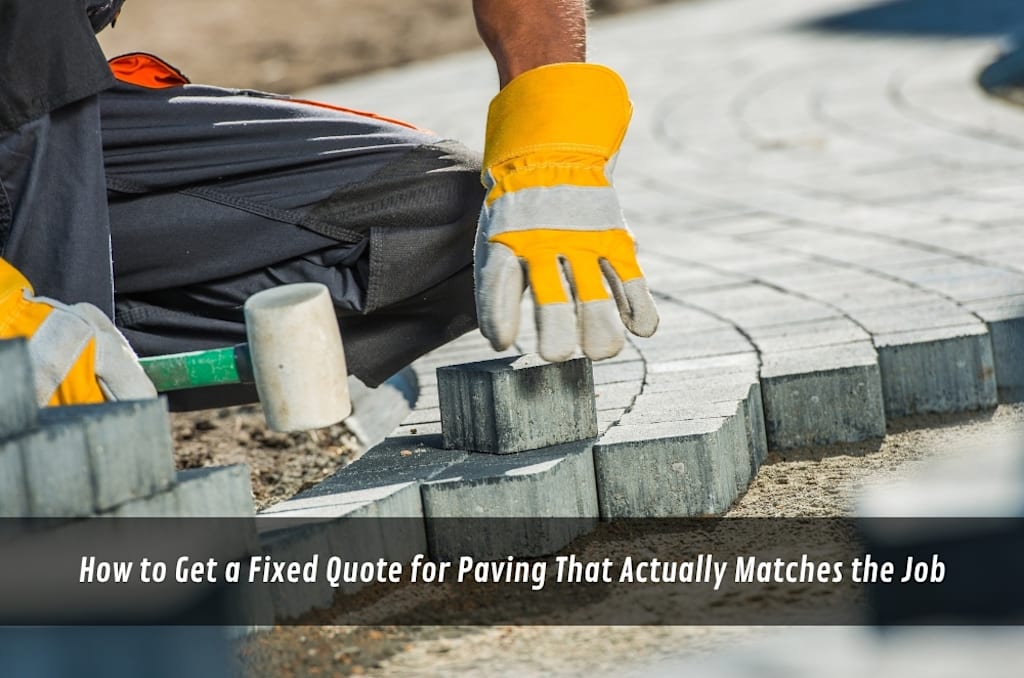
Paving looks simple until it shifts, puddles, or cracks. Most problems start below the surface: ground prep, drainage falls, and edge restraints. If you’re comparing paving install contractors with fixed quotes, the “fixed” part only holds when everyone prices the same scope, not assumptions discovered mid-job. Here’s what to specify, what to ask, and how to compare quotes before booking.
Start with purpose and constraints
Write down what the area must handle (foot traffic, outdoor dining, light vehicles, driveway loads) and the constraints that change labour and risk: access, levels at doors, existing drains, tree roots, and where stormwater can realistically go.
If the paving sits near the house, note any damp issues, low points, or overflow paths after heavy rain—those clues shape the fall design.
What drives cost and longevity
The biggest cost and performance levers are usually excavation depth, sub-base material and compaction, drainage falls, edge restraints, and the amount of cutting/detailing required.
Paver choice still matters, but mostly for slip resistance, heat underfoot, and maintenance. Smooth finishes can be risky near pools or shaded areas, and very light colours can glare in full sun.
If two quotes are far apart, it’s often because one includes the hard parts (base, disposal, drainage detail) and the other leaves them vague.
The scope that makes or breaks a fixed quote
A good paving scope names inclusions and exclusions in plain English:
- Area and rough m², plus the intended use
- Finished levels at doors/steps and any trip-hazard limits
- Excavation depth and base build-up (materials + compaction method)
- Drainage intent (direction of fall, tie-in to existing drainage, and where water must not go)
- Edge restraint type and where it goes
- Transitions to lawn, garden beds, grates, or existing concrete
- Demolition, spoil removal, and what’s excluded (e.g., rock removal, unknown services, drainage upgrades)
If it helps, a one-page reference like the All Green Gardening & Landscaping paving scope checklist can make comparing quotes line by line much easier.
Operator Experience Moment
On real sites, the calmest paving jobs are the ones where the water path and finished levels are agreed before excavation starts. When those two points are vague, even good trades end up negotiating on-site with a half-built surface. Clear notes up front feel slow, but they’re usually the quickest way to avoid mid-job resets.
Common mistakes that cause rework
Not specifying falls (“it’ll drain somehow”), skipping edge restraints, under-building the base for the actual load, ignoring slippery finishes in wet areas, and leaving transitions (to turf, drains, thresholds) undefined are the usual reasons paving needs rework.
Another common one is assuming existing drainage can take extra runoff. If more hard surface is added, water moves faster and can overwhelm a grate that was “fine before”.
Decision factors when choosing a contractor
Prioritise (1) a written scope of works, (2) clear base and compaction details, (3) drainage thinking you can repeat back, (4) edge restraint and transition details, (5) access/logistics planning, and (6) a documented variations process for hidden conditions.
Ask how they’ll protect surrounding areas (fences, garden beds, neighbouring surfaces) and what reinstatement is included, because “make good” can be a hidden cost if it’s not written down.
A reliable contractor won’t promise “no variations ever”; they’ll show how variations are identified, priced, and approved before the work changes.
A simple 7–14 day plan
Days 1–2: Define success in two sentences (use, safety, drainage, finished levels).
Days 3–4: Sketch the area with measurements, access notes, and keep/avoid items.
Days 5–7: Choose trade-offs (budget ceiling, low maintenance, strongest surface, best look, coolest underfoot).
Days 8–10: Request quotes using the same written scope and photos of constraints.
Days 11–14: Compare line by line (base, drainage, edges, disposal, exclusions), then clarify gaps in writing before booking.
Sydney SMB mini-walkthrough
Inner West café courtyard refresh for outdoor seating.
Narrow lane access drives labour and spoil removal.
Door threshold means levels and falls must be precise.
Existing drain needs a clear “where water goes” plan.
Scope includes edge restraints along a garden bed.
Quotes compared on base build-up, not just paver style.
Finish chosen for slip resistance and easy wash-down.
Practical Opinions
Drainage and levels deserve more attention than patterns.
If the scope isn’t written, the “fixed quote” is guesswork.
Choose clarity and process over the cheapest headline number.
Key Takeaways
- Fixed quotes hold when base, drainage, edges, and exclusions are explicit.
- Most failures trace back to prep and water flow, not the paver itself.
- Compare quotes line by line so you’re not comparing different jobs.
- Confirm how variations are approved before anything changes on-site.
Common questions we hear from Australian businesses
Q1) How detailed should a paving quote be to count as fixed?
Usually it should read like a scope: base depth/build-up, drainage intent, edge restraints, demolition/disposal, and clear exclusions. Next step: ask for a short “scope of works” section if it’s missing. In Sydney, access and spoil removal can change costs, so include them.
Q2) What most often causes pooling water or uneven paving?
In most cases it’s incorrect falls or insufficient base preparation and compaction. Next step: get the contractor to describe where water will run and how levels are set before approving the quote. Local downpours make this especially important near doorways and low points.
Q3) Are variations always a bad sign?
It depends on what triggered them; hidden rock, unstable fill, or unknown services can be real. Next step: require that any variation is documented, priced, and approved in writing before the scope changes. Older Sydney sites often have surprises under the surface.
Q4) Should you consider permeable paving or drainage upgrades?
Usually it depends on the site and where runoff currently goes. If water regularly sheets across the area, permeable options or better capture points may reduce puddling and reduce load on existing grates. Next step: ask for two scope options—standard and “improved drainage/permeability”—so the cost difference is transparent. In many Sydney areas, tight blocks and mixed older drainage mean small changes in falls can make a big difference.
About the Creator
Marie Pintor
My passion lies in crafting engaging and informative content that inspires readers to connect with their outdoor spaces.
Enjoyed the story? Support the Creator.
Subscribe for free to receive all their stories in your feed.
Comments