

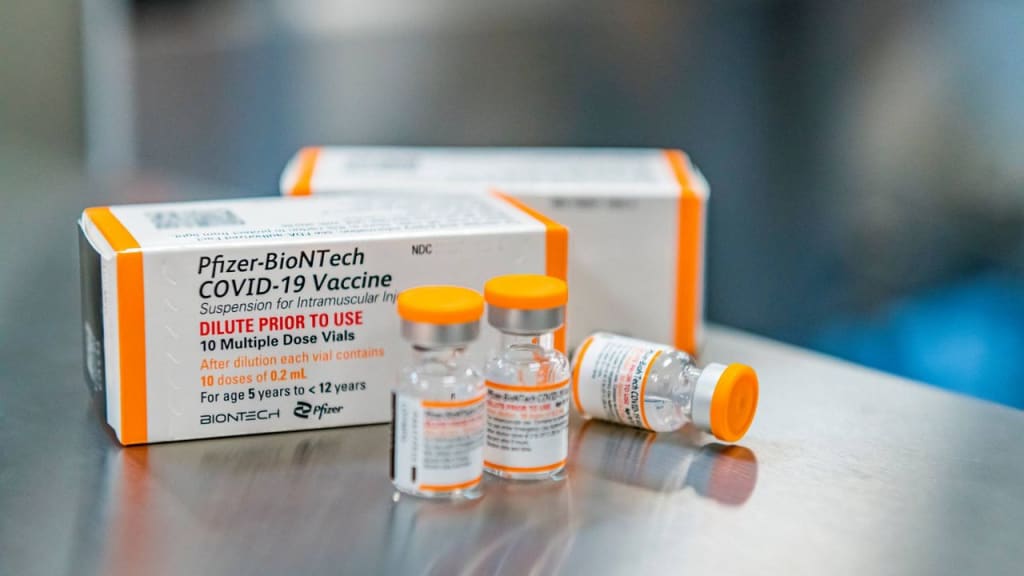
Researchers are attempting to create a "skillet Covid" immunization - one that offers assurance against different variations of the Covid that causes Coronavirus.
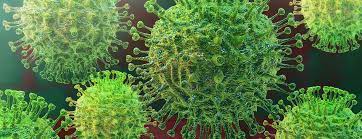
The expectation is that such an immunization could make ready for the improvement of a widespread Covid antibody, which could take off any Covid - arising variations that cause Coronavirus, yet additionally a few normal colds and surprisingly the threatening danger of novel Covids we haven't distinguished at this point.
However, such antibodies are "going to require a long time to create," Dr. Anthony Fauci, head of the Public Organization of Sensitivity and Irresistible Infections, said during a White House preparation on Wednesday.
Covids that contaminate people were first distinguished during the 1960s, and there are seven known human Covids: four that cause normal colds; Center East respiratory disorder, or MERS; extreme intense respiratory condition, or SARS; and SARS-CoV-2, the Covid that causes Coronavirus.
"Be that as it may, since September of 2020, there have been five SARS-CoV-2 variations of concern: Alpha, Beta, Gamma, Delta and presently the current Omicron," Fauci said in Wednesday's advising.
"So clearly, inventive methodologies are expected to prompt wide and tough assurance against Covids that are known and some that are even now obscure," Fauci said. "Subsequently, the wording 'skillet Covid immunization.' "
Widespread immunization could assist with battling variations
During the Coronavirus pandemic, the world has seen a few Covid variations arise - and with some, the viability of current Covid antibodies to ensure against disease and ailment has somewhat lessened.
Notwithstanding, general wellbeing authorities stress that it's as yet vital to get immunized at this point.
The current Covid antibodies approved for crisis use or supported in the US - from Pfizer/BioNTech, Moderna and Johnson and Johnson - were created to focus on the first wild-type SARS-CoV-2 infection recognized toward the beginning of the pandemic.
Albeit those immunizations have shown viability against contamination and disease of around 90% and higher against the wild-type, that adequacy against some SARS-CoV-2 variations has seen a little plunge, dropping to 66% against Delta contaminations, for example, and even lower for Omicron. However, a third portion of the antibody - or a promoter shot - can further develop assurance against variations.

"Our flow antibody regimens really do give solid assurance, especially when utilized with a supporter, against serious Covid sickness and demise," Fauci said Wednesday. "So don't stand by to accept your essential immunization routine, and if it's not too much trouble, get your promoter in the event that you are qualified."
A widespread Covid immunization - or even only a dish Covid antibody - could move the technique completely.
NIAID, part of the Public Foundations of Wellbeing, has put essentially $1.2 billion in Covid immunization research, remembering different ventures for creating dish Covid antibodies. In September, NIAID reported honors of about $36.3 million to three scholarly organizations - the College of Wisconsin, Brigham and Ladies' Emergency clinic in Boston and Duke College - to study and foster immunizations to secure against different sorts of Covids and variations.
"I don't need anybody to imagine that dish Covid immunizations are in a real sense around the bend in a little while. It will require a very long time to create in a gradual manner," Fauci said during Wednesday's White House preparation. "A portion of these are now in Stage 1 clinical preliminaries."Instructions to assemble an antibody that battles numerous Covids
In the core of Durham, North Carolina, on Duke College's grounds, sits the Duke Human Immunization Establishment. The researchers there make up only one of many examination groups all over the planet endeavoring to make a dish Covid antibody.

"What we attempt to do is truly focus on a particular piece of the infection, for example, that we know is its weak spot," Kevin Saunders, head of examination at the Duke Human Antibody Foundation, told CNN Boss Clinical Journalist Dr. Sanjay Gupta this week.
For an antibody to work across various kinds of Covids, that "weak spot" ought to be a piece of the infection that stays uniform across variations and after some time - so as infections transform, the part that the immunization targets presumably won't change a lot.
This present "fatal flaw" additionally should be something that an infection needs. On account of Covids, that could be a piece of the infection that it uses to tie to our cells when it contaminates us.
"Ordinarily, that is where the infection is restricting to explicit protein on the host cell that it's focusing on, and on the off chance that it changes that site, it's at this point not ready to contaminate," Saunders said. "Also that generally is obliged developmentally by that infection, since, supposing that it loses that site, then, at that point, it's as of now not ready to taint."
When that piece of the infection - the "fatal flaw" or "rationed site" - is distinguished, the immunization can work by getting neutralizer reactions against it. The expectation is for that site, or the fatal flaw, to be available on more than one infection.
"We attempt to track down antibodies that tight spot to monitored locales, thus this means, we go into people that have been contaminated with a specific infection, and we begin mining their safe reaction to get what's viable and what's not successful," Saunders told Gupta.
"Something we found, particularly in SARS-CoV-2, is that there's antibodies that can explicitly target locales that are moderated or present on various different Covids, thus once you are familiar those kinds of destinations, then, at that point, you can begin to say, 'How would I plan an immunization that spotlights in on that?' " Saunders said. "That is currently how we're doing SARS-CoV-2."
One hint about such a site emerged when Saunders and his partners observed an immune response called DH1047. They recognized that immune response subsequent to examining the blood of an individual who had SARS in 2003 and observed that the neutralizer can tie to both SARS-CoV-1, which causes SARS, and SARS-CoV-2, which causes Coronavirus.
"So we accepting that neutralizer as a format to say, 'there should be some site that is normal between SARS-CoV-1 and SARS-CoV-2, and how about we sort that out, since, in such a case that we can sort out that preserved or normal site, then, at that point, we would realize that should be in the immunization.'
"Thus we tracked down that immunizer. We then, at that point, addressed the construction, implying that we sorted out precisely where it ties on SARS-CoV-2 and SARS-CoV-1, and afterward we involved that as our antibody idea," Saunders said. "At the point when we inoculated non-human primates with our immunization, they then, at that point, produced these antibodies that resemble DH1047."
The methodology at Duke College, to zero in on DH1047, is only one of numerous systems among researchers attempting to foster container Covid immunizations. A few different ways to deal with making an extensively defensive immunization include inciting various kinds of antibodies and may not depend on a solitary moderated site.
However, generally, immunization research in creatures has produced the sorts of antibodies that could offer insurance against numerous Covids.
One more investigational dish Covid immunization, being created at the Walter Reed Armed force Establishment of Exploration in Silver Spring, Maryland, was found in preclinical preliminaries to shield non-human primates from illness brought about by the first strain of SARS-CoV-2 and to actuate immunizer reactions against significant SARS-CoV-2 variations of concern and the SARS-CoV-1 infection that arose in 2002, the Tactical Wellbeing Framework reported in late December.
The immunization is being examined in people; it entered Stage 1 human preliminaries in April.
This isn't whenever researchers first have attempted to foster general immunizations that could offer insurance against different infections.
Researchers at the Public Foundations of Wellbeing's NIAID flu research program have been attempting to make a general influenza shot, which the program portrays as an antibody that gives vigorous, dependable security against numerous subtypes of influenza, rather than a chosen handful. Studies are as yet in progress.
Independently, scientists at the Duke Human Immunization Establishment have been attempting to foster a general antibody against HIV, the human immunodeficiency infection that causes Helps. They have distinguished an immunizer that could assume a part in growing such an immunization, however that exploration is likewise progressing.
Concerning investigational container Covid immunizations, assuming Duke's, the military's or any others demonstrate effective in human preliminaries, they could be en route to turning into the Coronavirus shot we get before very long - to ensure against arising variations or even an obscure Covid that may gush out over from creatures to people.

"How I see it working out for a general Covid antibody would be that we have an immunization that is powerful against the seven human Covids. So this implies that the immunization could forestall the Covids that presently are known to contaminate people," Saunders told Gupta.
"We would then move over to the infections that can taint human cells however are circling in creatures - in light of the fact that we accept those are the following probably contender to move over and cause a novel Covid pandemic," he said. "I could consider it that sort of layered methodology: Would we be able to stop what's at present tainting people? Would we be able to stop the following probably applicants? And afterward would we be able to assault the repositories that could bring about novel Covids?"
'The objective ought to be to ponder a general Covid antibody'
To build up what the fate of Coronavirus antibodies may appear as though, US wellbeing controllers should figure out what their objective is with the immunizations: to forestall significant ailment and hospitalizations, or to forestall contaminations generally speaking and spread of illness, Dr. Amesh Adalja, senior researcher at Johns Hopkins College Place for Wellbeing Security, told CNN
About the Creator
Enjoyed the story? Support the Creator.
Subscribe for free to receive all their stories in your feed.
Comments
There are no comments for this story
Be the first to respond and start the conversation.