
How a Mandibular Splint for Sleep Apnoea Could Transform Your Nights
Mandibular Splint for Sleep
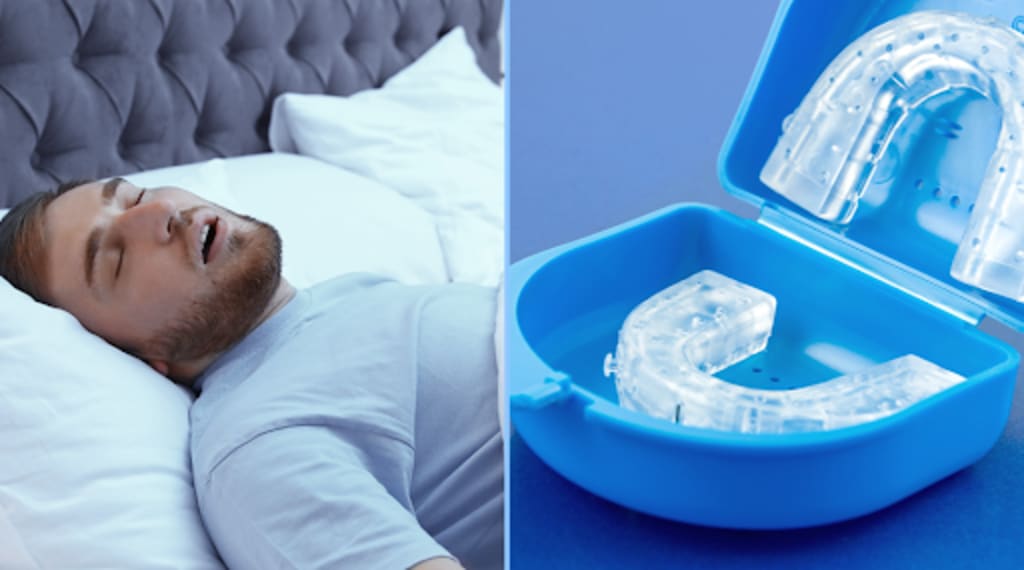
Most individuals imagine sleep apnoea therapy entails putting on a CPAP mask and suffering the noise for the rest of their lives. What they are seldom informed upfront is that a considerable fraction of CPAP users discreetly ditch the machine within the first year – not because the treatment fails, but because sleeping with a pressurised mask over your face every single night is actually tough to maintain. This is where a mandibular splint for sleep apnoea enters the equation, not as a last option, but frequently as the better first decision for the correct patient.
Not Just a Mouthguard
The comparison to a sports mouthguard is technically accurate but deeply misleading. A sports guard protects teeth from impact. A mandibular splint repositions the entire lower jaw forward by a calibrated amount — typically a few millimetres — which physically widens the pharyngeal airspace behind the tongue. That distinction matters because the narrowing of that specific space is what triggers the majority of obstructive apnoeic events. The splint does not simply hold the mouth shut or prop the tongue aside. It changes the geometry of the throat itself during sleep.
Why Jaw Position Matters More Than Most Expect
Here is something that does not get discussed enough: when a person loses muscle tone during deep sleep, gravity and soft tissue relaxation work together to pull the tongue and surrounding structures backwards. In people with certain jaw and neck anatomies, even a small degree of that collapse is enough to cut airflow significantly. A mandibular splint for sleep apnoea counteracts this by holding the mandible in a position the body would not naturally maintain unconsciously. The advancement creates passive tension in the genioglossus — the primary tongue muscle — which keeps the base of the tongue from becoming an obstruction without any active effort from the sleeper.
The Titration Process Nobody Mentions
One reason some patients get underwhelming results from a mandibular splint is that they receive a device and are sent on their way without proper titration. The jaw does not need to be advanced to its maximum position — it needs to be advanced to the therapeutic position, which is different for every person. Good clinical practice involves moving the jaw forward incrementally over several weeks, with the patient monitoring their symptoms at each stage. Jumping to maximum advancement too quickly often causes jaw joint discomfort that puts people off the device entirely. Done gradually, the vast majority of patients adapt well and find a position that resolves their symptoms without causing soreness.
What Sleep Studies Reveal About Compliance
Research consistently shows that patients with obstructive sleep apnoea use mandibular devices for longer nightly periods than CPAP machines. The reason is straightforward — there is no noise, no mask seal to maintain, no humidity chamber to fill. People simply wear it, sleep, and remove it in the morning. Higher compliance directly translates to better therapeutic outcomes, which is why many sleep physicians now consider a well-fitted mandibular splint for sleep apnoea a clinically equivalent option for mild to moderate cases, rather than a consolation prize for CPAP refusers.
The Morning Bite Shift — and What to Do About It
A genuine side effect that warrants an honest mention is temporary morning occlusion change. After wearing the splint, the teeth may not meet in their usual position for the first twenty to thirty minutes after waking. This is normal and resolves quickly, but it can be unsettling for patients who were not warned about it in advance. Dentists often recommend a brief series of jaw exercises on waking to accelerate the return to normal bite. Patients who know to expect this adapt without concern. Those who do not often worry needlessly or abandon the device prematurely.
Conclusion
Sleep apnoea treatment is not one-size-fits-all, and the assumption that CPAP is always the superior option deserves to be challenged. A mandibular splint for sleep apnoea offers something CPAP often cannot — consistent nightly use without the friction that causes patients to give up. When properly fitted, carefully titrated, and monitored over time, it is a treatment that works quietly in the background while the patient simply gets on with sleeping. For the right candidate, that is genuinely transformative.
About the Creator
Enjoyed the story? Support the Creator.
Subscribe for free to receive all their stories in your feed.
Comments
There are no comments for this story
Be the first to respond and start the conversation.