
How 5-Axis Machining Delivers Superior Precision and Complexity
5 axis machining
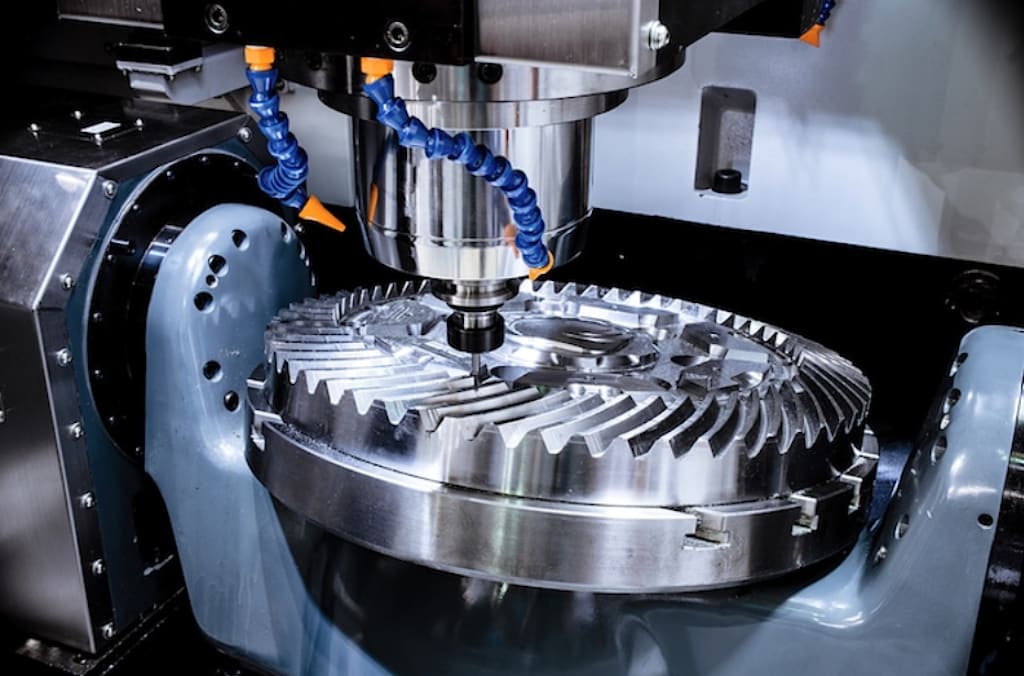
There is a class of components that sits in an uncomfortable middle ground for most machine shops. Too complex for straightforward three-axis work. Not complex enough to justify the conversation about why three setups became four and still did not achieve what the drawing asked for. The accumulated datum error from sequential fixturing. The surface steps where one operation met the next. The feature relationships that were correct individually and wrong relative to each other. These are not capability failures. They are the predictable consequence of approaching a multi-surface geometry with a process architecture that was never designed for it. 5-axis machining addresses those problems structurally before the first cut is made.
What Simultaneous Motion Actually Enables
The distinction between positioned and simultaneous five-axis machining is one that most conversations about the technology skip entirely. A five-axis positioner — sometimes called a three-plus-two — uses the rotary axes to tilt the part into a fixed orientation and then machines in three axes from that position. Simultaneous five-axis machining keeps all axes moving together throughout the cut. The difference matters because simultaneous motion allows the tool to maintain a consistent engagement angle with a complex surface throughout its path, which produces better surface finish, more consistent tool load, and longer tool life on difficult geometries. Shops that own five-axis machines but run them predominantly in positioned mode are accessing part of the capability and leaving the rest unused.
Why Fixture Reduction Changes Geometric Accuracy
Every time a component is re-fixtured, it is relocated from a new datum. Runout, angular error, and positional shift at each rechucking step accumulate across operations. Features machined in different setups that are specified with tight geometric relationships – coaxiality, perpendicularity, and true position – carry the error from every datum change between them. Five-axis machining consolidates those operations. A complex prismatic component that previously required multiple setups can be completed from one or two fixturings, which means the geometric relationships between features are controlled by the machine's accuracy rather than by the consistency of manual re-clamping. That is not a marginal improvement. It changes the class of tolerance achievable on multi-surface components.
The Tool Length Problem in Deep Cavity Work
Reaching into deep cavities or undercut features on a three-axis machine requires either long reach tooling or tilted fixturing. Long reach tooling deflects under cutting load, which produces dimensional and surface finish errors that become more pronounced the deeper into the cavity the tool needs to reach. 5-axis machining resolves this by tilting the workpiece — or the spindle — to present the feature at a more accessible angle, allowing shorter, stiffer tooling to reach geometry that would otherwise demand a compromised approach. The result is better dimensional accuracy in deep features, better surface finish, and reduced tool breakage on geometries that push the limits of what long-reach tooling can reliably achieve.
How Surface Finish Quality Connects to Axis Synchronisation
On complex curved surfaces, tool path quality is determined not just by the path itself but by how smoothly the machine executes simultaneous multi-axis motion. Machines with poorly tuned axis drives, or with CAM post-processors that produce motion commands the control cannot execute smoothly, produce visible faceting, chatter marks, and surface finish variation on surfaces that should be continuous. 5-axis machining quality on complex aerodynamic, optical, or medical surfaces depends on the combination of machine dynamics, control capability, and post-processor quality working together. A capable machine running a poor post-processor produces worse results than a more modest machine running a correctly optimised one.
Why Part Consolidation Reduces Assembly Risk
A component that previously required assembly from multiple simpler machined parts carries geometric and structural risk at every joint. Alignment between joined features depends on assembly technique. The joint itself introduces a potential failure point under load or vibration. Redesigning a multi-part assembly as a single five-axis machined component eliminates those joints, removes the assembly variables, and often produces a lighter result with better structural integrity than the original multi-part design.
Conclusion
5-axis machining changes what is achievable on complex components not just by adding axes but by changing the process architecture that determines geometric accuracy, surface quality, and the reliability of feature relationships. Organisations that understand what simultaneous multi-axis capability actually delivers — beyond reduced setup count — consistently design better components, achieve tighter tolerances, and reduce the assembly and qualification risk that multi-setup processes carry with them into production.
About the Creator
Enjoyed the story? Support the Creator.
Subscribe for free to receive all their stories in your feed.
Comments
There are no comments for this story
Be the first to respond and start the conversation.